

Lukashenka's Bind
What Just Happened #99

Welcome, and happy 250th birthday to the United States of America.
Here in the US, Russia’s war on Ukraine has faded into the media background. But it rumbles on, with another huge Russian ballistic missile strike on Kyiv just yesterday. Today let’s catch up a little bit, with a good look at Russia’s reluctant ally Belarus.
Common Sense and Whiskey goes deeper than the headlines on a few stories a week, in a presentation that busy people can absorb quickly. It’s a short, sharp look at the world out there.
If you’re reading this as an email, have a look at the online version at CommonSenseandWhiskey.com, where all CS&W content is available, and if you like what you see, please subscribe. Talk to me in the comments section or directly, at BillMurrayWriter (at) gmail.com. Let me know what you think.
•••••
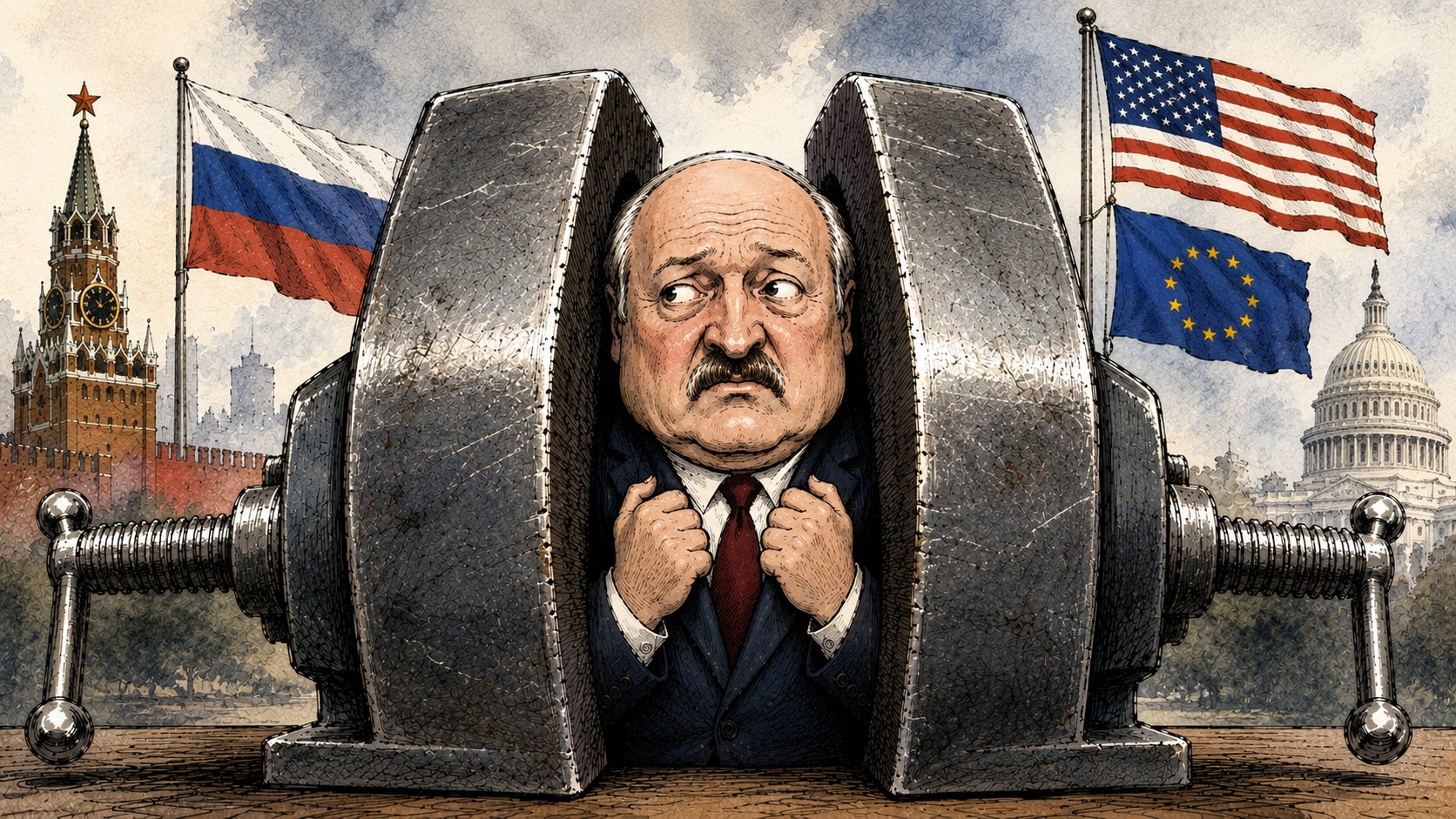
BELARUS: A couple of weeks ago something unexpected happened: Kyiv threatened to widen Russia’s war on Ukraine by bombing Russian installations in Belarus. Days later the Belarusian leader promptly set out to meet with the leaders of Russia and China.
Did he seek Putin’s advice? Was he summoned? What happened in Beijing? Let’s figure it out.
First a little background: Belarus and Russia became independent countries at the same time, in December 1991, when the leaders of Russia, Ukraine, and Belarus met at a government hunting lodge in one of Europe’s few remaining old-growth forests, the Belovezhskaya Pushcha, in western Belarus. They signed an agreement there declaring that the Soviet Union would no longer exist.
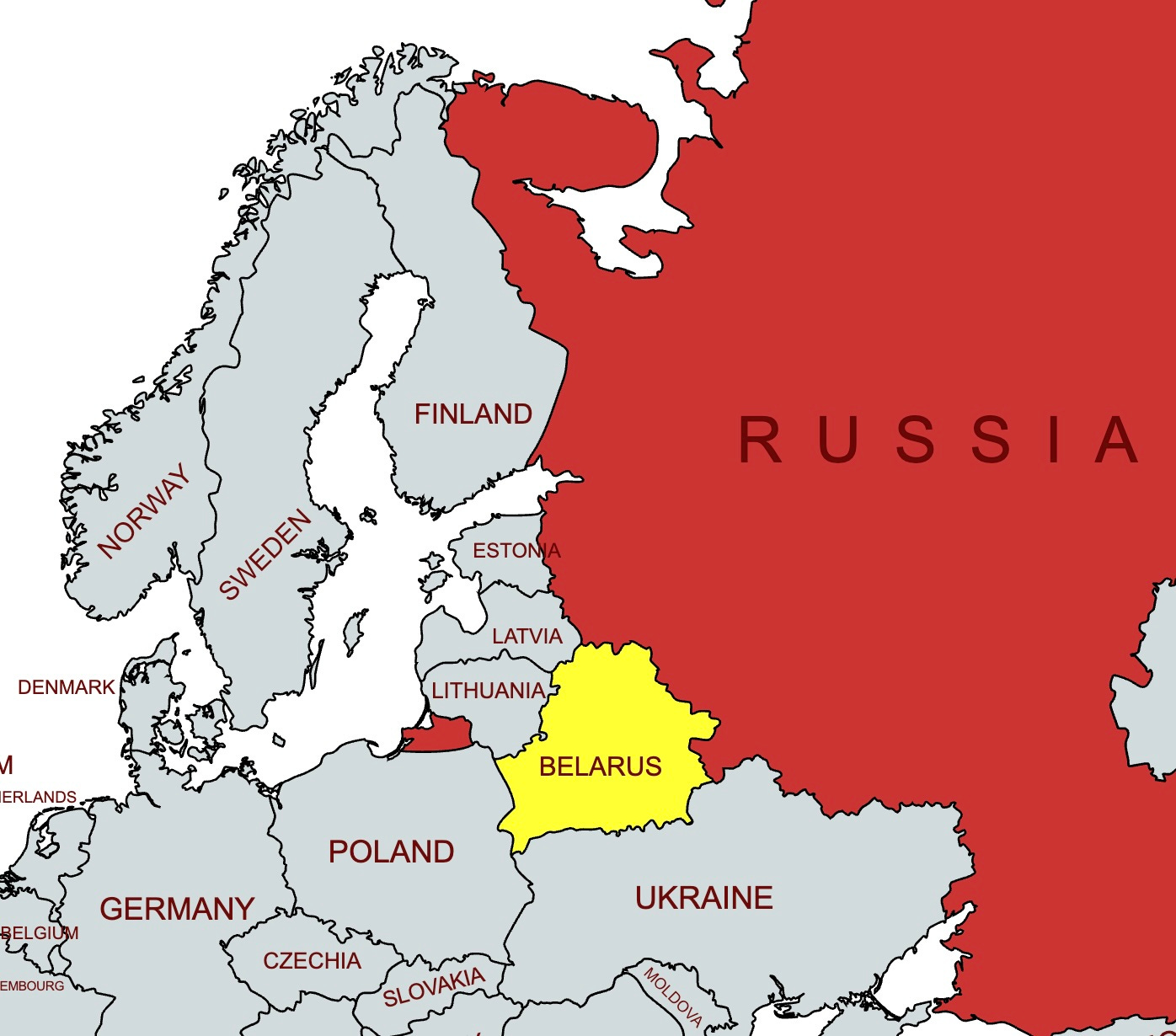
The current leader of Belarus, Aleksandr Lukashenka, has held power since 1994. He has been the country’s only post-Soviet leader but one. Lukashenka is often described as Europe’s last dictator, and he governs like it; he keeps his jails full of political prisoners, and the vibe in Minsk, at least during my one brief visit, was institutional, chauvinist and vaguely intimidating.
The biggest political scare of Lukashenka’s reign came in 2020, when his presidential reelection campaign led to serious protests and mass arrests. Protestors were killed, some 30,000 detained and at least 8,000 convicted in politically motivated trials. Tens of thousands fled into exile.
DILEMMAS: Lukashenka turned to Moscow for help. Vladimir Putin responded, and since then Putin has required a never-ending series of favors as payback, including among other things, staging the beginning of his war on Ukraine from Lukashenka’s country. The initial ill-fated Russian tank assault on Kyiv in February, 2022 came straight down from the north, across the Belarusian border. Lukashenka must fear a demand from Putin he can’t fulfill.
Moscow’s constant needs aren’t the only pressure Lukashenka faces. Since his 2020 election debacle, Brussels has held sanctions against Minsk in place. They only grew more onerous when the Belarusian leader allowed Russian troops to mass on his soil against Ukraine.
Something else: were Putin to demand active Belarusian participation in his war on Ukraine there is a real question whether Lukashenka’s conscripts would participate. Moreover, Belarusian troops are entirely untested in battle. They haven’t fought a war since independence.
Then there’s the anti-Lukashenka movement that rose from the 2020 election. Domestically, rail traffic has been sabotaged and outside the country a shadow government waits. It’s not an imminent threat, but it’s at least a niggling worry.
For all those reasons, Lukashenka is feeling the pressure. Perhaps that’s why he may be—delicately, tentatively—seeking a hand from the West.
In the last couple of years Minsk has released around 400 political prisoners to the US, acting via Maryland trial lawyer and Donald Trump associate John Coale, who has made two publicly confirmed visits to Minsk. In return for a release last December, the US granted limited sanctions relief to three key Belarusian potash companies (Potash is one of Belarus’s biggest sources of foreign currency.)
ABOUT THAT OPPOSITION MOVEMENT: A thoroughly organized Belarusian leadership-in-exile exists, recognized to variously depending on various bodies’ politics. It is headed by the woman most people believe won that 2020 election, Sviatlana Tsikhanouskaya.
Among the prisoners who have been released by Lukashenka was Siarhei Tsikhanouski, who was arrested at a protest in May 2020, and is Sviatlana Tsikhanouskaya’s husband. On his release he was sent straight into exile in Lithuania.
Tsikhanouski, a populist YouTuber focused on corruption when he was arrested, originally meant to contest the 2020 election himself, but was disqualified and thrown in jail for his uppityness. His wife Sviatlana—an English teacher with no previous political experience—ran in his place.
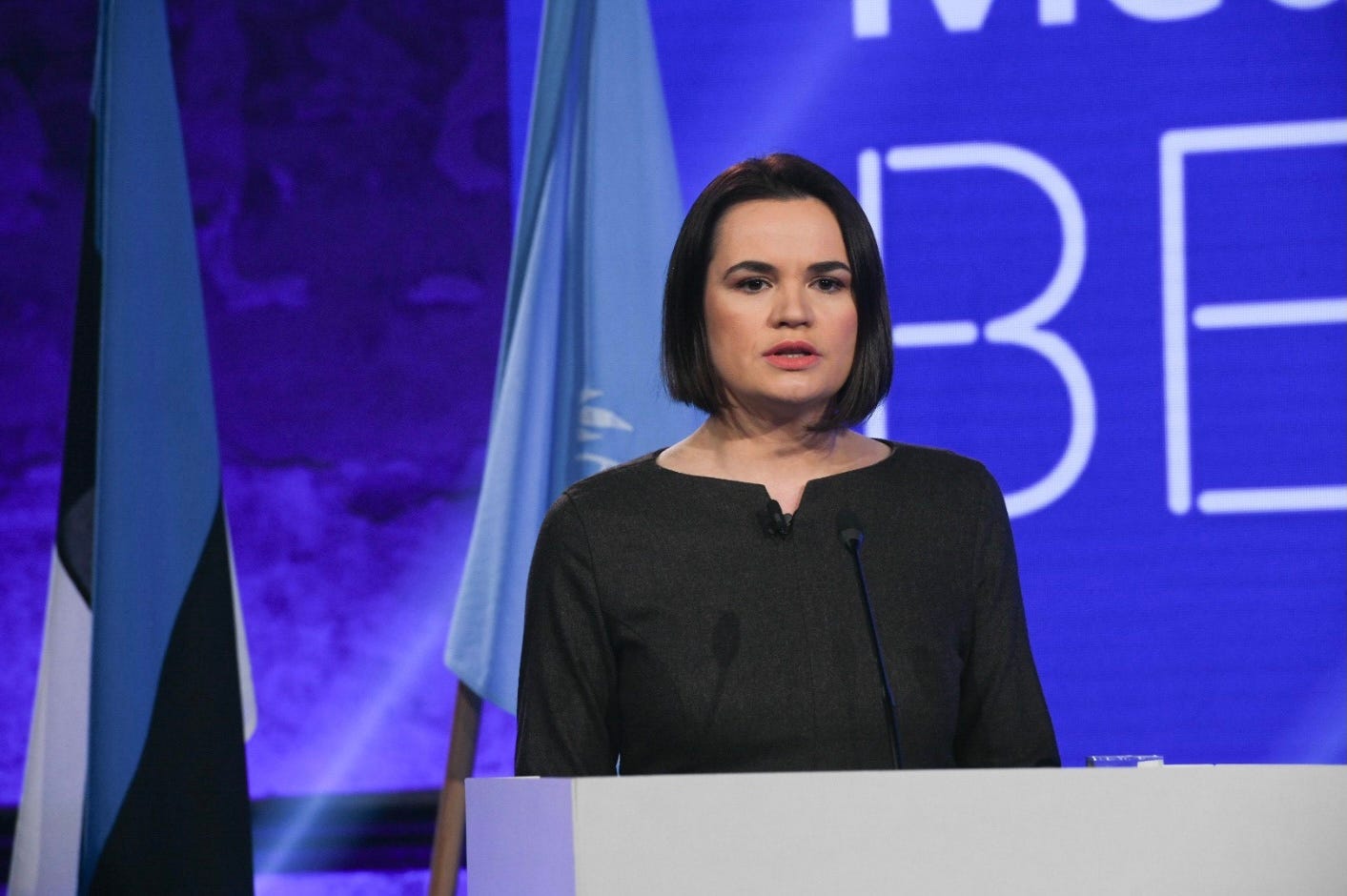
Back in Drozdy, the government residential compound where he lives, Lukashenka couldn’t imagine being defeated by a girl, so allow Tsikhanouskaya to stay in the race. She became the opposition’s unity candidate, and in the view of pretty much everybody, Tsikhanouskaya was the legitimate winner of the election.
Which didn’t stop Lukashenka from altering the results to claim victory with eighty percent of the vote. Protests immediately erupted across the country. Lukashenka turned to Moscow for help and, as we have seen, became irrevocably indebted to Vladimir Putin.
Lukashenka chased Tsikhanouskaya to exile, and she set up shop in Vilnius, the Lithuanian capital. Five years later she moved her operation to Warsaw, where she remains the face of the democratic opposition. She flies around meeting heads of state, ministers, NATO officials and so forth, while her husband, time served in prison adding to his cred, travels around Europe arguing instead for a neutral Belarus, on the grounds that Russia might better accept that than a free and democratic Belarus.
A HASTY TRIP TO RUSSIA AND CHINA: Ukraine’s President Zelenskyy threatened Lukashenka with military strikes on June 19th, demanding that the Belarusian leader remove Russian signal relay stations operating inside Belarus. (These look like ordinary cell towers, and are used to strengthen Russia's communications with drones attacking Ukraine.)
Shortly after, Lukashenka said Belarus had turned the relay stations off.
And then he hit the road. The obvious conclusion is that someone, either in Minsk or Moscow, took Zelenskyy’s threat to widen the war seriously enough to call a meeting. Thursday a week ago (June 25th), Belarusian state media announced Lukashenka would travel to Russia the following day to meet with Putin.
After that meeting Lukashenka flew directly to Beijing, where he held talks with Chinese President Xi Jinping. In neither Russia nor China were there public read-outs about the meetings.
Lukashenka flew on from Beijing to Indonesia with plans to meet President Prabowo Subianto, as reported by Lukashenka’s BelTa news agency:
(Note that BelTa neglects to report the weensy little detail that Lukashenka was leaving from Beijing.)
Lukashenka did indeed meet with Subianto in Jakarta, and then Myanmar’s Junta leader Min Aung Hlaing in Naypyidaw, before flying home. It was a regular autocrats tour. Kim Jong-un must have been busy.
What is all this? Certainly Lukashenka and Putin, meeting at Putin’s compound on Lake Valdai rather than the Kremlin, discussed Zelenskyy’s threat. There’s more we don’t now than we know, so we can only speculate.
So here’s some speculation:
It’s interesting that by the time they met, Zelenskyy has already announced that the Russian relay stations had shut down. That suggests Lukashenka decided to comply with Zelenskyy’s demand before he talked with Putin.
So much for allies coming together in solidarity to make a joint decision. But neither has there been anything since to indicate Putin demanded that Lukashenka change his mind. Perhaps Putin decided to do without his relay stations rather than put at risk other Russian assets in a growing Ukraine/Belarus dispute.
That would make sense, because if Belarus became involved in combat, Russia would presumably need to deploy air defenses to protect those assets, and we see nearly every day now that Russia keenly needs its air defenses back home just now.
Before he left for Valdai, Lukashenka said he had met with Zelenskyy’s people. That was Lukashenka being tough guy: He said he had warned them not to drag Belarus into the war.
“I told them bluntly: 'Guys, tell your president: if he thinks he can talk to us like that—and drag us into a war to boot—then he needs to understand that the nature of the war would change instantly,'“ he said.
But Lukashenka’s talking publicly about having a separate channel with Ukraine could have unnerved Putin. Putin may have wanted to hear from Lukashenka’s lips that he was only talking with Kyiv to reduce the risk of war, not to cosy up to Zelenskyy at Russia’s expense.
On the other hand, Valdai could have been Lukashenka’s idea. He may have wanted Putin to hear his version of his discussions with Kyiv rather than have the meetings filtered through Putin’s intelligence channels. Or to counter what Lukashenka feared Putin’s spies would say.
Or perhaps Lukashenka wanted to reassure Putin in advance that he wasn’t flying off on a secret end run with Beijing. Or, to turn things around, perhaps Putin had a message for Xi he wanted Lukashenka to carry personally.
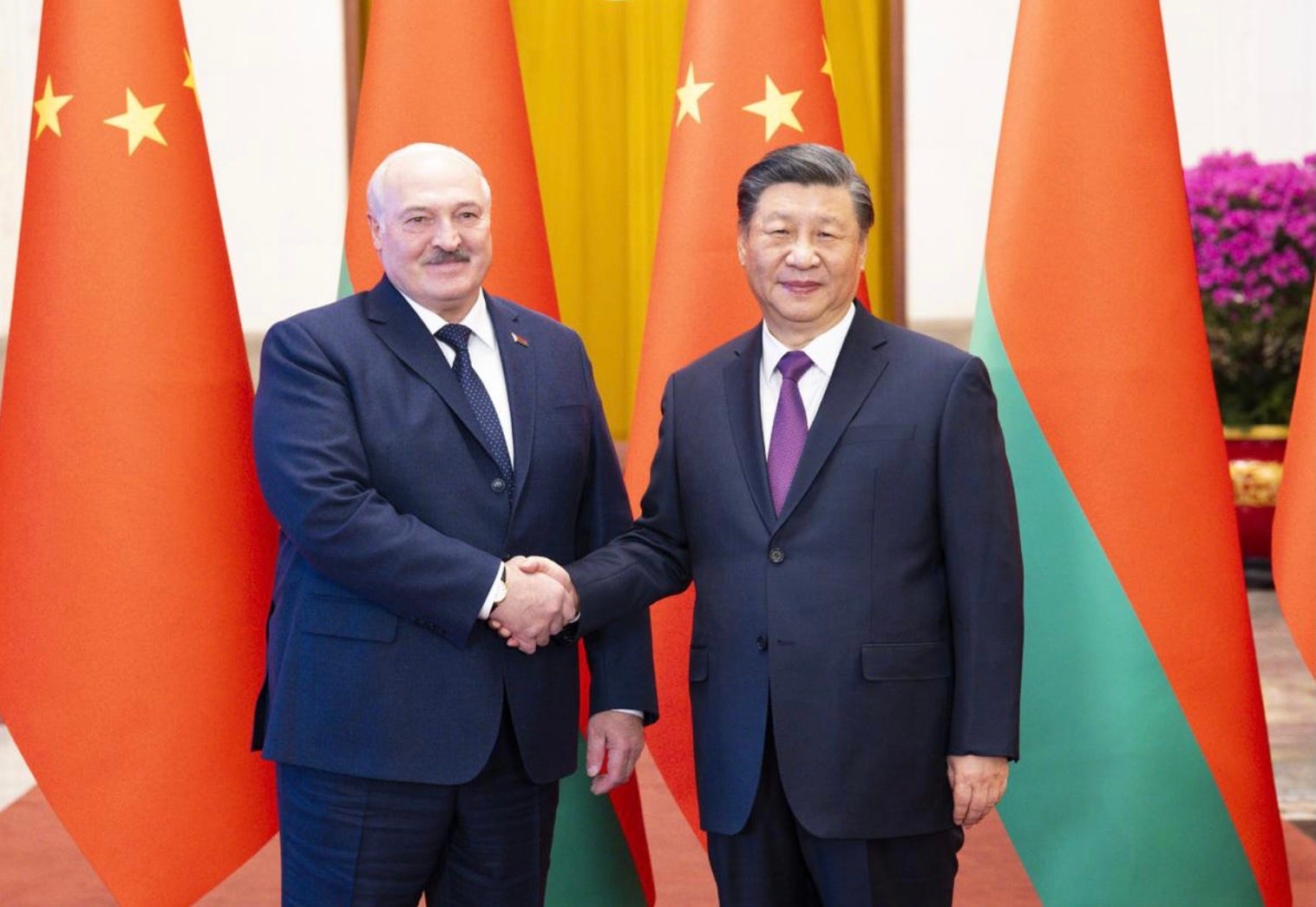
Then there’s the China visit. Lukashenka flew straight from meeting with Putin to Beijing, where, publicly at least, he and Xi conducted a bland and ordinary ‘working meeting.’ China Daily had a photo (above) of the two leaders, and Xi said China supports Belarus in safeguarding its “national sovereignty, independence and territorial integrity.” Which could have been Xi shaking a rhetorical finger at Zelenskyy for his threat against those Russian relay stations in Belarus that started this little flurry in the first place.
Whatever this was all about, there’s not much evidence anything big, new and dangerous is imminent. If it were, if Putin had persuaded Lukashenka to make a big new commitment to involvement in his war, it seems likely we’d see some public evidence by now.
CONCLUSIONS?
As for the Russian relay stations that started the row in the first place, on Tuesday (June 30th), Commander-in-Chief of the Armed Forces of Ukraine Oleksandr Syrskyi said in an interview, “One repeater was turned on yesterday. Well, I think they won’t be turning any more of them on.” It’s hard to tell if that was a further threat, but fair, I think, to surmise that Kyiv doesn’t consider the issue resolved.
And the Atlantic Council thinks Zelenskyy is right to worry about Belarus. It points out how intertwined Belarus and Russia are in this war effort:
“Hundreds of Belarusian enterprises now manufacture components for Russian missiles, air-defense systems, drones, electronic warfare equipment, and ammunition.”
But it presses the idea that Lukashenka may not be making his own final decisions:
“(H)e appears to be steadily building up his country’s military capacity in case he finds himself pushed more directly into the war.”
Lukashenka’s woes are a subplot in the larger story of a war that Ukraine has pretty clearly evened up in 2026. This doesn’t mean Ukraine will win the war. It doesn’t even mean Ukraine has the upper hand. But it does suggest, I think, that the Kyiv/Moscow power balance has shifted, and that puts Minsk in as tough a spot as the combatants.
•••••
UKRAINE: Not long ago we all fretted about whether Europe would step up to cover Ukraine’s needs when the Trump administration abandoned Kyiv, and most of us had our doubts. It’s only fair to recognize that it has.
As Timothy Ash has put it, The EU has “more or less has provided Ukraine with a blank cheque to sustain its defence, and in so doing that of Europe - sending a powerful message to budget constrained Russia.”
The European Commission’s proposal for the EU’s next seven-year budget gives Ukraine a pre-accession and reconstruction path like nothing ever offered to a candidate country before. It has its own name—the Ukraine Reserve—and contains funding of up to €100 billion between 2028 and 2034..
As you’d expect if someone offered you €100 billion, there are conditions. “(F)unds will be disbursed in exchange for continued reforms—primarily in the areas of the rule of law, anti-corruption, public administration reform, and harmonization of legislation with EU standards.” (More about conditions here.)
Brussels-bashing is a daily parlor game across Europe, but implementation of any such agreement would be a clear example of the EU getting real things done. Strahinja Subotić writes for the European Policy Center that:
“Since the war in Ukraine began, EU institutions and member states have openly acknowledged the need to turn over a new page in the Union’s functioning. A fivefold increase in funds allocated to defence and security represents an attempt to elevate and embed common defence capacity-building policies more permanently within the EU’s budgetary structure – aiming to establish a European Defence Union.”
•••••

If you’re reading this as an email, be aware that your provider may clip the article before the end. Try clicking on ‘view entire message’ to see the whole thing, or you can always read everything at Common Sense and Whiskey online.
•••••
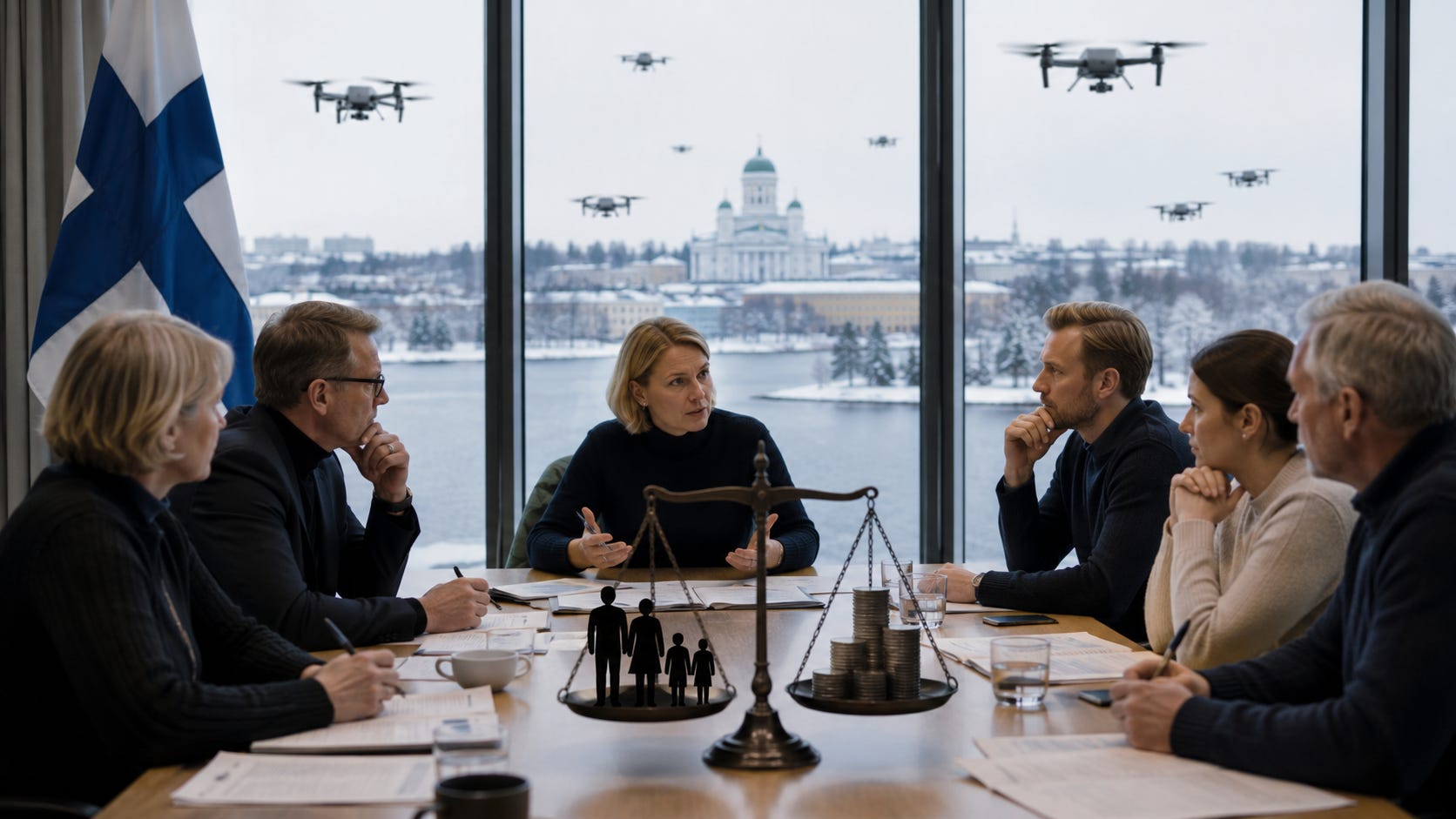
CHANGING TIMES: Playing to stereotype as a Nordic social welfare state, Finland debates how to cover the wages of those who miss work due to drone threats.
Here’s state broadcaster YLE on the unexpected change brought on by drone warfare:
“In recent weeks, there has been a lot of talk about what will happen to the salaries of employees who are forced to stay home due to the drone threat and cannot work remotely.
An agreement has been sought between employers, employees and the government. Minister of Labour Matias Marttinen (Confederation) has given the labour market organisations until Friday, or the matter will be transferred to the minister’s desk and he will resolve it before the summer holidays.
According to Yle, the Confederation of Finnish Industries is proposing that health insurance contributions be collected separately from employers to cover the wages of those who miss work due to the drone threat. Companies could apply for compensation from the collected contributions to cover the wages of those who miss work.
Health insurance premiums are a side expense of wages, paid by employers and employees. According to information from Yle, in a recent proposal, however, only employers would pay health insurance premiums for drone threats.
The employers’ association EK reportedly raised the issue in a tripartite working group that is seeking an agreement on the wage dispute.
Sources familiar with the negotiations tell Yle that the Confederation of Finnish Employers’ Associations’ proposal has been considered bureaucratic and burdensome, at least on the employee side, and the negotiations are still so far apart that reaching an agreement between employers and employees seems difficult.
The working group is led by Timo Jaatinen, the Secretary-General of the Ministry of Employment and the Economy , who did not want to comment on the content of the negotiations to Yle on Wednesday.
Employers and employees have been divided on how the Employment Contracts Act should be interpreted in the case of a drone threat. According to employers, there is no obligation to pay wages, as the obstacle caused by the drone threat affects the commute and not the work.
However, Prime Minister Petteri Orpo (Congress) said in A-studio last week that he believes that an employee cannot be left without pay if they have to stay home for their safety due to the threat of drones.
In mid-May , the Confederation of Finnish Industries (EK) ruled that there was no need to pay wages to those who were absent from work due to the drone threat. Finnish Enterprises, on the other hand, has previously proposed that if wages were paid, they would be financed by the state, not the employer.
The drone threats that have been in the public domain have targeted Uusimaa and Southeast Finland. One idea is reportedly that through health insurance contributions, it would be possible to spread the burden among employers onto broader shoulders.”
•••••

Last week we had a story about Donald Trump’s efforts to take Greenland from the Kingdom of Denmark. I may have gotten the grand strategic order wrong. Here’s a post I missed from the president, using the White House’s X account:
•••••
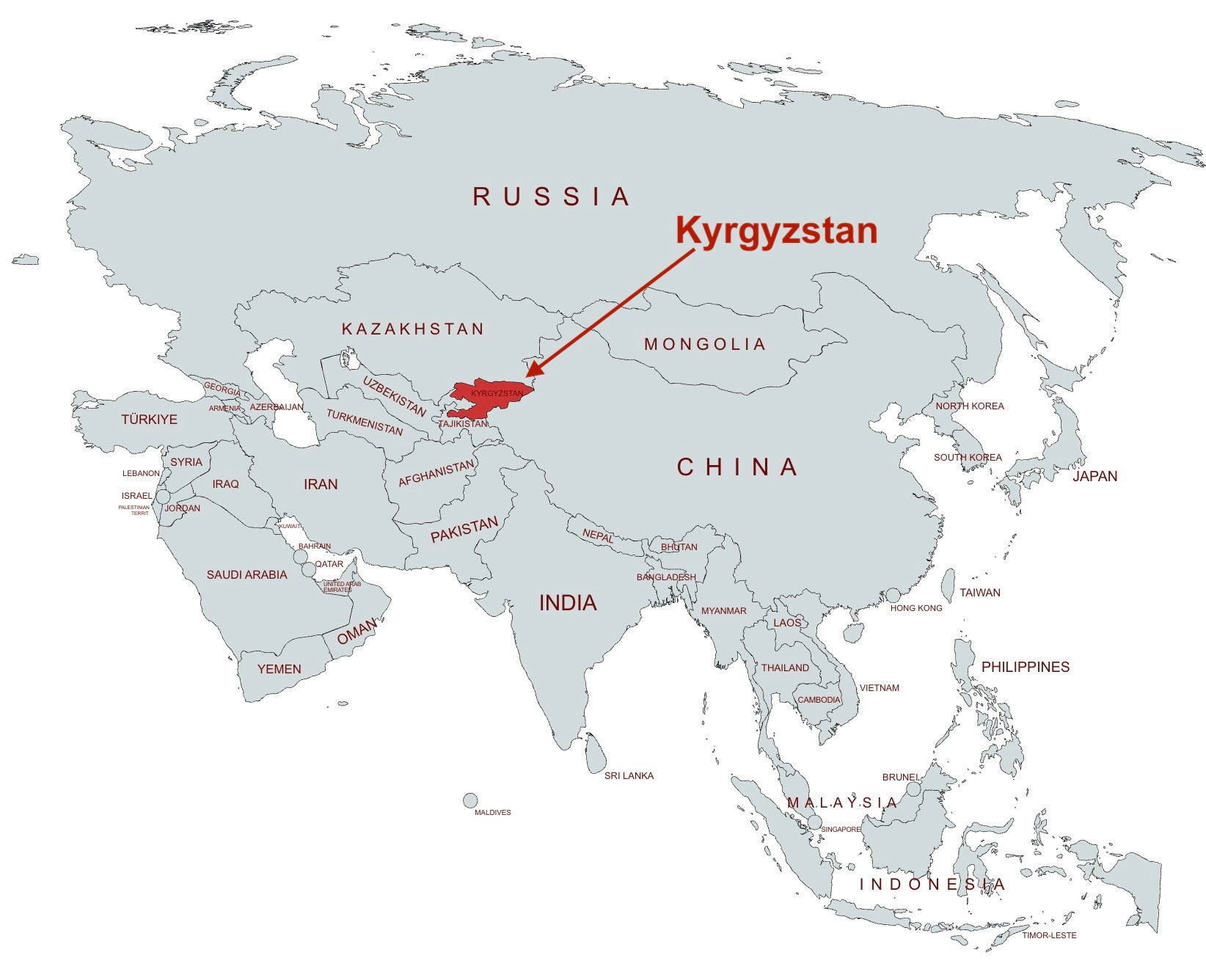
AND FINALLY: There exists something called the United Nations Office of the High Representative for the Least Developed Countries, UN-OHRLLS for (not so) short. UN-OHRLLS calls Kyrgyzstan “the landlocked developing country (LLDC) located farthest from the sea.” Kyrgyzstan is therefore the least maritime country on Earth.
And yet Kyrgyzstan joined the International Maritime Organization in 2024. A reasonable question at the time was “why?” And now we know the answer. This month lawmakers in Bishkek approved legislation allowing seagoing vessels to be registered under the Kyrgyz flag, and set out rules on maritime safety, seafarers’ rights, insurance, and shipowner liability.
This would allow merchant ships to register under the national flag, laying the groundwork for an International Ship Registery. Ministry officials “told parliament that the registry could eventually bring Kyrgyzstan $10 million-$15 million a year.”
•••••
Big American media is increasingly falling under the control of government-friendly oligarchs. The future of intelligent content is on Substack and platforms like it — please invest in independent writers you trust. We’d all appreciate your support.
That’s it for today. Thanks for your time, and let me know what you think. Good weekend, and to Americans, happy 250th! I’ll see you next week.
Please pass this article around and invite your friends to subscribe. Substack authors, feel free to restack this or any other column on your own Substack anytime.
Content on Common Sense and Whiskey is free. There’s no paywall, but if CS&W is beneficial to you, please subscribe for just $5 a month or $50 a year.
Cheers,
Bill
