

What Just Happened #98
Stay Inside Till the Sun Goes Down Edition

Welcome. Solstice behind us, now we get down to serious summer heat. Today, NATO under strain, protests in Albania, developments in Russia’s war on Ukraine, Nordic allies close ranks in Greenland, and Abiy Ahmed’s electoral dominance in Ethiopia is not real.
Common Sense and Whiskey goes deeper than the headlines on a few stories a week, in a presentation that busy people can absorb quickly. It’s a short, sharp look at the world out there.
If you’re reading this as an email, have a look at the online version at CommonSenseandWhiskey.com, where all CS&W content is available, and if you like what you see, please subscribe. Talk to me in the comments section or directly, at BillMurrayWriter (at) gmail.com. Let me know what you think.

THE UNITED STATES & EUROPE: Between the first and second Trump administrations the NATO alliance moved from a rhetorical ‘will Article 5 hold?’ to the widespread flat assertion that ‘no one trusts Donald Trump will be there for Europe.’ The alliance now actively prepares for a decrease in American military assets across Europe.
When the incoming Trump administration made it clear that the U.S. would no longer unilaterally donate military aid to Ukraine, NATO chief Mark Rutte hammered out an arrangement with the US to create a mechanism called PURL, for Prioritized Ukraine Requirements List, in which allies buy American-made weapons from U.S. stockpiles for Ukraine.
The US welcomed it and loved it. But as time has gone on, politics is pulling Europe away from Washington.
Somewhere deep in State Department rules, under U.S. International Traffic in Arms Regulations, any weapon containing even a single American component requires Washington’s legal sign-off before it can be exported or even fired. Europeans worry that’s too restrictive.
They worry too that US monopoly over things like software updates, data networks, and spare parts on its weaponry like the F-35 fighter aircraft could effectively act as a ‘kill switch,’ should the US one day turn its back entirely on Europe.
German Defense Minister Boris Pistorius told German media, “I consider a so-called kill switch on the part of the United States to be ruled out” because “if such a scenario were implemented, the US defense industry would lose all trust from its partners.”
With trust running low these days, and with Washington holding to an unflinching hard line, change was bound to come.
In late 2024 the Brits fast-tracked Project Brakestop to develop a new generation of low-cost, long-range cruise missiles without any US components, specifically to avoid any question of a US ‘kill switch.’ The MoD expects the first operational missiles to be in Ukrainian hands by the end of 2026.
France has explicitly refused to participate in the PURL initiative from the beginning, choosing instead to develop home grown, pan-European defense systems. Other countries have made expensive, long term commitments to American weaponry, like Finland, which committed to purchase of 64 F-35 fighter jets in December 2021, during the Biden administration, before questions about American reliability became acute.
Early in Russia’s war on Ukraine, Kyiv keenly sought to join the NATO alliance, seeking its security. A lot has changed since 2022. Since meeting resistance to NATO membership Ukraine has developed a remarkable self-reliance, and an equally remarkable new arsenal of its own weapons.
Now the lure of NATO—for prospective new members at least—has weakened, in large part because of the increasing doubt about wether the US would stand behind its paper defense guarantee.
This has thrown the alliance into crisis, and there is no point in using over-polite analytics-speak. NATO’s self-doubt originated in the destructive presidency of Donald Trump. The question now is whether the NATO alliance can restore its effectiveness as a deterrent force.
•••••
ALBANIA: You may have seen a US or European version of a recent news story, in which, as CNBC has it:

The protests have been sustained for weeks now, and the display of civic involvement has to be satisfying for your ordinary Besnik, Arben and Fatmir (possible Albanian equivalents of Tom, Dick and Harry). But the story of these protests sounds a little different if you’re inside Albania.
The protests began in Tiranë, Albania’s capital, at the end of May, after a fence went at the Kushner/Trump resort building site at Zvërnec on the Albanian Adriatic Sea coast. Collectively, the protests have been called the Flamingo Revolution, because the construction site on Sazan Island opposite the Zvërnec peninsula is an important flamingo habitat.
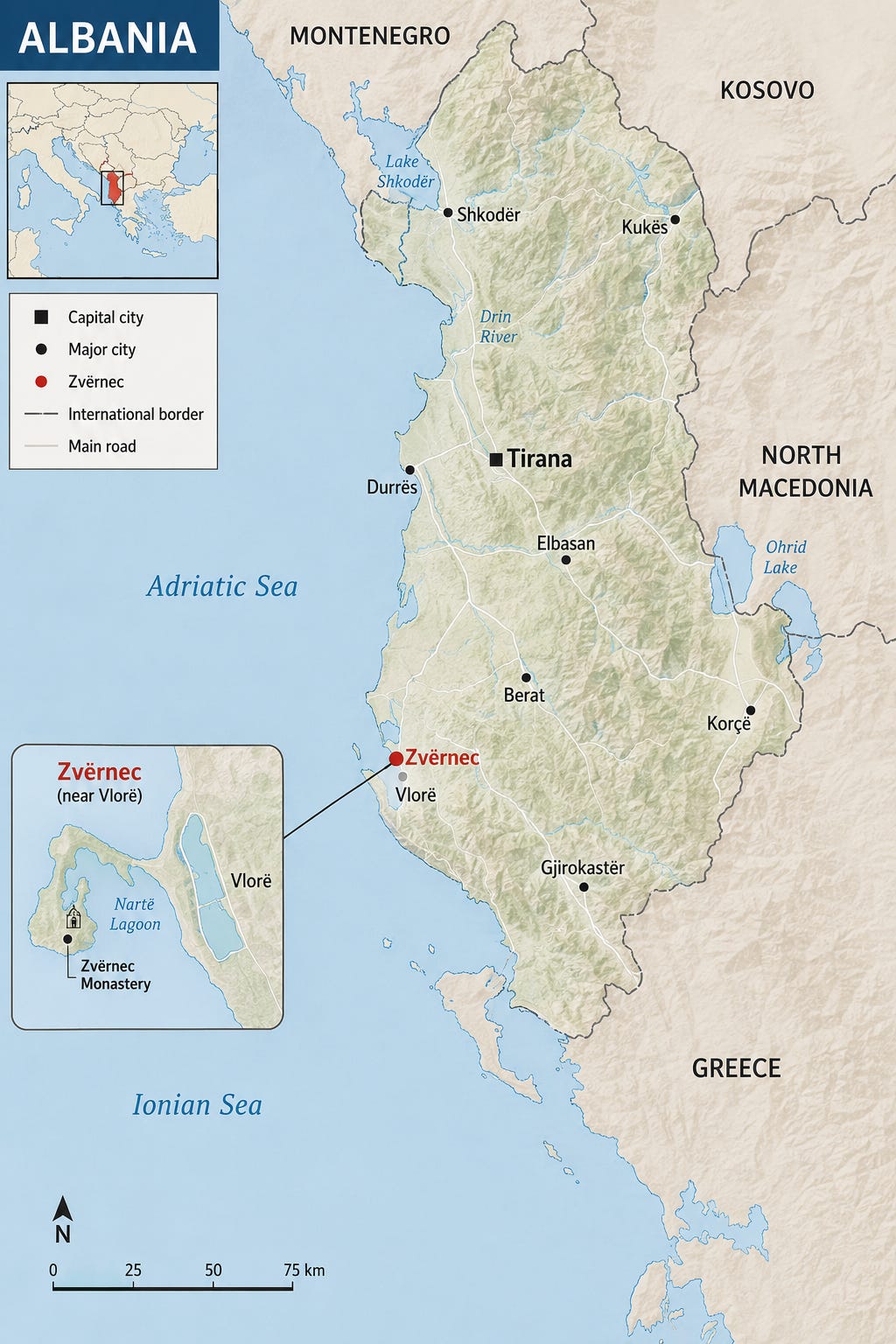
There have been nightly protests outside Prime Minister Edi Rama’s office. A June 20th protest, in particular, drew tens of thousands of people and was widely described as one of the largest protests Albania has seen in years.
Trump opponents in the West call the protests opposition to the Trump family’s self enrichment, and they are about that. But while that may have been the spark, the protests seem to have developed into expressions of general dissatisfaction with Albanian leadership.
More than three decades after its authoritarian government collapsed, the country’s politics is still dominated by two men, Prime Minister Rama and Sali Berisha, who have shaped Albanian politics that whole time. These two politicians, and the camps built around them, still have the backing of about half the country’s politics each.
Rama has been prime minister for thirteen years now and remains popular with his half of the electorate. He can (and does) point to economic growth, infrastructure projects, tourism expansion, and progress toward EU accession.
His supporters look at the country today and see a state immeasurably more prosperous and functional than the Albania of the 1990s, and obviously, not every post-Communist leader can demonstrate the same success. On the other hand, Albania started life after dictatorship in dire, dire shape. After the wreckage of the 1990s, even modest competence could pass for wizardry in statecraft.

Berisha was the first president of the country after they forced out the dictator, all the way back in 1991. His crowds demonstrate how roughly half the country remains skeptical of Rama.
The very staying power of Rama and Berisha makes people weary, and the Trump/Kushner angle provides a good pretext to rally around. So, it’s anti-corruption. The New York Times put it this way:
“Nobody here is protesting against Trump or Israel,” said Elis Kodra, 33, who turned up with his girlfriend for a recent rally with several thousand people outside the office of Albania’s beleaguered prime minister, Edi Rama.
“We are protesting against everything else,” he added, complaining that Albania has been ruled since the collapse of Communism 35 years ago by the same self-serving politicians who rotate in and out office, give state contracts to their friends in business and pay little attention to the economic and other grievances of ordinary citizens.”
(Speaking of common Albanian names, Hoxha is by far the most common surname. There are around 40,000 of them in a country of under 3 million people. Albania’s longtime authoritarian leader was Enver Hoxha, who died in office in 1991.)
•••••
RUSSIA’S WAR ON UKRAINE: Three short items you may have missed:
First, On June 19th Volodymyr Zelenskyy accused Belarus of allowing Russian signal relay stations to operate on its territory, demanded that the Belarusian leader remove them, and said:
“I think a week will be enough for him to do that. If he doesn’t do it, we’ll do it.”
Ukraine says the radar was helping guide Russian drone attacks against Ukrainian civilians. Was Zelnskyy serious about intervening in Belarus? Was he was trying to pressure Lukashenka to choose between closer alignment with Europe or Moscow?
Ukrainian military action against Belarus would obviously widen the war, which would bring a whole series of new risks for everybody involved. For Belarus, should conflict break out there would be the question of whether/how enthusiastically its all-conscript army would engage with Ukraine.
Whichever, Zelenskyy’s threat was apparently seen as serious enough for Lukashenka and Putin to talk about it. Kremlin spokesman Dmitry Peskov said on Monday that Vladimir Putin would be meeting with Lukashenko shortly to discuss the ultimatum.
Then on Wednesday (June 23rd) Zelenskyy said the relay stations are no longer operating. He said Ukrainian intelligence doesn’t know whether they have actually been dismantled or merely switched off, but that they had been inactive since Monday and Ukraine was monitoring them.
Second, Ukrainian and South Korean foreign ministers will hold negotiations in Seoul on June 30 regarding North Korean prisoners of war who fought for Russia, Reuters wrote on June 23.
South Korea’s Foreign Ministry stated that the country is ready to accept all North Korean prisoners of war who fought on Russia’s side, provided they wish to relocate there.
“South Korea opposes any repatriation of North Korean prisoners of war to Russia or North Korea against their will,” the agency quoted the South Korean Foreign Ministry as saying.
Third, just across the Black Sea from Ukraine, it looks like Russia has accomplished a creeping, stealth annexation of part of Georgia. In 2008 Russia invaded part of Georgia, taking over the South Ossetia region (which runs right up to an alarming 25 miles from the Georgian capital, Tbilisi).

During the Soviet era North Ossetia was an autonomous republic within Russia while South Ossetia was an autonomous oblast within the Georgian republic. Their border wasn’t politically significant until the Soviet Union fell apart.
They lie on either side of the Caucasus Mountain range, which is formidable. You don’t just drive over the top from the northern capital, Vladikavkaz, to the small southern capital, Tskhinvali. But there’s a tunnel.
Russian troops drove through the Roki Tunnel to occupy South Ossetia in 2008, and since then, the legal fiction of South Ossetian independence has remained, barely, but last month Vladimir Putin and South Ossetian leader Alan Gagloyev signed a “Treaty on Deepening Allied Interaction,” allowing Russian citizens to hold senior government positions inside South Ossetia for the first time.
South Ossetia’s prime minister then resigned and Gagloyev nominated Marat Kambolov, a Russian federal bureaucrat, to replace him. So now South Ossetia’s government will now take its marching orders directly from Moscow, and formal annexation is just about pointless.
•••••

GREENLAND: On March 5th last year, Donald Trump told Congress, “I think we’re going to get it. One way or the other, we’re going to get it.” He was talking about Greenland. The Nordic countries’ response (besides righteous irritation) has been to knit themselves more tightly together in solidarity.
(This fits into larger Nordic military cooperation, as we discussed in a column on Europe after NATO, called What to Do Next, here.)
This week Denmark let a contract to directly bring the bright red-liveried Air Greenland into defense of the territory. The national carrier will now take over operation of Arctic surveillance and rescue flights currently flown by the Danish military.
Meanwhile Norway will open a consulate in the Greenlandic capital, Nuuk, joining Canada, the EU, France, Iceland and the US. The Consulate General in Nuuk will report to the Norwegian embassy in Copenhagen, as Greenland is a self-governing territory within the Kingdom of Denmark.
•••••
MEANWHILE BACK HOME: Donald Trump’s Deputy Chief of Staff for Policy and Homeland Security Advisor Stephen Miller wrote this on X:

If the voters don’t look inclined to vote for you, you might have to change the voters.
•••••

If you’re reading this as an email, be aware that your provider may clip the article before the end. Try clicking on ‘view entire message’ to see the whole thing, or you can always read everything at Common Sense and Whiskey online.
•••••

ETHIOPIA: From a Bloomberg newsletter this week:
“Ethiopian Prime Minister Abiy Ahmed’s party won parliamentary elections by a landslide, giving him another five years to pursue his reformist economic agenda. Abiy’s Prosperity Party faced off against a fragmented opposition and won 438 of the 486 seats in the House of Peoples’ Representatives where tallies had been verified.”
These numbers didn’t exactly add up to me, in a land where separatists control in significant regions of the country. You might plausibly surmise that winning “438 of 486 seats” meant Abiy and Prosperity command ninety percent popular support. They don’t.
For one thing, large parts of the opposition didn’t participate fully or at all. All 38 parliamentary constituencies in Tigray, in the north, were excluded from the election after rebels fought the Abiy government from 2020 to 2022, in a conflict that drew in Eritrean forces.
Voting also didn’t happen in at least eight constituencies in the densely populated Amhara, including in the historic imperial capital Gondar. The government in Addis decided that conditions weren’t suitable.
The Oromo Liberation Front has an armed wing that has fought the government for years, such that in parts of Oromia, normal electoral politics becomes difficult. Voter intimidation and such. Plus, sometimes separatist groups don’t bother to contest parliamentary seats.
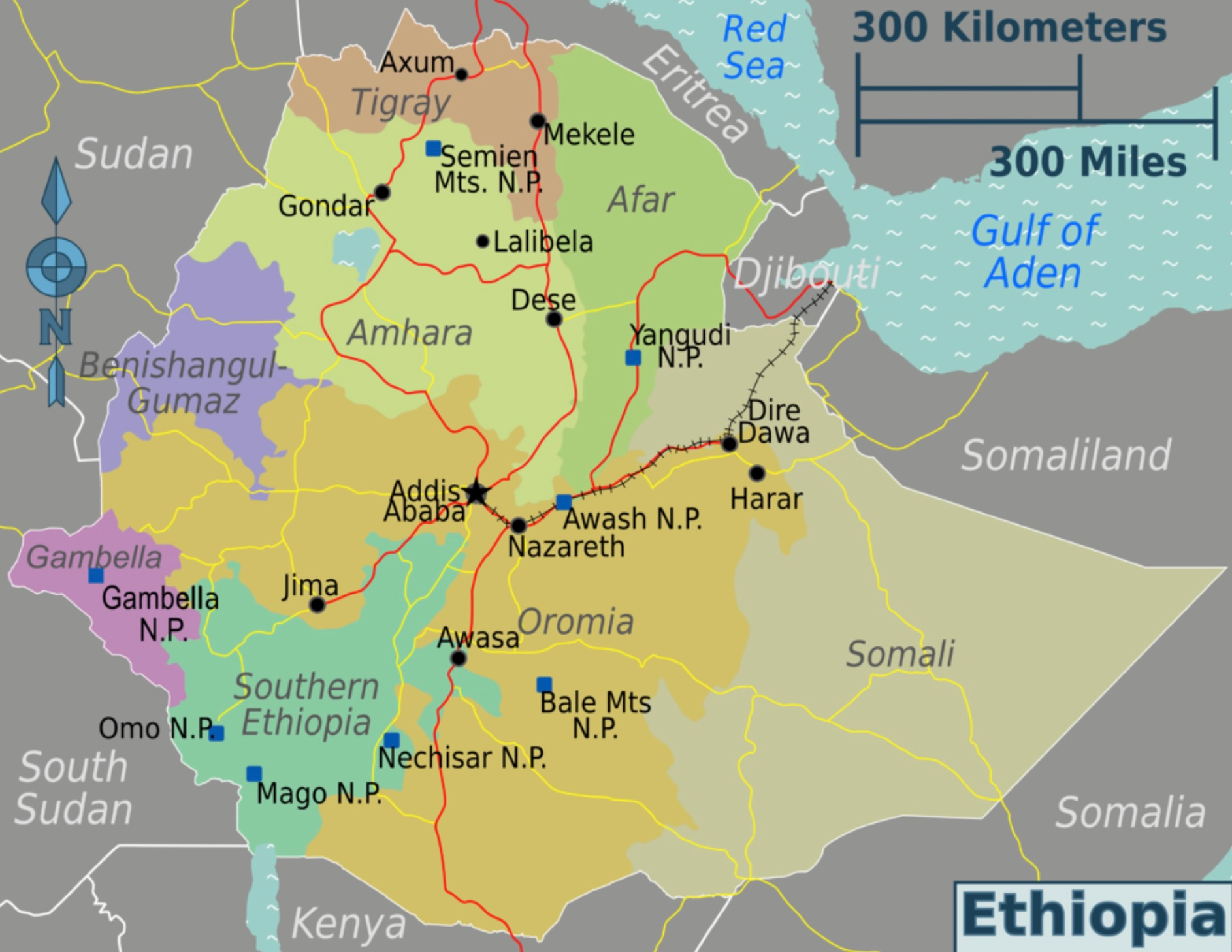
The election result doesn’t tell us that Ethiopia is politically unified. All it really tells us is that the federal center in Addis keeps itself electorally dominant.
•
Ethiopia isn’t the only place the government can be unquestionably in charge of the country while not holding effective control over parts of its own territory. There’s Colombia at the height of the FARC insurgency. Or rising and falling periods of insurgency in India, in Jammu and Kashmir, parts of the northeast (Manipur in particular), or Maoist pockets in central India. Or local control by drug gangs in Mexico. These examples show that there is a difference between control of the state, as Abiy clearly exercises, and unquestioned control of its territory.
•••••
AND FINALLY: A perennial target of political candidates is waste, fraud and abuse. Here’s one office I might could get behind eliminating: The US National Office for Harmful Algal Blooms. No offense to the algae lobby.
•••••
That’s it for today. Thanks for your time, and let me know what you think. Good weekend, and I’ll see you next week.
Please pass this article around and invite your friends to subscribe. Substack authors, feel free to restack this or any other column on your own Substack anytime.
Content on Common Sense and Whiskey is free. There’s no paywall, but if CS&W is beneficial to you, please subscribe for just $5 a month or $50 a year. Big American media is increasingly falling under the control of government-friendly oligarchs. The future is on Substack and platforms like it — please invest in independent writers you trust. We’d all appreciate your support.
Cheers,
Bill
