

What Just Happened #94
Short, Sweet Holiday Edition

Welcome. It’s a holiday weekend, so today we take a briefer spin around the world than usual. We look at how golly gee, gosh darn hard it is for the French far right to obey the law. We consider that it’s just as hard for the Trump administration to maintain alliances (Taiwan edition), we test your geography skills (Baltic edition) and we discover just how much paperwork it takes to join the European Union.
Enjoy the holiday weekend and I’ll see you next week.
Common Sense and Whiskey goes deeper than the headlines on a few stories a week, in a presentation that busy people can absorb quickly. It’s a short, sharp look at the world out there.
If you’re reading this as an email, have a look at the online version at CommonSenseandWhiskey.com, where all CS&W content is available, and if you like what you see, please subscribe. Talk to me in the comments section or directly, at BillMurrayWriter (at) gmail.com. Let me know what you think.
•••••

FRANCE: More problems for the ever-lovable National Rally. With it’s leader Marine Le Pan awaiting sentencing as a convicted embezzler, her glamorous understudy Jordan Bardella has found himself in trouble in a probe about a similar type of crime:
“The European Public Prosecutor’s Office (EPPO) has opened a formal investigation into suspected misuse of EU funds linked to Jordan Bardella. At the centre: €133,300 of European Parliament money allegedly spent coaching the RN leader for a French presidential campaign.”
The story, as relayed by Julian Hoez, is that a former TV presenter turned communications consultant named Pascal Humeau “was paid around €133,300 via the EP’s budget to train Identity and Democracy MEPs on European affairs, instead met Bardella 26 times to prepare him for Marine Le Pen’s 2022 French presidential campaign.”
And Hoez reports that “Under Articles 432-15 and 131-26-2 of the French Penal Code, a conviction for misappropriation of public funds carries a maximum ten-year prison sentence and a fine of up to €1 million. Since 2016, ineligibility for public office has been mandatory for up to 10 years following conviction.”
Hate to see ‘em go.
•
THE NEVER ENDING, ALWAYS DESTRUCTIVE ART OF THE DEAL: At the beginning of the second Trump administration there was a great debate about the strength of NATO’s Article 5. Would it hold up? Would the US keep it’s commitment to stand behind the alliance?
Sixteen months into the second term the question has answered itself. We’ve learned that if the United States treats a treaty commitment as conditional, transactional, or even expendable, that commitment comes to be seen as no commitment at all.
Here is the president’s answer when asked about a delayed $14 billion arms package for Taiwan in a FOX News interview, following his trip to China: “I’m holding that in abeyance and it depends on China. It’s a very good negotiating chip for us, frankly. It’s a lot of weapons.”
That makes the American position all too clear. Support for Taiwan’s defense is now a matter of negotiation with Beijing. Which upends the position the United States has held since the establishment of the People’s Republic of China. Up to Trump II, support for Taiwan has never been negotiable.
•
IF CANADA JOINED THE EU: It would have to adopt the EU’s Acquie Communitaire, the accumulated rules and regulations of the European Union. That would surely take years.
Because a person named Christian at the Association of Accredited Public Policy Advocates to the European Union once determined that “If all the legislation the EU has passed were laid out lengthways, it would be 193.12 km long. Even if you just account for the amount of EU legislation currently in force, at 51km it stretches even further than a marathon (42km) and would take the average person more than four hours to run along.” And that was back in 2013.
So JUST HOW BIG IS THE ACQUIS COMMUNAUTAIRE????
More from the Accredited Public Policy Advocates:
“Politicians have asserted for years that the EU’s acquis communautaire- the body of EU legislation which European companies, charities and individuals have to comply with is roughly 80,000 pages long. However, if you total up pages in the many volumes of the EU’s Official Journal of legislation, you will find that the EU has passed a staggering 666,879 pages of law since its inception in 1957. If you research the EU’s legislative database Eur-lex, you will find that 26% of all EU regulations passed since 1957 are still active. Thus the true size of the active acquis communautaire is over 170,000 pages long or double the number of pages that is normally claimed by the EU Commission and other commentators. Of these 170,000 pages, over 100,000 have been produced in the last 10 years. If the EU continues to legislate at current trends the acquis communautaire will have more than doubled by 2020 to 351,000 pages.”
That just might be enough to put Canadian officialdom off of joiining the EU. And what about the Canadian people? Consider that with the fourth-highest GDP in the bloc after Germany, France, and Italy, Canada could become a net contributor to the EU’s budget.
Which all suggests the more likely approach would be some kind of custom, invented association agreement.
AND FINALLY, LATVIA: This week, Latvia has repeatedly scrambled NATO aircraft against drones, including one incident in which a drone struck an oil facility. On three consecutive days at least one drone entered the country’s airspace. Train service in the area was temporarily suspended.
The crash of one of the drones inside the country was the trigger for a political crisis. The Prime Minister fired the Defense Minister. Whose party, the Progressives, announced they no longer supported the prime minister. Two opposition parties, the National Alliance and the United List, joined in opposition and the PM (from the center right New Unity party, Jaunā Vienotība in Latvian), who no longer had a parliamentary majority, resigned.
President Edgars Rinkēvič invited the head of the largest opposition party, United List, to try to form a government. Its leader, Andris Kulbergs, has no previous government experience. Should he fail President Rinkēvičs could invite someone else to try to form a government, or the fallen government could continue as a minority caretaker until parliamentary elections in October.
This crisis is a marker because Latvia’s is the first NATO government to fall primarily over the “gray-zone spillover” effects of the Ukraine war rather than over economics or ideology. I’ll have more on this in an upcoming report on what comes after NATO for European defense.
Now, test your knowledge of Baltic geography. Which one id Latvia?
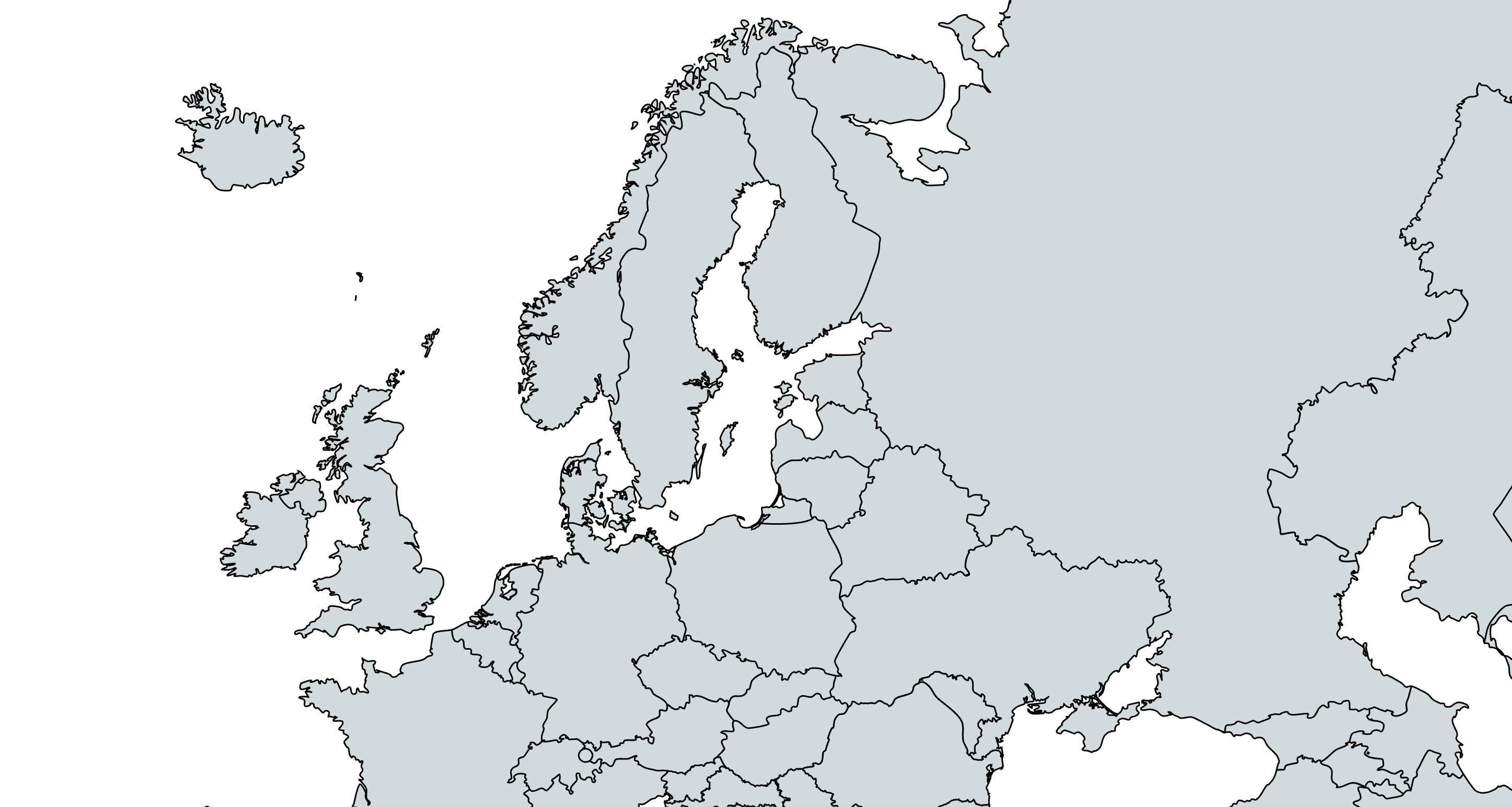
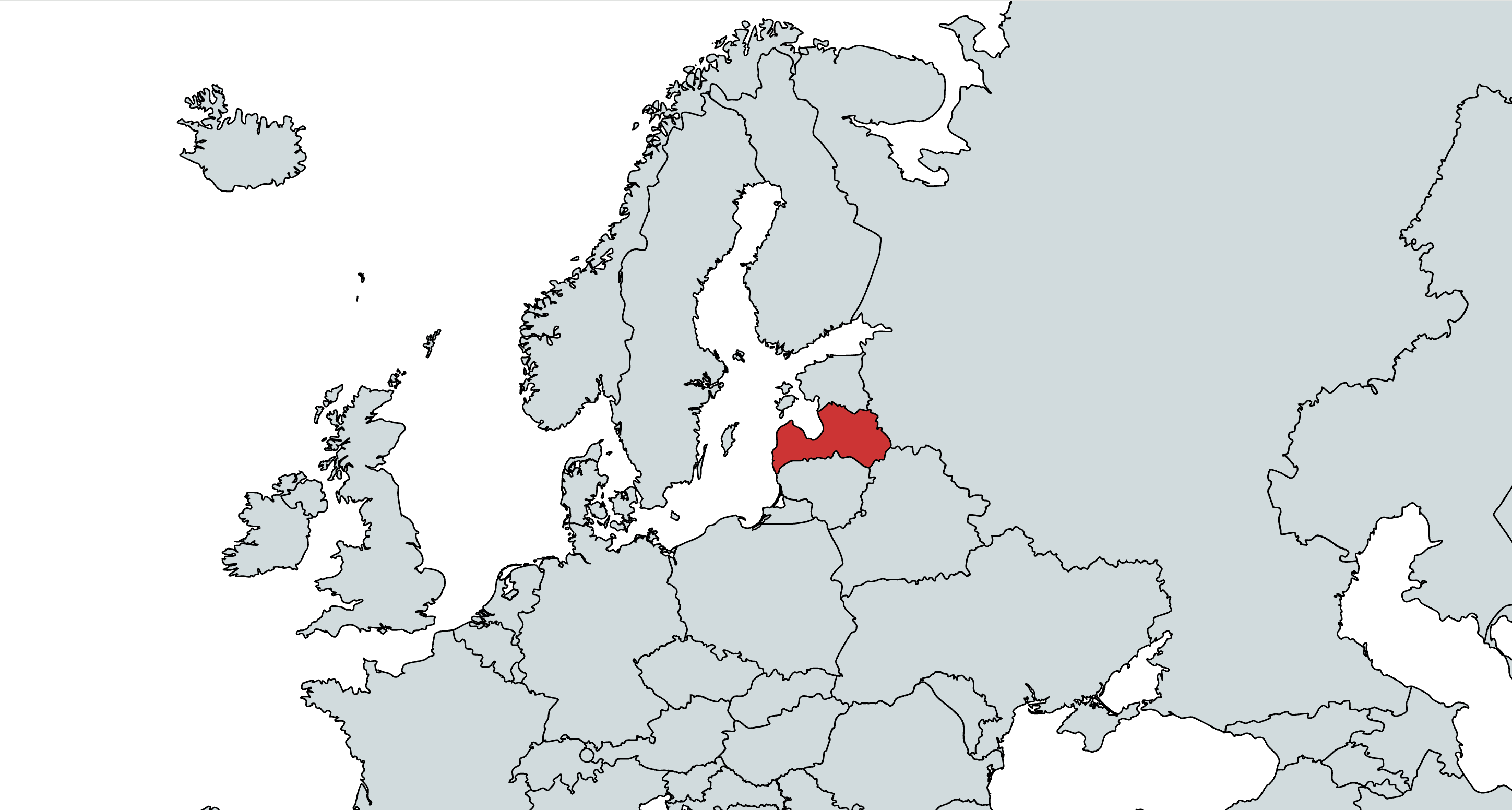
If the next military conflict with Russia will start in the Baltic, and that’s a fair bet, it might be useful to have just a bare, working knowledge of the three Baltic countries, former Soviet republics all.
That big bite out of the country is the Gulf of Riga and that’s where the capital, Riga, is. It’s a big, busy, muscular place, an old Baltic trading port that joined the Hanseatic League in the 13th century. Located at the mouth of the Daugava River, trading goods from the Russian interior and northern Europe flowed came naturally to it, and today it’s bigger than the other two capitals, Vilnius and Tallinn.
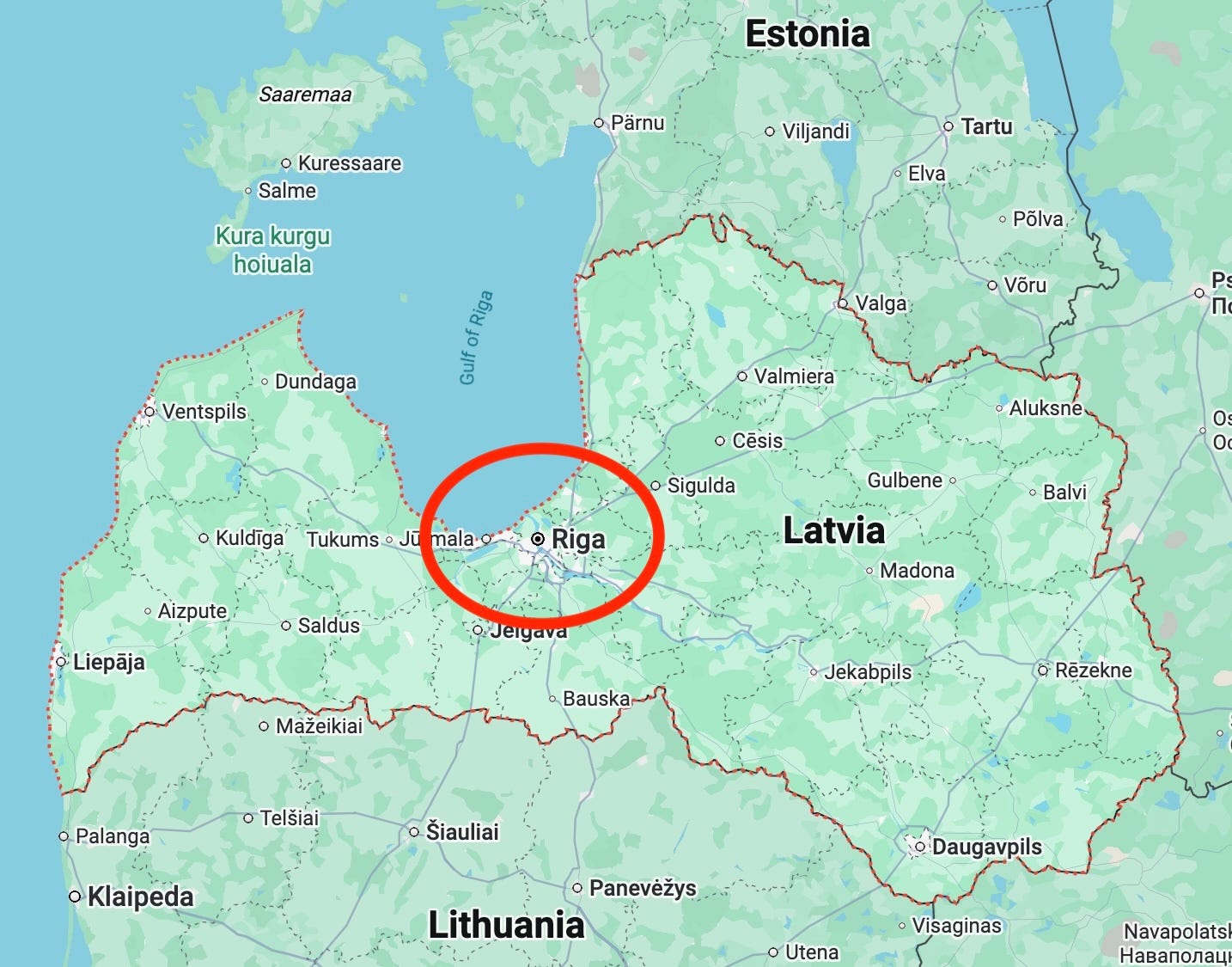
To me, Riga feels maybe not so much like the capital of the Baltics, but in US terms, maybe a little like an ancient Chicago, the Baltics’ big, muscular working waterfront town.


•••••

If you’re reading this as an email, be aware that your provider may clip the article before the end. Try clicking on ‘view entire message’ to see the whole thing, or you can always read everything at Common Sense and Whiskey online.
•••••
Next Friday I’ll share a column about giraffes. Here are some stars of next week’s show. See these and tons more wild animals in the Wildlife Gallery at EarthPhotos.com, along with something like 15,000 more of my travel photos.







•••••
That’s it for today. I’m working on a longer report about what might come next after NATO, and that’s taking most of my writing time for now, so next Friday I’ll share one of my most read ever columns, originally published in 2018. It’s one in a series of African travelogues.
Then the following week I’ll see you twice. Thanks for your time, and let me hear what you think. Please pass this article around and invite your friends to subscribe. Substack authors, feel free to restack this or any other column on your own Substack anytime.
Content on Common Sense and Whiskey is free. There’s no paywall, but if CS&W is beneficial to you, please subscribe for just $5 a month or $50 a year. Big American media is increasingly falling under the control of government-friendly oligarchs. The future is on Substack and platforms like it — please invest in independent writers you trust. We’d all appreciate your support.
Cheers,
Bill
