

What Just Happened #89
American Distress, Hungary Rising

Welcome. Common Sense and Whiskey goes deeper than the headlines on a few stories a week, in a presentation that busy people can absorb quickly. It’s a short, sharp look at the world out there.
If you’re reading this as an email, have a look at the online version at CommonSenseandWhiskey.com, where all CS&W content is available, and if you like what you see, please subscribe. Talk to me in the comments section or directly, at BillMurrayWriter (at) gmail.com. Let me know what you think.

The Trump administration’s ominous and unconventional diplomacy moves ever forward. This week we learned that JD Vance’s visit to Budapest - to campaign for Viktor Orbán - on behalf of Donald Trump - didn’t do anything but embarrass all three. Secretary of State Marco Rubio made a similar campaign swing to Hungary as part of his Munich Security Conference itinerary on February 16 and 17, also to no effect.
On election day Trump ‘truthed’ that Orban was a “TRUE FRIEND, FIGHTER, AND WINNER” and that if Hungarians would just reelect Orbán, Trump would use the “full Economic Might of the United States” to help his authoritarian, Putin-friendly friend. In the run-up to election day he had similar messages for Orbán supporters on X.
Perhaps the president would have made the trip to Budapest himself if he weren’t bogged down in this inconvenient business of threatening civilizational erasure.
The administration’s National Security Strategy, issued in early December last year, warned of European civilization erasure. It spoke of the “real and … stark prospect of civilizational erasure” brought on by the usual right wing bugbears, “activities of the European Union,” presumably malign migration policies and a novel one, the loss of European self-confidence.
Now Trump’s nihilist side emerges. With Iran, he threatened to carry out a civilizational erasure of his own, not incremental like in the Europe of his imagination, but a one-day affair he could carry out himself.
In his feud with the pope this week, the president again demonstrated his striking lack of grace under pressure.
But the most troubling revelation so far in this war with Iran is Trump’s unsteady hand as a commander in chief. Apply real time, international grade pressure, and our commander-in-chief, to use the academic term, freaks out.
Richard Nixon’s madman theory - not employed as a negotiating instrument but as a real, actual personality trait of the negotiator - is not what you want to see in real-life international disputes.
•

HUNGARY BELOW THE HEADLINES: It’s been almost a week by now and we’ve all read the play-by-play about last Sunday’s Hungarian election day. Let’s widen the lens.
Lily Lynch writes this week about Viktor Orbán’s early attempts to build in Budapest a “new network of think tanks, publications, and fellowships … created with the aim of nurturing thinkers on the right. In a sea of ‘globalist liberalism’, Hungary would serve as a bastion of conservative freedom, unencumbered by the hysterical dictates of Woke.”
This seems to be an initiative of Orbán himself, begun about the time he returned for his second (and currently ending) stint as Prime Minister in 2010, designed to train and fund a new cadre of conservative students, writers and policy people.
The American right began to take notice a little before 2020, and Orbán’s team worked that connection, increasing their offerings in English. Not long after came the first CPAC Budapest, a two-day conference held in May 2022.
And today, it just so happens that JD Vance is the American official closest to the Hungarian network of Putin-friendly illiberals. The billionaire Peter Thiel, a co-founder of PayPal and Palantir Technologies, who championed Vance’s rise to the vice presidency, is involved as well, funding a “a secretive donor group that Vance co-founded,” which in turn is headed by Chris Buskirk, who is a member of the Mathias Corvinus Collegium, one of Orbán’s original vehicles for cultivating a new cadre of Hungarian conservatives. It is also a Budapest foundation “promoting MAGA and pro-Russian views,” the Washington Post reported last weekend.
Bookmark that for the future. JD Vance is the founder of a Budapest-based secret donor group promoting MAGA and pro-Russian views.

WHAT WE’VE LEARNED: Russia’s disinformation efforts continue to flounder on the eastern side of Europe. They failed to elect hard-right nationalist George Simion in Romania’s presidential election in May last year. The winner was Bucharest mayor Nicușor Dan, the pro-EU, anti-corruption candidate.
In Moldova’s parliamentary elections last September, the governing coalition neatly turned away Russia’s substantial vote buying challenge, and now Moscow has failed to reelect Orbán, Moscow’s (and Washington’s) man in Budapest.
Magyar was a formidable candidate who ran a canny, disciplined campaign. Last month he refused to be drawn by Orbán’s last-minute desperation attempt to lure Magyar off message and into a manufactured scandal involving Ukrainian money.
His message discipline was relentless. I recognize not everyone will see this as necessarily complimentary, but his campaign exhibited Obama’s sang-froid.
Magyar will now try to free up suspended EU aid to Ukraine. A lot’s at stake. As Politico reports, “Hungary is missing out on about €10.4 billion in Recovery and Resilience Facility loans, €7 billion in cohesion funds and €16 billion in SAFE loans earmarked for defense. Budapest is also paying €1 million per day to the European Court of Justice for violating the bloc’s migration policies.”
Which is all a measure of how abject the Orbán government had become - foregoing an estimated $18 billion in funding to its own citizens - in support of Vladimir Putin.
TISZA’S PROSPECTS: Viktor Orbán sounded almost humble on Thursday. He said he would remain head of Fidesz in opposition, and that Fidesz required a “complete renewal.”
But he also took responsibility for his loss, saying “I have to admit that the opponent’s message was stronger.” Those remarks were intriguing for what they may say about Hungary’s political future.
When Donald Tusk took office as Poland’s Prime Minister in December, 2023, he faced the challenge of dismantling a corrupt, anti-democratic governing structure put in place by the party he defeated, the Law and Justice Party (PiS in the Polish acronym).
Over the previous eight years PiS had embedded loyalists across key governmental bodies like Poland’s Constitutional Tribunal, which reviews whether laws pass constitutional muster, the Public Prosecutor’s Office and public media. PiS also left behind the reigning president, who could block legislation.
Opponents decried Tusk’s early and aggressive efforts, calling them illegal. Tusk’s Civic Platform coalition knew it had to move fast, while it still had electoral momentum. But to argue ‘we have to do possibly illegal things while we’re still popular’ just wouldn’t do.
Instead, they argued that the bodies they targeted had been illegally packed and were thus already functioning illegally. Momentum, in this case, was framed as necessity. And while it wasn’t pretty, it mostly worked.
Péter Magyar must dismantle a similar, even more entrenched bureaucracy, but with a key difference: Where Tusk won a tight, hard fought election, Magyar’s Tisza brings with it a two-thirds parliamentary majority. That gives it authority to amend the constitution, and thus more room to maneuver lawfully than Tusk ever had in Poland. (Tusk “Tusk posted a video of himself telling the incoming Hungarian leader over the phone that he was so happy: “I think I’m happier than you, you know.”)
Péter Maygar will see the same value in moving fast as Tusk. Early, decisive moves help to demonstrate the old system is a thing of the past. In this context, Viktor Orbán’s (almost) contrition in his first post-election remarks on Thursday were interesting. Because just how much he may now feel chastened, and how much Fidesz stands in the way of reform, will be an early indicator of the spirit of Hungary’s immediate political future.
•
ECHOES OF 1989: There were joyous scenes across Budapest on election night, and you’ve got to give it to them, the city divided by the Danube provides a photogenic setting for pageantry. Magyar’s celebration on the waterfront in Buda, with the backdrop of the river and the brightly-lit parliament building in Pest, looked positively radiant.
It wasn’t hard to hear echoes of 1989, when the Soviet system still stood across Eastern Europe. Hungary provided the first actual breach of the Iron Curtain, three months before the fall of the Berlin Wall.
The atmosphere had been charged all summer long, as pro-European reformers sensed Soviet weakness. On August 19th organizers held a ‘Pan-European Picnic’ to stage a symbolic opening of a border gate in open Hungarian countryside, a field at the edge of a forest outside the town of Sopron.
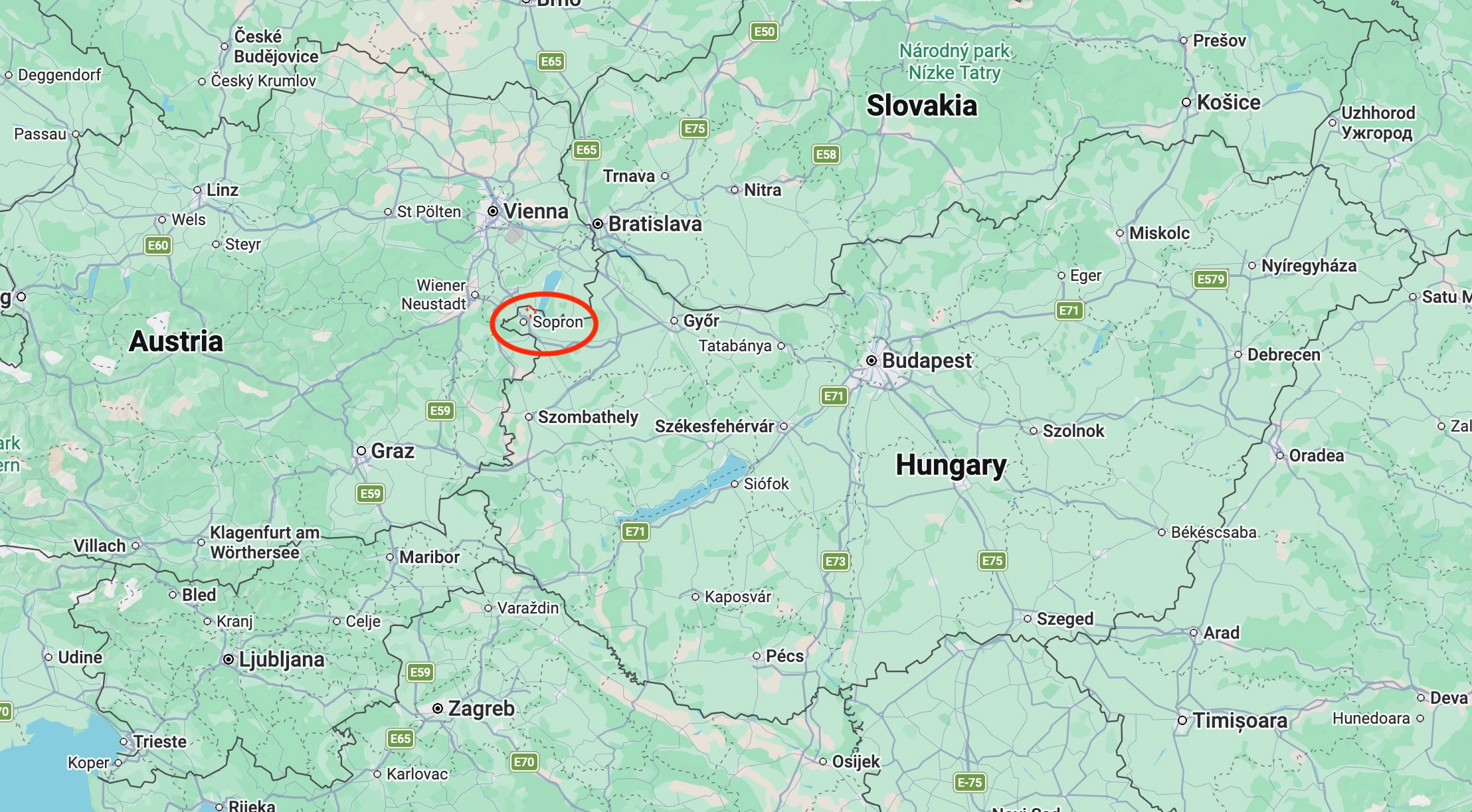
East Germans could travel legally to Hungary, a fellow Soviet ‘satellite,’ to use the term of the day, and a large group of predominantly East Germans, in Hungary for summer holidays, gathered near the border. In the moment, when the fence was opened, several hundred of them ran across the border into Austria. Uncertain Hungarian border guards did not stop them.
Under West Germany’s 1949 Basic Law, citizens of East Germany were automatically entitled to citizenship in West Germany. And Sopron was less than sixty miles from West Germany. Via Vienna, you could make it by car in three or four hours. Which explains why most of those who crossed that day were East Germans.
Within a month Hungary had formally opened its border with Austria, and East Germans left en masse, with tens of thousands crossing over the next weeks.
That summer Viktor Orbán was not yet in government. He was a 26-year-old opposition activist in Budapest, one of the founders of a liberal, anti-communist youth movement called Fiatal Demokraták Szövetsége (Alliance of Young Democrats), shortened to Fidesz.
BUT IS IT A MOVEMENT? JD Vance wasn’t the only far right leader to travel to Budapest on Orban’s behalf. Marine Le Pen of France, Dutch Freedom Party leader Geert Wilders, Italy’s Matteo Salvini and Belgian far-right leader Tom Van Grieken all campaigned for Orbán at the so-called Patriots’ Grand Assembly in Budapest in March.
Can we combine those visits, Orbán’s crushing loss, those other authoritarian defeats in Romania and Moldova, Giorgia Meloni’s recent setbacks - she championed and lost a national referendum last month on judicial reform - and her feud with Donald Trump over the pope, and Trump’s nobody-left-but-the-die-hards poll numbers, to describe a budding trend? A qualified maybe.
Like Nicușor Dan’s in Romania, Magyar’s campaign relentlessly pounded corruption, over and over and over again. One way to find out would be for anti-authoritarian candidates elsewhere to pick up Magyar’s relentless campaign message against cronyism and corruption, hammering it over and over and over again, to see if it that theme can consolidate wider support.
The next attempt by the far right National Rally to win the French presidency will be the marquee election event in Europe next year, and National Rally’s leader, Marine Le Pen, is a convicted embezzler.
There are other elections. Robert Fico must call parliamentary elections by September next year in Slovakia, and Putin-friendly Aleksandar Vučić must defend his presidency by the end of next year in Serbia.
•••••

If you’re reading this as an email, be aware that your provider may clip the article before the end. Try clicking on ‘view entire message’ to see the whole thing, or you can always read everything at Common Sense and Whiskey online.
•••••
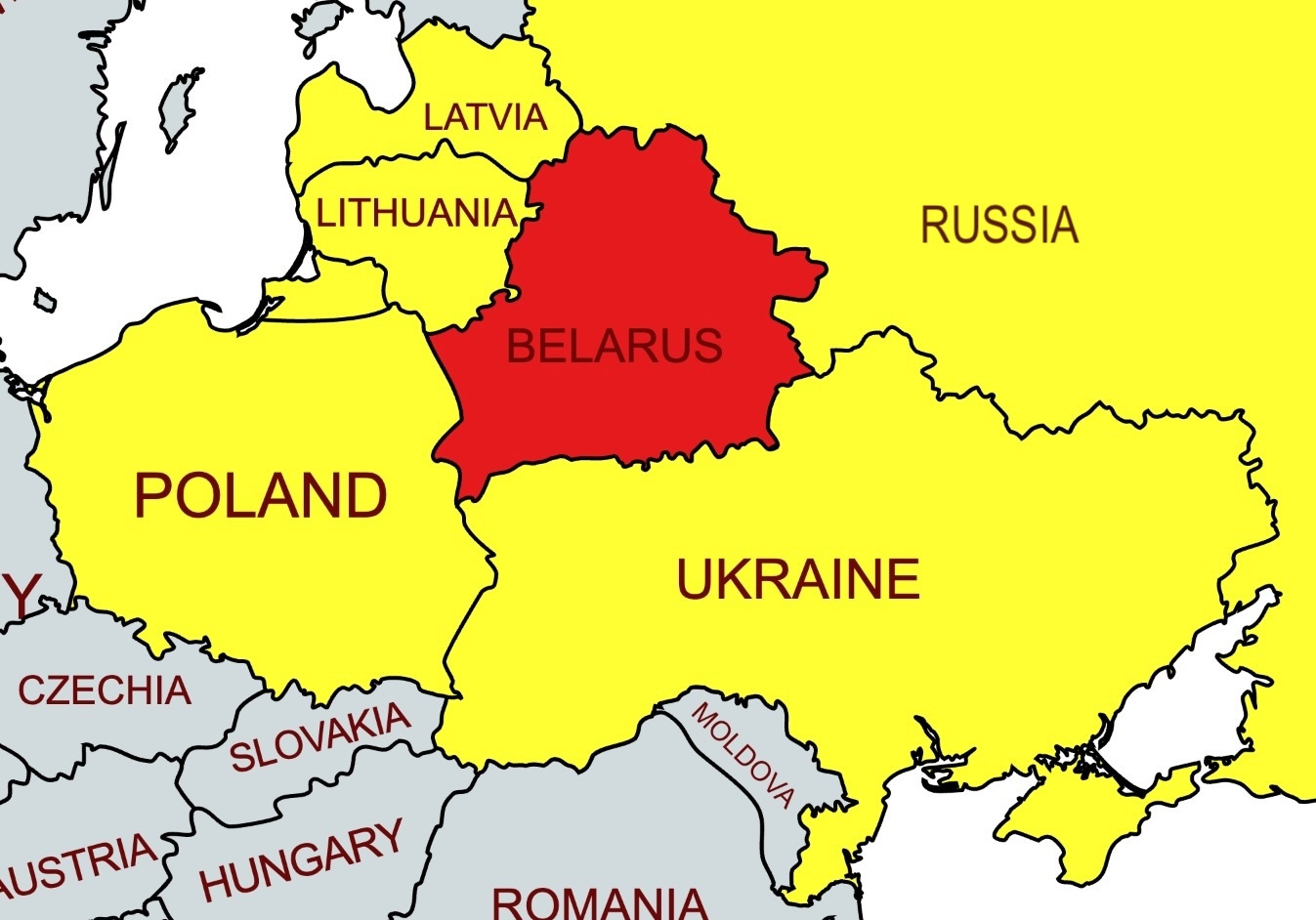
BELARUS: Campaigning for Viktor Orbán isn’t the only area in which the Trump administration has given European leaders pause in the past month. Europe’s decision-makers are troubled by the Trump administration’s unilateral attempts at rapprochement with Belarus.
In a negotiation with the Belarusian leader on March 19, U.S. special envoy John Coale heaped praise on Belarusian autocrat Alexander Lukashenko and the “great value” of his opinion on global issues. Beyond diplomatic-speak, if Mr. Coale believes that, he is unique in his view.
Within the last month a number of political prisoners have been released by Minsk in return for a relaxation of American banking, aviation, and other sanctions. Coale also claimed to be making “great progress” in “reconciling” Belarus and its neighbor Lithuania. I’m skeptical.
(Coale is not a career foreign service officer, but another of Trump’s acquaintances turned negotiator, “a swaggering plaintiff’s lawyer who once represented Trump.” Here he serves, in the administration’s style, to strike a transactional bargain with Minsk.)
Coale reportedly offered substantial further sanctions relief if the remaining 900-odd political prisoners held in Belarus are freed this year. That would obviously be good for those prisoners and their families, but otherwise it sends a politically ominous signal.
Belarus is a Russian satrapy and has been the tip of Russia’s spear in hybrid warfare attacks against its neighbors Lithuania, Latvia, and Poland in the 2020s. It has weaponized migrant flows into the EU by actively bringing migrants from the Middle East to the borders with Lithuania, Latvia, and Poland.
The national air carrier Belavia and other airlines dramatically increased flights into Minsk from cities like Baghdad, Istanbul, Damascus, and Dubai in the summer of 2021. Middle Eastern travel agencies sold packages that included visas, flights, and onward transport, and their counterparts in Belarus issued invitation letters for tourist visas, arranged accommodation and transport. Belarusian security forces were documented pushing them toward EU border crossings, often preventing them from returning.
In 2023, Vladimir Putin announced that Russia would move nuclear warheads to Belarus, with delivery systems already present and Belarusian crews being trained. There is scant visual evidence, naturally, but Lukashenko has claimed that “several dozen” warheads arrived.
More recently Belarus has sent fleets of balloons carrying contraband cigarettes into Lithuanian airspace, triggering security responses, testing airspace monitoring and generally jangling nerves. Authorities in Vilnius have accused Minsk of seizing hundreds of Lithuanian trucks.
Allies once expected the United States to deter the regime from stunts like these, not to play nice with Lukashenko. Trump administration motives are unclear. Speculation ranges from pursuit of a deal involving Belarus’s potash industry, which has become newly interesting as the war in the Gulf likely sends fertilizer prices soaring. Others see it as a dry run for a future rapprochement with Moscow.
As an American way to pull NATO allies apart, it’s effective whether or not that’s its purpose. Business lobbies in Lithuania and Latvia would love to reopen transit routes with Belarus, for example. It is not just Putin who plays divide and rule in Europe; Trump likes that tactic, too.
[Reporting from Ed Lucas informs this story]
EMPTY STREETS, EMPTY SQUARES IN MINSK
What I saw on my trip to Minsk, August, 1989. Not a lot of life.


•••••
TWO LAST THOUGHTS: JD Vance has traveled to Budapest and Islamabad this month with dubious results. In Hungary he imagined himself as key to an Orbán victory; in Pakistan he thought he could outsmart a delegation of shell-shocked Iranians. This week Vance told a poorly attended rally for college supporters in Athens, Georgia that cutting off aid to Ukraine is “one of the things I’m proudest that we’ve done in this administration.” He’s wrong about that, too.
AND FINALLY: I don’t think I’m alone in having a hard time figuring out NATO Secretary General Mark Rutte, but I’ve just about come around to a theory. I propose that Rutte has adopted a slogan from the Biden administration for addressing NATO’s biggest geopolitical challenge, Russia’s war on Ukraine: “As Long As It Takes.”
Call it his intentional, very public, personal debasement strategy:
Keep smiling no matter the facial fatigue.
Consider clinching your teeth and praising as just another occupational hazard.
Sacrifice your personal dignity for the sake of the alliance.
As the longest serving Prime Minister in the Netherlands - presiding over four consecutive coalition governments between October 2010 and July 2024 - Rutte was lauded for his ability to forge and maintain those coalitions. Here, let’s posit that he’s just remaining true to form.
It has been easy to shake your head and deride the NATO chief, especially compared to his more taciturn predecessor, the Norwegian Jens Stoltenberg. But in fact, if your dead serious aim is DO NOT LET THE NATO ALLIANCE COLLAPSE, Rutte just might be the right man in the moment. So far, at least, NATO still has a heartbeat.
•••••
That’s what we’ve got this week. Thanks for your time, and let me hear from you. Please pass this article around and invite your friends to subscribe. Substack authors, feel free to restack this or any other column on your own Substack anytime.
Content on Common Sense and Whiskey is free. There’s no paywall, but if CS&W is beneficial to you, please subscribe for just $5 a month or $50 a year. Big American media is increasingly falling under the control of government-friendly oligarchs. The future is on Substack and platforms like it — please invest in independent writers you trust. We’d all appreciate your support.
Cheers,
Bill

I appreciate this perspective, that the xenophobic tide might be turning in Europe. Friends traveling there tell me they find strong conservative feelings everywhere and that Europeans find themselves more altered by immigration than Americans feel we are.
I guess this all might turn out differently if we still had a professional Foreign Service on the case? Real estate agents and weekend News Hosts can only be expected to do so much.
Another great write-up, Bill. Keep 'em coming!