

What Just Happened #85
Munich

Welcome to Common Sense and Whiskey. Thank you for visiting. Today we wrap up Munich, consider what the changing security environment means in different parts of the world, and urge you never to become a politician in Peru.
Common Sense and Whiskey goes deeper than the headlines on a few stories a week, in a presentation that busy people can absorb quickly. It’s a short, sharp look at the world out there.
If you’re reading this as an email, maybe have a look at the online version at CommonSenseandWhiskey.com, where all the content is available, and if you like what you see, please subscribe. Talk to me in the comments section or directly, at BillMurrayWriter (at) gmail.com. Let me know what you think.
•••••
By now we’ve heard enough about this year’s Munich Security Conference to last until next February. Instead of another rehash, just a few words. Okay, several words.
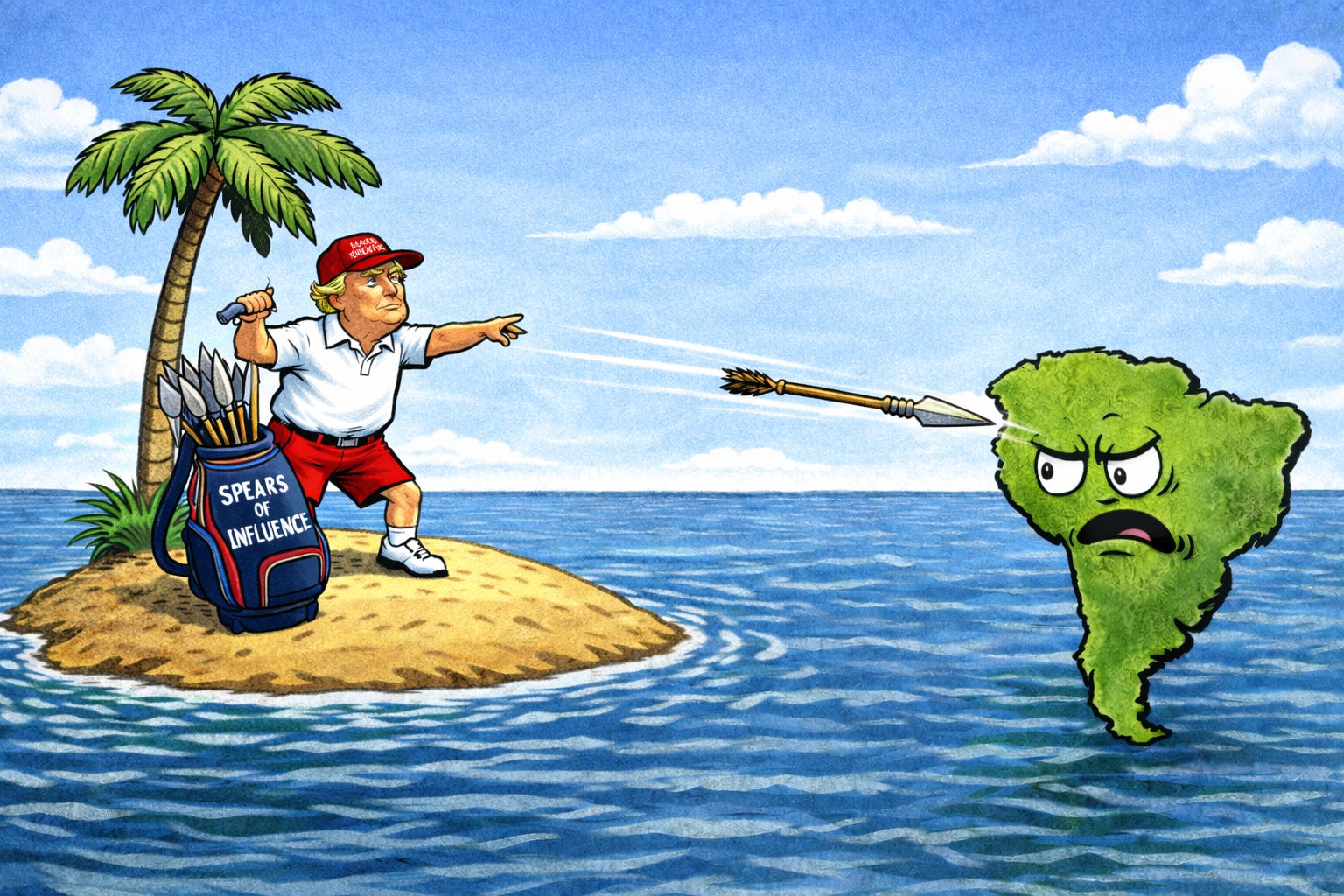
First there’s the broad question of security - especially among governments allied with the United States for eighty years - and the ways the distribution of power around the world is changing. It’s not just notions of who wields power, but who will be expected to.
The administration isn’t formally proposing that hegemons should seize control of their own spheres of influence (SOIs). Rather, it’s demonstrating in word and deed that it thinks SOIs are a pretty good policy idea it wants to explore.
SOUTH AMERICA AND THE CARIBBEAN: Hence the new Trump-branded war paint on the Monroe Doctrine, the seizure of Nicolás Maduro in Caracas, the open threats against Mexican drug gangs, Washington’s intention to keep tariff pressure on states exporting oil to Cuba, and the hostile rhetoric against Gustavo Petro, the president of Colombia.
Like a hegemon, President Trump summoned Petro to Washington. Prior to the meeting Trump said Colombia was “run by a sick man who likes making cocaine and selling it to the United States.” Asked if his hostility implied a U.S. military operation in Colombia after Venezuela, Trump responded, “It sounds good to me.”
The pressure on Petro seemed to lessen after his Washington visit.earlier this month. Both leaders described the encounter as ‘respectful.’ The US needs Colombia’s counternarcotics help, and the last thing Petro’s government needs is US hostility in the run up to the May election there.
•••••
Outside the US’s sphere of influence, an interested aspiring hegemon, say, a hundred miles across the Taiwan Strait, might reasonably be encouraged to test the waters. As Tom Waits sang in a rather different context, ‘fishing for a good time starts with throwing in your line.’
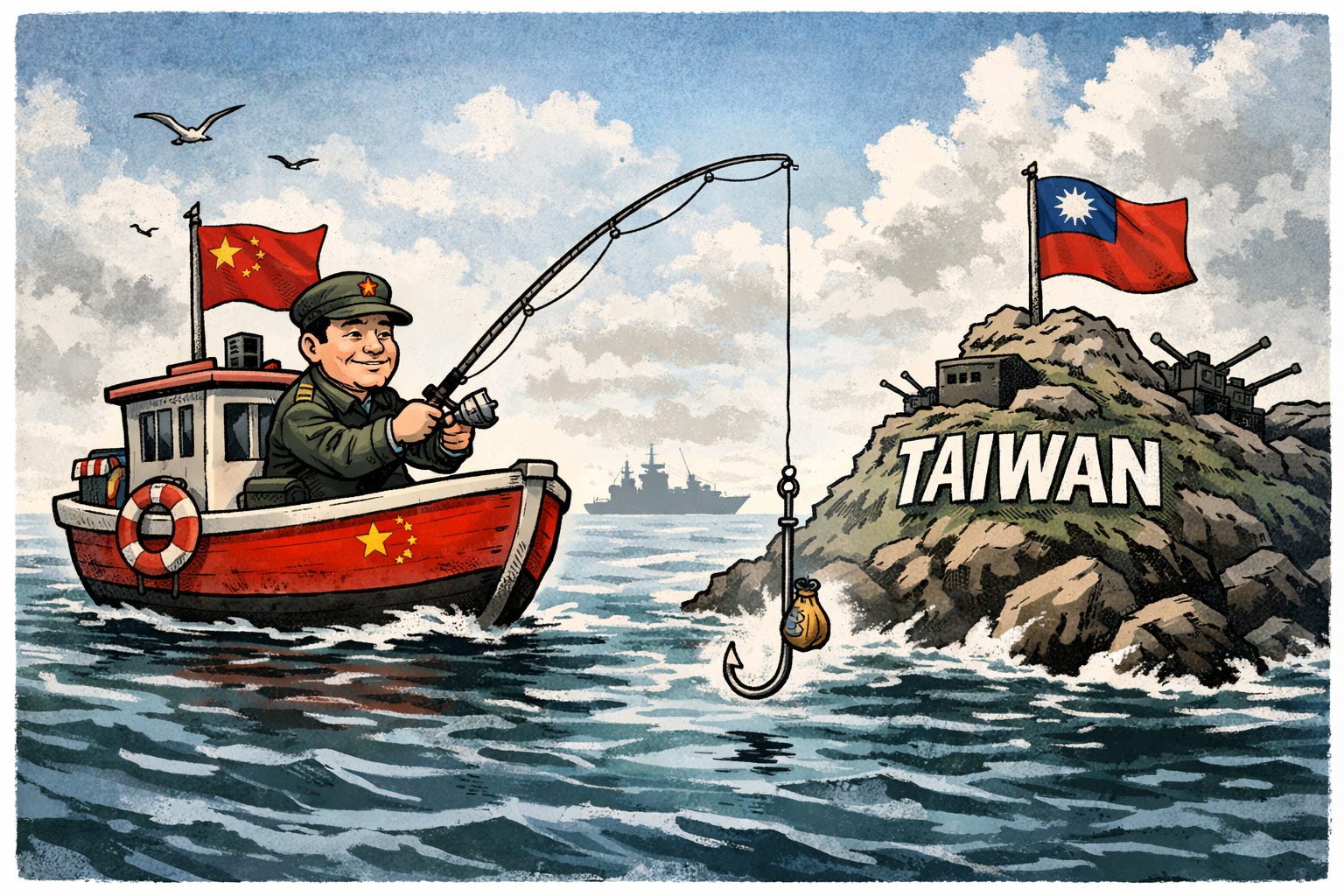
REGIONAL HEGEMONS: Smaller state leaders in some of the world’s tougher neighborhoods, whether legitimately elected or autocratic, have played this game down through time. On the current world map, note Armenia and Azerbaijan, Rwanda and Congo, India and the rest of South Asia, Turkey and Iran and their region, and the entire Horn of Africa. And there’s one more, a would-be hegemon whose dreams of a restored empire may be beyond its capabilities, as it struggles against Ukraine.
MIDDLE POWERS: In Mark Carney’s widely heralded ‘rupture’ speech at Davos, he lamented that “Great powers have begun using economic integration as weapons, tariffs as leverage, financial infrastructure as coercion, supply chains as vulnerabilities to be exploited.”
He noted that
“The multilateral institutions on which the middle powers have relied – the WTO, the UN, the COP – the architecture, the very architecture of collective problem solving are under threat.”
He seemed to be sounding out whether middle-sized states - read that Europeans, primarily, but not just Europeans - are prepared to band together to do the enforcement that big hegemons can do on their own.
This week Carney set up Canada’s first ‘Defense Industrial Strategy’ through which he hopes to reduce reliance on the United States. Canada has become the first non-EU member of the European Union’s Security Action for Europe defense initiative, and has proposed to be ‘a bridge’ between the existing Asia-Pacific CPTPP trade bloc that includes Canada, Japan, Singapore, Mexico and others, and the ten year old EU–Canada CETA agreement.
AND THE BANKERS?: Carney is throwing a handful of spaghetti at the wall, with what feels like some urgency. He is both the former Governor of the Bank of Canada and former Governor of the Bank of England. At Davos, Carney stood squarely in front of his people - bankers and government financial types. He has put it all out there. Now he, and we, watch and see.
AND EUROPEANS LEADERS? Munich was the Europeans’ opportunity to pose as real, independent players rather than US wingmen. Many spoke good and brave words, fewer seemed to mean them a hundred percent, and not many looked comfortable in the role.
Friedrich Merz, whom you might be forgiven for thinking has been the Chancellor of Germany for a decade, has in fact only been leader for a little over nine months, and sometimes it looks that way. Merz’s approach is bold oratory and striking assertions followed by … not much.
Recall that Merz warmed Ukrainian hearts prior to his taking office by seeming to promise Kyiv German Taurus KEPD 350 missiles. Nine months later, the follow up? “No final decision has been made” on actually delivering them.
At his spotlight role at Munich, as leader of the host country, Merz came out swinging, telling the conference organizer,
“You’ve chosen a grim motto for this conference, “under destruction.” And it probably means that the international order based on rights and rules is currently being destroyed. But I’m afraid we have to put it in even harsher terms. This order, as flawed as it has been even in its heyday, no longer exists.”
Other European leaders have their own problems being tough guys. Emmanuel Macron’s problem is his position of real political weakness, with a barely functioning government back home, backed up by a national pocketbook too empty to put forward new proposals.
Kier Starmer? The UK PM was under the gun again late this week when Donald Trump attacked his Chagos Islands deal. Starmer just can not win. He endures criticism from the US administration despite his hopes of maintaining his ‘special relationship,’ and, like Macron, faces a real challenge from the far right back home.
Pedro Sanchez? Although he was sent straight from Central Casting, the Spanish leader’s costume doesn’t fit. He’s been handed lines from a whole different script.
At the end of the meeting the Financial Times’s Gideon Rachman summed things up as well as anybody:

RUBIO CAMPAIGNS FOR ORBAN:


Veterans of past Republican administrations who broadly represent the pre-Trump Republican party approved of (and some applauded) Marco Rubio’s Munich speech. Richard Haass, a National Security Council staffer under President Reagan who went on to become president of the Council on Foreign Relations, wrote on Substack Notes that:
“Sec of State Marco Rubio delivered a measured, reassuring address at the Munich Security Conference. His answer to a question on Ukraine was similarly thoughtful & balanced. The only problem, one that he could not deal with and in some ways highlighted, was the gap between his words and much of the foreign policy of the administration he works for.”
Eliot Cohen, Counselor in the Department of State under George W. Bush, fawned over Rubio’s “urgently coaxing” tone in an article for the Atlantic:
“He spoke of our ‘intertwined destiny’ and asserted that ‘the fate of Europe will never be irrelevant to our own.’”
The mainline consensus had Rubio smoother than Vice President JD Vance, the previous year’s main American speaker. In his 2025 Munich speech, Vance committed small acts of speechifying arson and pointedly met with Alice Weidel, the co-leader of Germany’s far right AfD party later that same day - just nine days before German federal elections.
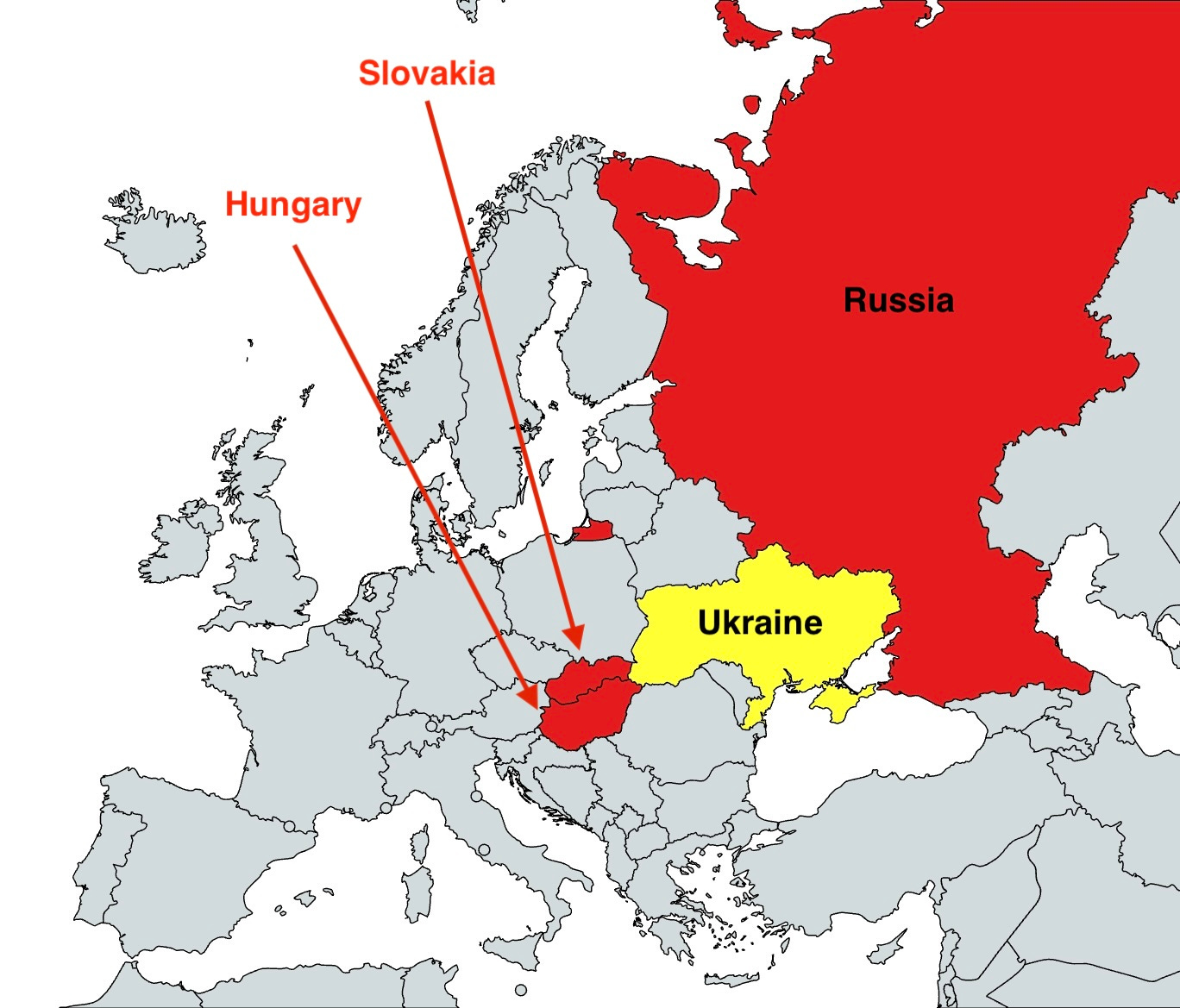
But here’s the thing about Rubio: just after ‘reassuring’ European leaders he flew off to meet Prime Minister Robert Fico of Slovakia, followed by a campaign visit to Budapest to endorse Prime Minister Viktor Orbán.
Most of the audience Rubio ‘reassured’ in his speech at Munich consider Fico and Orbán the two most obstructionist leaders in Europe. Orbán has regularly blocked or delayed EU sanctions against Moscow, claiming they hurt Hungarian consumers or its economy, while Fico, newer in office, quickly reversed Slovakia’s military aid to Ukraine.
Both engage directly with Moscow. Other European leaders see Orbán and Fico as obstacles to deeper EU unity against Russia.
There are many small countries in the east of Europe, so here’s a reminder of which two we’re talking about here:
Rubio skeptics will recall that Rubio once aimed pointed criticism at the man he now serves as Secretary of State. That’s only one shift in a lengthening line. In 2019, Rubio joined three other members of the Senate Foreign Relations Committee in signing the following letter:

In it the Senators “express concern about Hungary’s downward democratic trajectory” and note that “Hungary has failed to diversify its energy resources away from Moscow.” They charge that “Under Orban, the election process has become less competitive and the judiciary is increasingly controlled by the state.”
But Monday in Budapest, as the FT reported:
“Marco Rubio has praised Viktor Orbán’s leadership as “essential” to US interests, saying Donald Trump is “deeply committed” to the Hungarian premier’s success ahead of critical parliamentary elections. The US secretary of state hailed a “golden era of relations” between the US and Hungary as he stood beside Orbán….”
Rubio went on, “I can say to you with confidence that President Trump is deeply committed to your success,” and that “We are entering this golden era of relations between our countries . . . because of the relationship that you have with the president of the US.”
The problem with Marco Rubio is which Rubio to believe - the diplomat in Munich or the campaigner for Orbán in Budapest.
•••••

If you’re reading this as an email, be aware that your provider may clip the article before the end. Try clicking on ‘view entire message’ to see the whole thing, or you can always read everything at Common Sense and Whiskey online.
•••••
BAD RUSSIA STAT OF THE WEEK:
From Janis Kluge at the German Institute for International and Security Affairs, Via X:


•••••
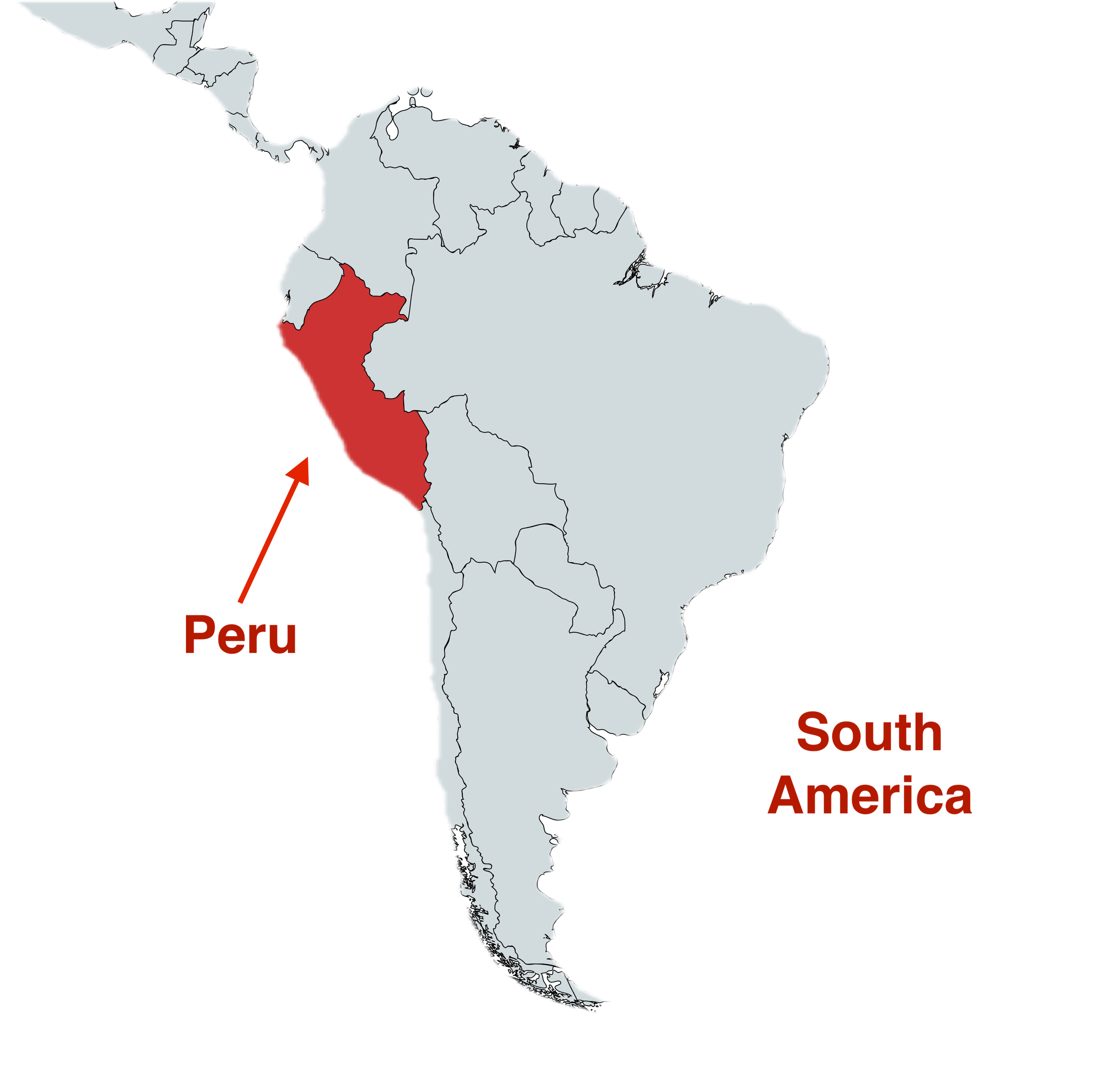
DON’T EVER BECOME PRESIDENT OF PERU:
Since July 2016:
1) President Pedro Pablo Kuczynski resigned to avoid impeachment amid a corruption scandal. Served in office 1 year, 7 months, 23 days
2) Martín Vizcarra removed by Congress for alleged corruption. Served in office 2 years, 7 months, 17 days
3) Manuel Merino resigned amid protests and violence after five days
4) Francisco Sagasti served as a transitional figure after Merino’s resignation and left office after the next election. Served in office 8 months, 11 days
5) Pedro Castillo impeached and removed on 7 December 2022 after attempting to dissolve Congress and rule by decree, was arrested and later sentenced to prison. Served in office 1 year, 4 months and 9 days
6) Dina Boluarte assumed office after his removal. was impeached for “permanent moral incapacity.” Served in office 2 years, 10 months, 13 days
7) José Jerí ruled from 10 October 2025 until Tuesday, when Congress censured him which, given his interim status, effectively removed him as president. Served in office 4 months 7 days.
The next presidential election is Sunday, April 12, 2026. Any runoff would likely be held in early June. As of midweek there were 36 presidential candidates.
•••••
AND FINALLY: Belarus’s participation in Donald Trump’s Board of Peace is off to a tough start.

Is this a lament or a sigh of relief? Maybe it’s what happens when your immigration people don’t want to let bad guys in and your State Department doesn’t tell them that for purposes of the Board of Peace, Belarus is not a bad guy.
•••••
Thanks for reading all the way to the end. Unless news intervenes, I think we’ll have a travel-related article focused on Greenland here next Friday. See you then.
Please send feedback. If you like it, please subscribe. Good weekend.
Content on Common Sense and Whiskey is free. There’s no paywall, but if you subscribe for $5 a month or $50 a year, next time I’m in town I’ll come over and wash your car. Maybe I will.
Cheers,
Bill
