

What Just Happened #84
So Much News, So Little Time

Welcome to Common Sense and Whiskey. Thank you for visiting. Today, several quick takes from Russia, Serbia, Japan, Hungary, Montenegro and Portugal, and we’ll follow JD Vance around the South Caucasus. On Sunday I’ll publish an argument against using spheres of influence as an organizing system for international relations.
Common Sense and Whiskey goes deeper than the headlines on a few stories a week, in a presentation that busy people can absorb quickly. It’s a short, sharp look at the world out there.
If you’re reading this as an email, maybe have a look at the online version at CommonSenseandWhiskey.com, where all the content is available, and if you like what you see, please subscribe. Talk to me in the comments section or directly, at BillMurrayWriter (at) gmail.com. Let me know what you think.
•••••
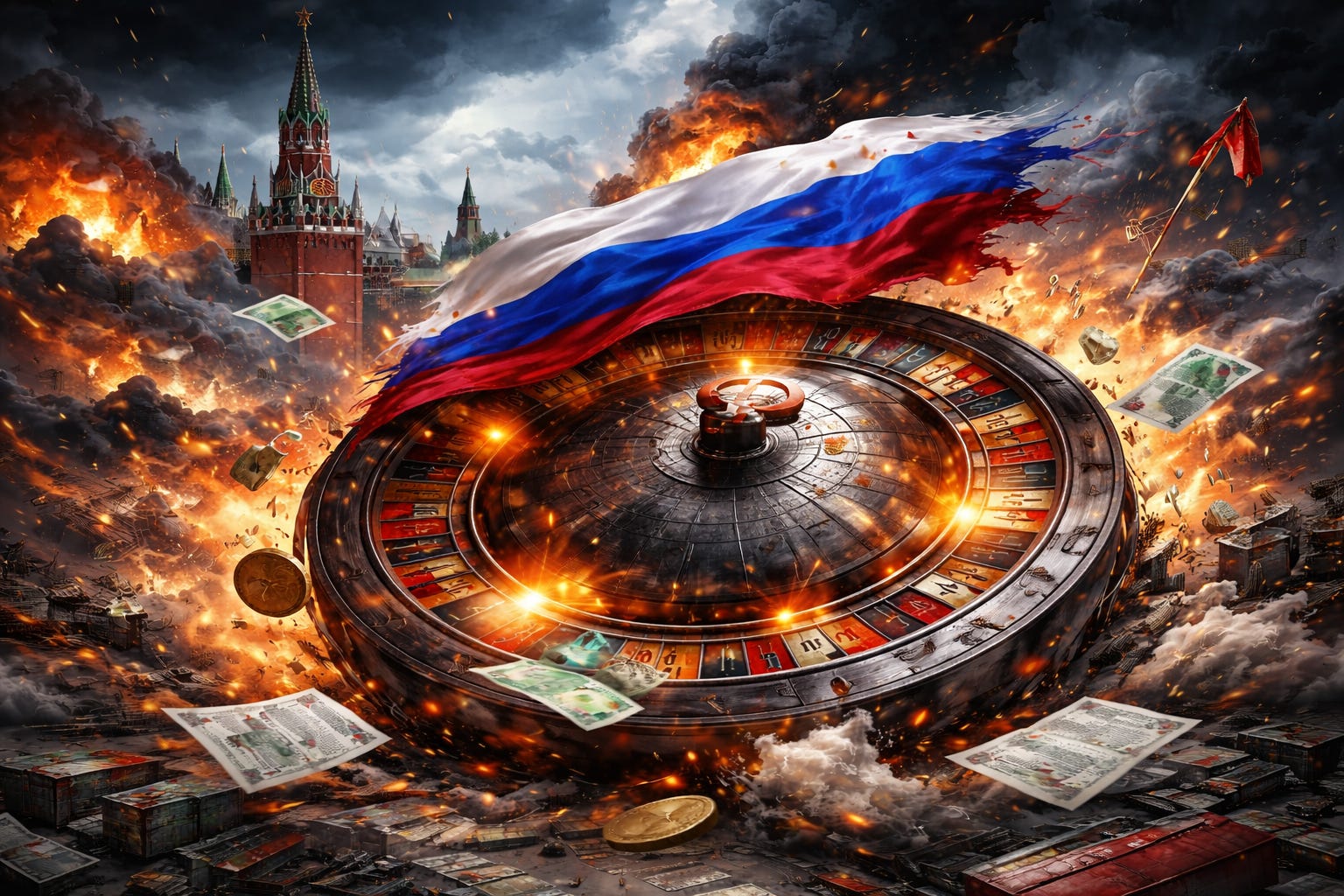
WHO COLLAPSES FIRST? Partisans on each side of Russia’s war on Ukraine wage a battle of statistics. Ukraine doesn’t have the vast resources that Russia does, so given time it will collapse. Or Vladimir Putin has destroyed a generation of Russian men and ruined Russia’s economy, which, given time, will surely collapse. There must be an element of truth to both points of view.
But I’ve seen a whole lot of this kind of thing lately. The state of the economy doesn’t look good in Russia:

“Russia’s federal budget posted a deficit of 1.718 trillion rubles ($22.3 billion) in January, nearly half of its full-year target, according to Finance Ministry data published on Friday.
Budget revenues totaled 2.362 trillion rubles ($30.7 billion) for the month, down 11.6% from a year earlier.
Oil and gas revenues fell by 50% to a five-year low of 393 billion rubles ($5.1 billion).
Moscow burned through nearly half the deficit spending it meant for the year in January alone. Budget revenues were down 11.6 percent from a year ago. Oil and gas revenues fell by 50 percent to a five-year low.
To try to compensate, Moscow is raising taxes. Non-oil and gas tax revenues rose 4.5 percent. VAT tax receipts were up 25 percent. The value added tax is now 22 percent.
The VAT is assessed on retail sales of goods in Russia including consumer durables, electronics, clothing, household goods, fuel sold domestically, cars, and most manufactured products. It’s also applied to services to both households and businesses including telecommunications and IT, domestic transport, hospitality, repair and maintenance services, advertising and professional services. And most imports, against which VAT is levied at the border.
Russia’s GDP expansion rate slid from 4.9 percent in 2024 to 1 percent last year. People in Russia know well that the Kremlin has cut health care spending. It has also cut aviation parts production, energy facility maintenance and even soldiers’ benefits.
All this is there for the world to see. American experts can see how European actions against the Russian shadow fleet are pinning the Russians back. The group most reluctant to hold Moscow to account is the diplomatic triumvirate of Trump and Kushner and Witkoff - the same three whose families stand ready and eager to benefit from future financial involvement with Russia. And on that there is a related story:
SERBIA: a Trump family deal has collapsed in Belgrade, where Jared Kushner had plans to build on the property where the Chinese embassy was bombed, apparently in error, during the Clinton administration’s military action against Serbia in the 1990s.
Kushner and his Affinity Partners have backed away from a deal with the Serbian government to rebuild the property into a luxury complex featuring a Trump-branded hotel, luxury residences, and commercial space - a Trump Tower Belgrade.
Serbia is the type of place that - while the rest of eastern Europe fled from the vestiges of Soviet rule - instead clung ever tighter to that particular Soviet type of thuggishness. After it failed to take over all its neighbors it retreated into a special kind of sullenness that it still suffers from today.
And Serbia is also a neighbor of Montenegro, which gives me cover to show this video of Donald Trump, President of the United States, shoving Montenegro’s prime minister, Duško Marković, aside at a NATO summit in Brussels on May 25, 2017. He did so in order that our American president could stand up front in the photo.
But where was I? The Kushner project kicked up opposition because the ruined site - which they’ve kept in its initial state of disrepair - reminded Serbian nationalists of that time when they tried to take over all their neighbors and failed. And you can’t just tear down a cultural heritage monument and a memorial of NATO’s 1999 intervention like that. Nationalists will be upset.
So, with it’s usual keen sense of politics, the government in Belgrade waited a while and then removed the complex from its list of protected cultural heritage sites, thinking it would help scoot the deal on through (to the benefit of which pocketbooks we may only speculate), but instead they only angered nationalists all the more.
In the end the whole thing collapsed and the Kushner company withdrew. Win some, lose some. Sometimes you use the nationalists, sometimes they use you. For now, no Trump Tower Belgrade.
•••••
EUROPEAN FAR RIGHT WATCH: They called it a landslide - another defeat for a far right nationalist party in Europe, this time in Portugal’s presidential race on Sunday, February 26th:

•••••

THE SOUTH CAUCASUS: JD Vance was in Armenia and Azerbaijan this week trying to move a Trump administration peace initiative there forward. He signed agreements - in Yerevan, a civil nuclear cooperation pact aimed at opening U.S. nuclear exports, and in Baku a deal to send new patrol boats to help protect its territorial waters.
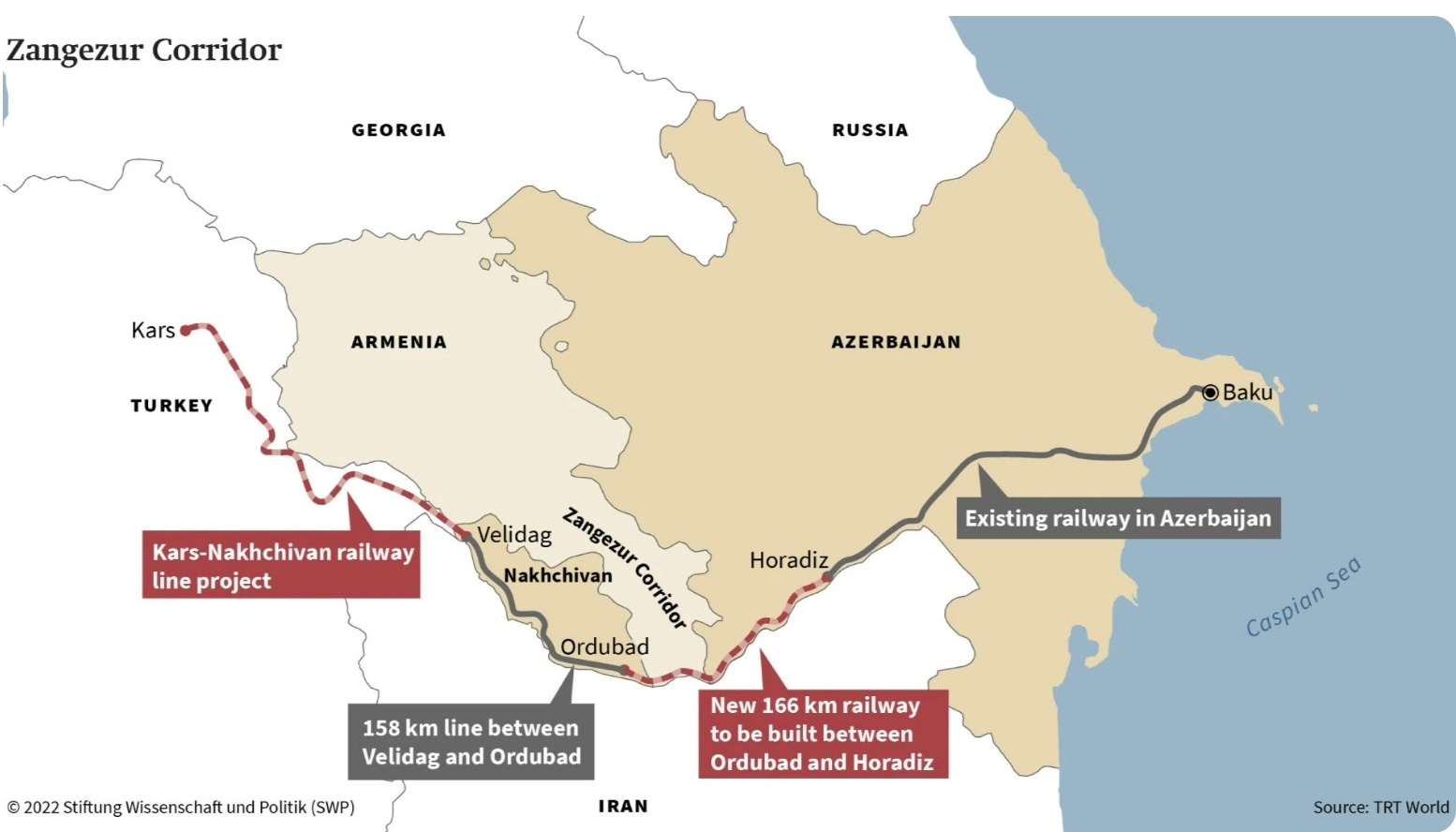
The trip’s main goal was to advance the so-called TRIPP, the Trump Route for International Peace and Prosperity. That’s a corridor through southern Armenia to connect Azerbaijan with its Nakhchivan exclave across Armenia’s Zangezur corridor (Map). Vance’s mission was an attempt to spin up some momentum towards getting a rail line built across the corridor, as envisioned in last year’s peace framework, but I didn’t see any announcements on progress.
It’s interesting in light of the Estonian Foreign Intelligence Service (VLA)’s annual Baltic Threat assessment report published on Tuesday (English version here and credit to Holger Roonemaa’s Baltic Flank Substack for the link). The VLA believes “the most imminent risk for Russia is losing control over the South Caucasus,” because it “assesses that this could mark the beginning of Russia’s ejection from the entire region,” which “would be a traumatic event of historic proportions for the Kremlin.”
The VLA expects Russia to intervene in Armenia’s domestic politics this year, with the aim to “remove Prime Minister Pashinyan from power, and install a government that appears nationalist but is, in substance, under Russia’s control.” Russian intervention didn’t work in last year’s Moldovan elections, but we’ll keep an eye out here.
•••••
GOOD PROBLEM FOR JAPAN’S LDP: Prime Minister for all of four months, Sanae Takaichi called snap elections for last weekend (February 8th), and the governing party did so well in single-member districts that it ended up not having enough candidates for the proportional representation seats that it did win. Now, if’s there’s a good problem to have, it just might be that you don’t have enough candidates to win all the seats you’d like.
The LDP took away a two-thirds supermajority in the lower house, and the largest mandate in Japan’s postwar history. The party can now override vetoes from the upper house.
[But wait. In politics, of course, someone can always find something to temper your enthusiasm. Here, let me mention Kier Starmer, who entered the Prime Ministership nineteen months ago with a historic 174-seat margin in the Commons. It was the largest this century, and this week Starmer endured maybe the worst week of his time in office. But back to Japan.]
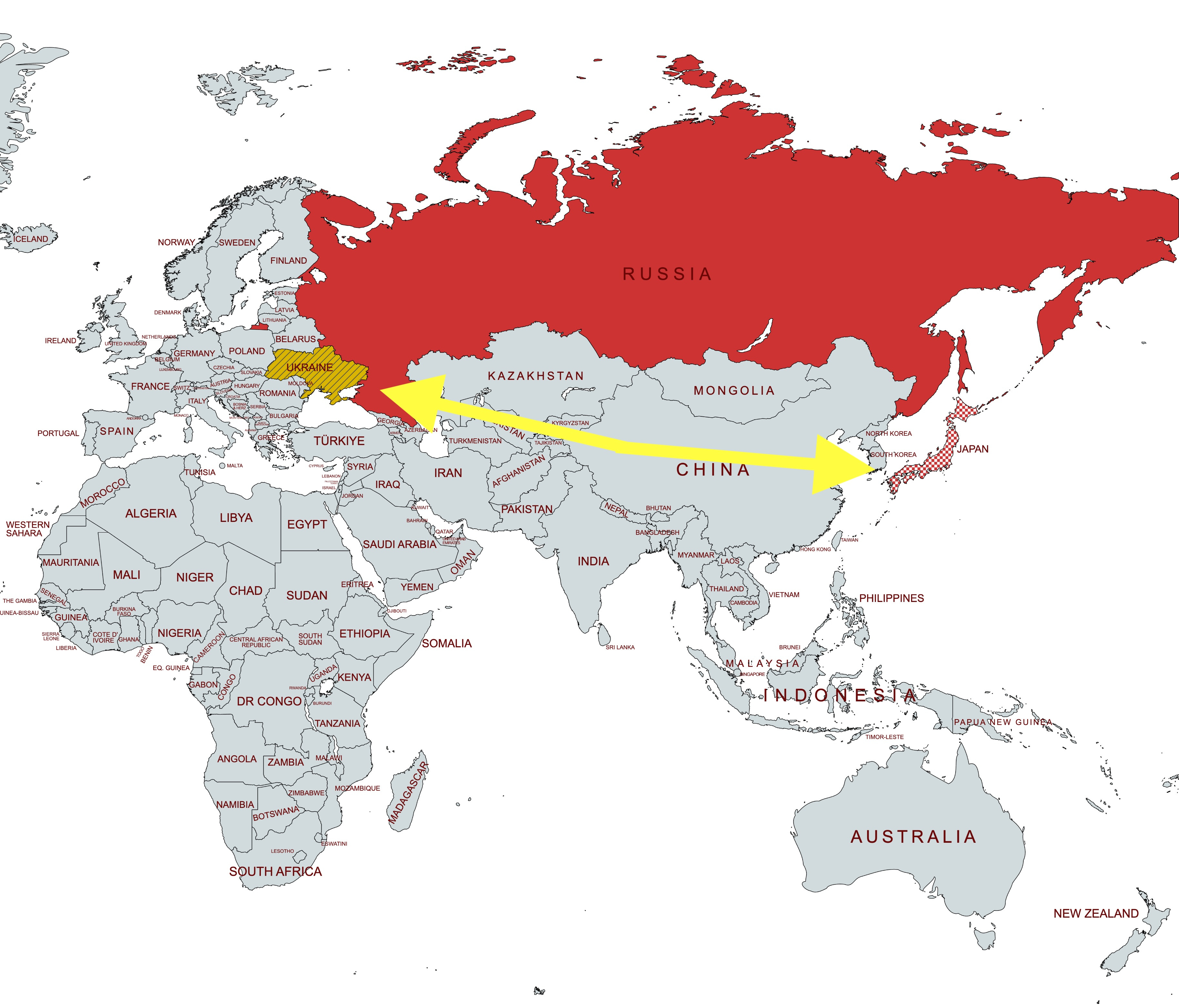
Also this week, the Takaichi government committed to join NATO’s so-called PURL initiative. PURL stands for Prioritized Ukraine Requirements List. It’s a scheme under which Ukraine tells NATO what equipment it needs to fight Russia’s war (things like air defense equipment, artillery ammunition, radar, light vehicles, communications gear and spare parts) and NATO coordinates buying items from the list with money pledged by members and allies.
Japan is a unique case. Its constitution was written under US occupation. Its Article Nine renounces war and declares that “land, sea, and air forces, as well as other war potential, will never be maintained.” Japanese politics has had to take a roundabout path to defense procurement for its Self-Defense Forces and others since then, using a series of so-called “national security documents.”
In a 1967 policy statement to the Japanese Parliament by Prime Minister Eisaku Sato, Japan declared it would not export arms to communist bloc countries, countries subject to UN arms embargoes or countries involved in or likely to be involved in international conflicts.
These “Three Principles on Arms Exports” were modified by Prime Minister Shinzo Abe in 2014 with the more permissive “Three Principles on Transfer of Defense Equipment and Technology.” Transfers directly into an active conflict zone are still restricted but Japan has now decided it can finance procurement of non-lethal equipment, purchase dual-use or defensive systems and support logistics, communications, or infrastructure via NATO through PURL.
More broadly, Takaichi comes from the conservative wing of the LDP, and brings ambitious goals to office. She promises to revise Japan’s national security documents to allow increased defense spending and the development of offensive weapons.
It’s an interesting time to watch the new government, flush with electoral majorities, as regards both Japanese/Russian relations, with this official thumb in the eye via PURL for Russia, and Japanese/Chinese relations, as the Prime Minister has been vocally supportive of Taiwan.
•••••

If you’re reading this as an email, be aware that your provider may clip the article before the end. Try clicking on ‘view entire message’ to see the whole thing, or you can always read everything at Common Sense and Whiskey online.
•••••
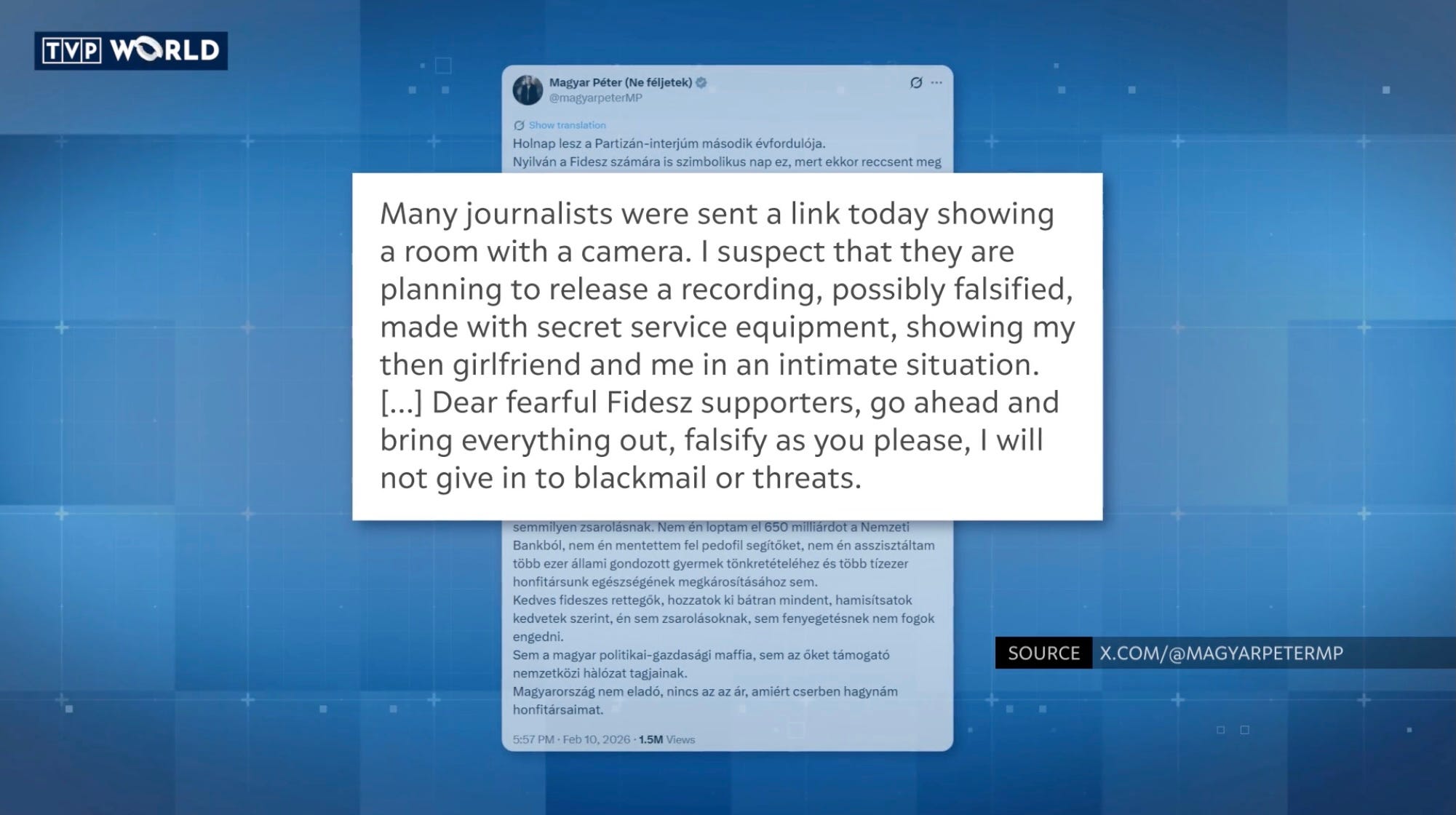
HUNGARY: With two months left before parliamentary elections in Hungary, the Polish public broadcaster Telewizja Polska’s TVP World English-language news channel aired a report at midweek saying people associated with Viktor Orbán’s Fidesz Party were about to release a possibly falsified sex tape involving Orbán’s main challenger Peter Magyar. Here’s a screen grab from the story.
•••••
IRAN’S NOT IN MUNICH: Organizers originally extended invitations to Iranian Foreign Minister Abbas Araghchi and others, but then withdrew them in response to Tehran’s violent suppression of protests.
In 1962 the philosopher Bertrand Russell received a series of letters from Sir Oswald Mosley, the founder of the British Union of Fascists, inviting him to a debate. Russell not only declined the invitation but replied quite generally that “nothing fruitful or sincere could ever emerge from association between us” - since “every ounce of my energy has been devoted to an active opposition to cruel bigotry, compulsive violence, and the sadistic persecution which has characterized the philosophy and practice of fascism.”
I think that’s right, be careful to whom you give a platform. Talk with anybody. Maybe don’t platform war criminals.
More about the same incident here.
•••••
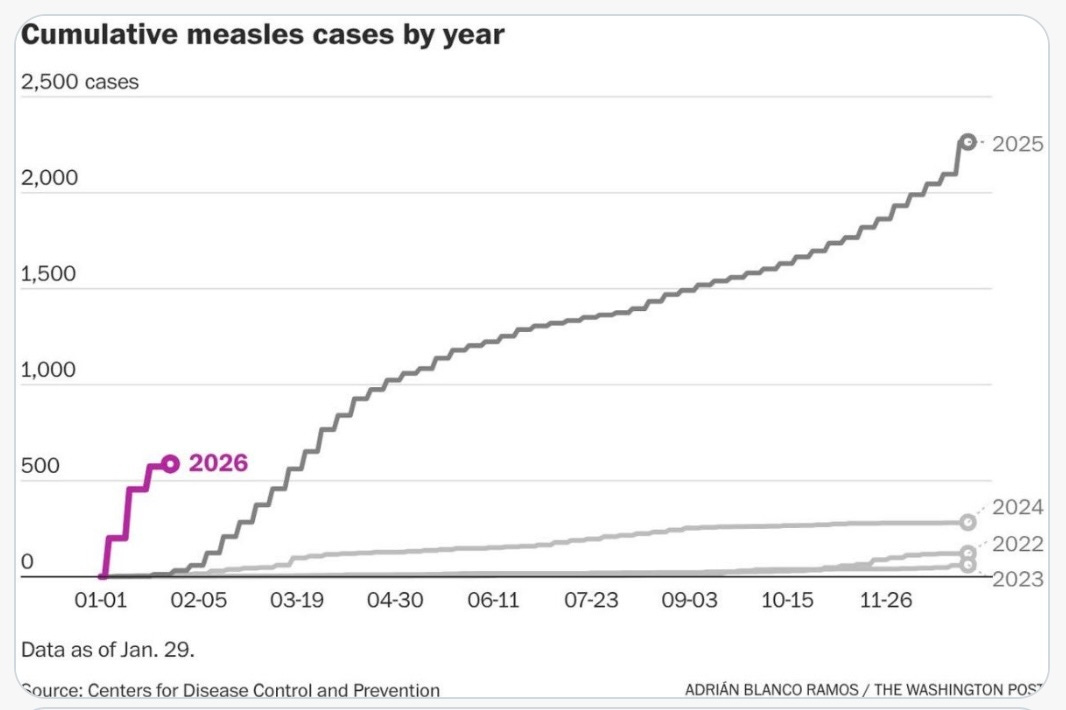
AND FINALLY: RFK Jr’s CDC speaks for itself:
•••••
Thanks for reading all the way to the end.
Please send feedback. If you like what you see, please subscribe. Even better, if anything here makes you think, subscribe for $5 a month. I’d like to see several new paid subscriptions this month, and YOU can make it happen. Thank you!
See you next week.
Content on Common Sense and Whiskey is free. There’s no paywall, but if you subscribe for $5 a month or $50 a year, next time I’m in town I’ll come over and wash your car. Maybe I will.
Cheers,
Bill
