

What Just Happened #81
An Alliance Wobbles

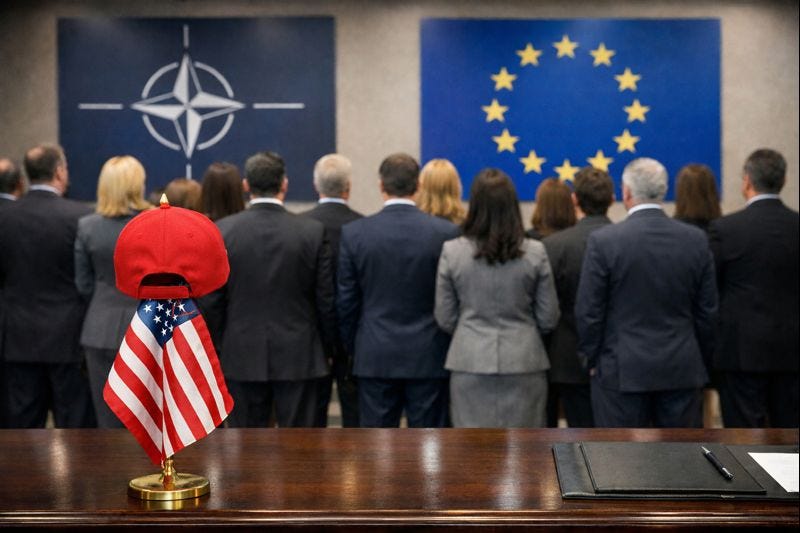
Welcome to Common Sense and Whiskey and thanks for dropping by. Today, Greenland and Davos and Trump, oh my. But the news of the week is NATO, mostly - from several angles - and we’ll take a look.
Common Sense and Whiskey goes deeper than the headlines on a few stories a week, in a presentation that busy people can absorb quickly. It’s a short, sharp look at the world out there.
Have a look at today’s column. If you’re reading this as an email, maybe have a look at the online version at CommonSenseandWhiskey.com, and if you like what you see, please subscribe. Talk to me anytime in the comments section or directly, at BillMurrayWriter (at) gmail.com. Let me know what you think.
•••••

UKRAINE: The news we’re all talking about came from Davos this week, but first it’s important to remind ourselves - every week - that as the Trump administration blows hard and backtracks, berates and blusters, Ukraine is freezing, everyday.
The last time Kyiv’s temperature was above freezing was on January 3rd because Vladimir Putin is attacking Ukrainian infrastructure to freeze children, the elderly and the rest of the civilian population who have nothing to do with the war except being victims of Russian aggression.
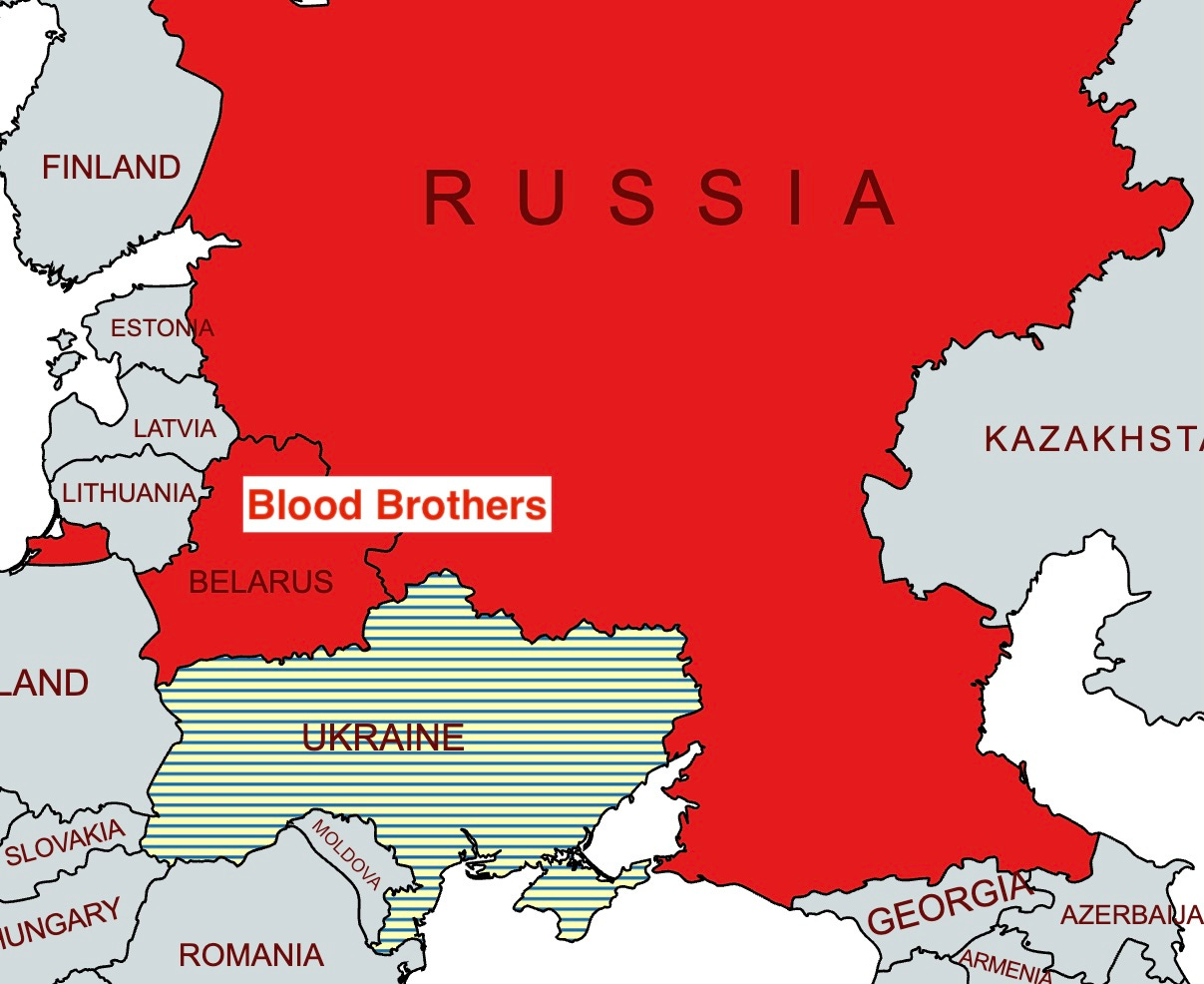
This is the same Vladimir Putin who this week Donald Trump invited to join his ‘Board of Peace,’ along with Putin’s satrap, effectively the governor of Belarus Oblast Aleksandr Lukashenka, whose land Russia uses to fire Russian drones and missiles at Ukraine. The president had a little Board of Peace ceremony yesterday in Davos, which his fellow peacemaker President Putin couldn’t attend because he would have been arrested on the charge of bearing individual criminal responsibility for the war crime of unlawfully deporting and transferring children, a war crime.
•••••
ALLIANCE LOST: The Trump administration has all points west of Moscow in uproar this week for saying America needs Greenland, or else the Russian military will seize it. So demanding the US take Greenland away from Moscow is sure to make the Russians who covet it very, very angry. Right?


The Trump administration also says that America needs Greenland so that the Chinese military won’t seize it. Except that “There are no Chinese warships operating around Greenland and no significant Chinese investments in the region, Denmark's Foreign Minister Lars Lokke Rasmussen said in Washington” last week, to quote China’s People’s Daily.
Denmark’s Chief of Joint Arctic Command, Major General Soren Andersen, also said there were no Chinese or Russian ships near Greenland, though he added that a Russian research vessel was located 310 nautical miles away. "That's the closest one," he told Reuters, adding that NATO allies maintain "a good picture of the situation up here."
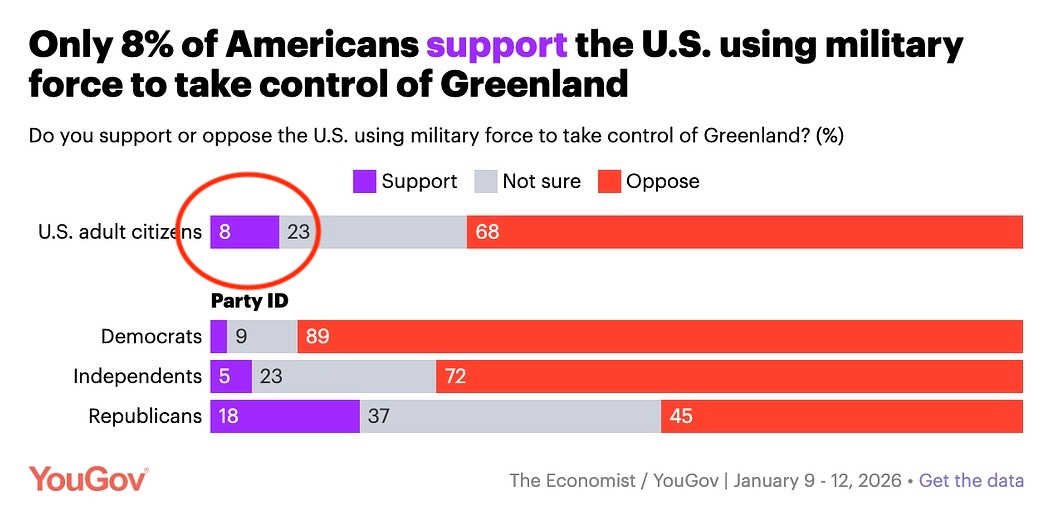
The Trump administration insists that America needs Greenland, but the president and his people can read polls as well as anybody. Maybe that has something to do with his backtracking at midweek.
FALLOUT FROM ALL THIS: NATO is an alliance built on trust. It is imperative that officials in any NATO member country under threat of attack have confidence that their fellow alliance members are serious about Article Five, the part of the NATO Charter that declares that an attack on one member is an attack on them all. In that light, it’s deadly serious to see reports that anonymous officials now claim NATO is withholding intelligence from the US.
That kind of lack of trust will likely hasten the breakdown of solidarity. Which is already tenuous in the eastern part of the alliance.
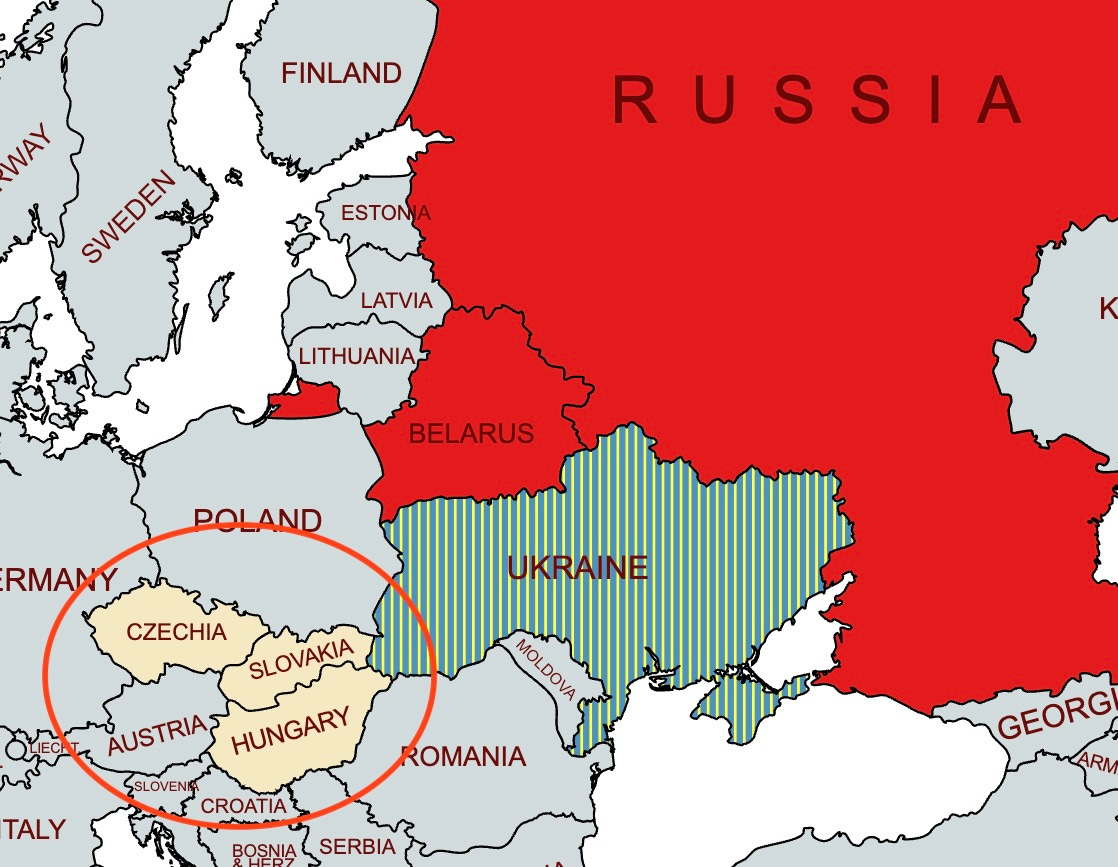
Governments change. Viktor Orban, in Hungary, who has been an anchor of Putin-friendly sentiment in the EU, stands for reelection in April. Neighbors Czechia and Slovakia have alternated between pro- and anti-Russian governments these last few years, and at the moment both are led by Putin-friendly governments: Robert Fico leads Slovakia, while Andrej Babiš is back for the third time, as Prime Minister of Czechia. So at least for now these three countries form a relatively pro-Russia bloc:
This week Hungary blocked a nap inducing, plain vanilla joint EU statement in support of Greenland. The draft version said the EU stands in solidarity with Denmark and Greenland, declared that territorial integrity and sovereignty are fundamental and encouraged dialogue. Ho hum.
Speaking in Prague, Hungarian Minister of Foreign Affairs and Trade Peter Szijjarto said Budapest does not consider the issue of Greenland to be a European Union matter. This is Orban’s government acting to puff up whatever role it imagines it has in an aspirational alliance between Moscow and Washington.
Slovakia’s Fico met Trump at Mar-a-Lago last Saturday. About their talks, he said in a video last Sunday that “there was a complete agreement in viewing the EU as an institution in deep crisis.” And on Monday Czech Prime Minister Babiš “refused to say unequivocally that the Czech government supports Greenland, amid growing tensions within NATO about the stated aim of the Trump administration to take control of the Danish territory.”
To the extent that the administration is hastening NATO’s and the EU’s demise, you might say that its National Security Strategy is going to plan.
•••••
LOSING FRIENDS: Europe may rightfully feel it’s caught in a pincer between Putin and Trump. Without much military heft to back up its collective foreign policies, Europe’s response mechanisms are factory-set on restraint. Maybe an out of character response once in a while would grab a little attention?
When Donald Trump came charging in this week, Emmanuel Macron tried to wield a little Gaullist flair, suggesting the EU use its “trade bazooka” (more officially, its ‘anti-coercion instrument’) against the Americans if they kept threatening tariffs and invasions.
Former German vice-chancellor Robert Habeck puts it in more characteristic Euro-bureaucratese, “As this broader region shifts from zones of peace to spaces shaped by tension, Europe must translate its normative influence into operational capacity.”
Habeck, a former leader of the Green Party, would have the EU invite Greenland to rejoin (it left the EU’s predecessor, the European Economic Community, in 1985 in a fishing dispute). And Habeck wouldn’t stop at Greenland.
There are four non-EU countries and territories in the north of Europe: Iceland, the Faroe Islands (like Greenland, part of the Kingdom of Denmark), Norway and the United Kingdom. Habeck suggests Canada might be invited, too, and it just so happens that Canadian Prime Minister Mark Carney has lately been searching for a new BFF, the second “F” in BFF having not exactly worked out for Carney and company recently.
•••••
THUS SPAKE CARNEY: Much talk this week about the speech Carney delivered at Davos on Tuesday. He started by quoting what you might call Vaclav Havel’s ‘parable of the shopkeeper’ as a way to illustrate the fragility of systems - in this case the current geopolitical one.
Download Havel’s essay or watch the speech for yourself. The Havel anecdote starts about at 4:30:
It really is a remarkable speech. Carney advocates non-compliance with our current geopolitical system until, in his words, ‘the illusion begins to crack.’ A remarkable hint of insurrection from a former central banker (He was Governor of the Bank of Canada from 2008 to 2013 and Governor of the Bank of England from 2013 to 2020) speaking to politicians, bankers and financiers.
The speech served as both a repudiation of the US led order - from which Canada has been roundly disinvited by Donald Trump - and a framework around which Carney would be happy to rally Middle Powers (as he called them), like Canada.
But it was something more, too. It was a well-timed exhortation to rouse an angry and bewildered European Union and NATO, both of which, at the beginning of the week, were feeling stung by American bluster and threats over Greenland. It was a pep talk and a little ‘elbows up’ from the Canadian leader.
It was a thoroughly crafted speech, one that read as if it had been through many drafts. It surely did not come from idle, back of the envelope jottings on the plane on the way over. It read like Mr. Carney worked hard on it, and given the timing, after a period during which European leaders were feeling stung by American bluster and threats over Greenland, it must have fallen on appreciative ears.
Hardly a day later the US president had already backed off his “I will have Greenland the easy way or the hard way” demands, and even taken back his latest tariff threat against the Europeans.
In his explanatory social media post, Trump gave credit to NATO Secretary General Mark Rutte, who had been the subject of skewering criticism for his ‘What? Me Worry?’ demeanor, as in this political cartoon from Politico EU:

That Politico EU report (from Zagreb earlier this month) had Rutte saying NATO was “not at all” in crisis and that the alliance was working together in the “right direction” - even as tensions over Greenland were acute.
Nobody believed him. But credit where it’s due: Rutte served as prime minister of the Netherlands from 14 October 2010 to 2 July 2024, the longest such term in Dutch history. He must have learned something about deal making somewhere along the way, because over that time negotiated to rule four coalition governments.
Not that we have any idea what kind of deal Rutte made with President Trump on Wednesday. All we know so far is that Trump has backed off (for now) on his tariff threats.
For the moment, it looks like Mark Rutte will live to praise daddy another day.
•••••
COALITIONS ARE BREAKING OUT ALL OVER: As strategists have been suggesting for some time, purpose-built ’coalitions of the pertinent’ are being thought up more and more every day. Case in point, this week’s NATO rift. NATO hinted at what Rutte and Trump may have been talking about, saying Thursday that:
“Discussions among Nato Allies on the framework the President referenced will focus on ensuring Arctic security through the collective efforts of Allies, especially the seven Arctic Allies.”
The ‘seven Arctic Allies’ are the Arctic states other than Russia. Some reporting suggested that NATO would like to flesh this out enough to announce a new Arctic defense initiative at its summit in early July in Ankara.
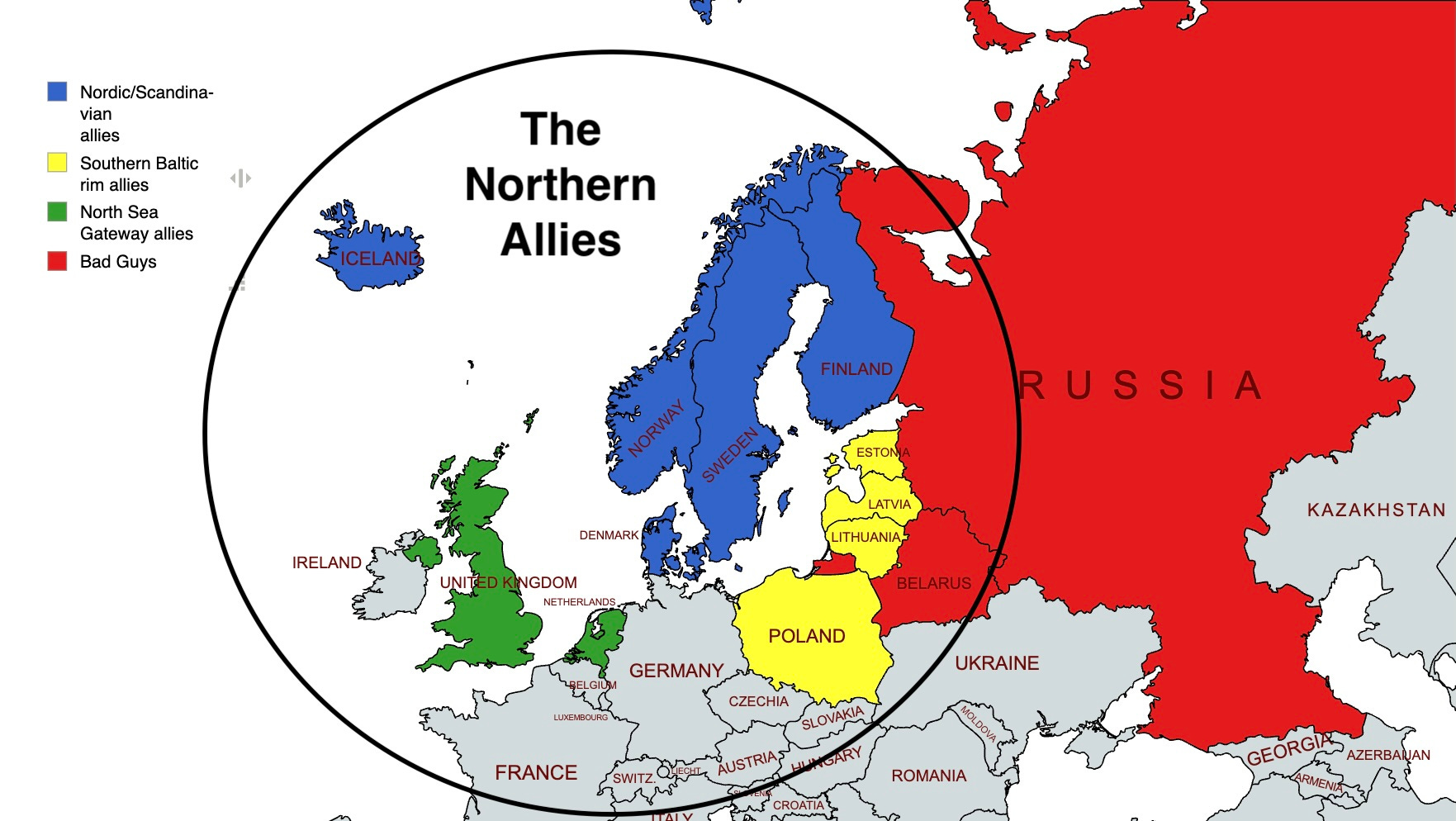
The seven Arctic Allies’ European cousins comprise another proposed group. The northern tier of Nordic and Scandinavian states - Iceland, Norway, Denmark, Sweden and Finland - have strong cultural affinity, and join states on the southern rim of the Baltic Sea - Estonia, Latvia, Lithuania and Poland - in having been strong opponents of Russian hegemony for centuries.
Throw in a possible Netherlands and United Kingdom at the gateway to the North Sea and you have an instant, like-minded group of countries that would be a natural core for a new northern European defense alliance should NATO ever come apart.
•
THIS DOES NOT AUGUR WELL: This week the United States left Greenland and Denmark out of negotiations about Greenlandic and Danish affairs, and negotiated with a third party, in the person of NATO Secretary General Rutte. It reinforced an unfortunate tendency, a pattern of negotiating over the heads of parties to any future agreement the president eventually negotiates.
Case in point: the Dmitriev/Witkoff Russia/US negotiating duo currently negotiating away Ukrainian sovereignty. Witkoff and Kushner were in Moscow on Thursday night. (I think this is Witkoff’s sixth trip to Moscow, while he has visited Kyiv zero times.)
It’s not hard to imagine that Greenland isn’t keen to allow NATO to negotiate Greenland’s future. For all Rutte’s good intentions, they’re not impressing Greenland’s government.
“On Wednesday night Aaja Chemnitz Larsen, a Greenlandic member of the Danish parliament, said that the idea that Nato should have anything to say about the territory’s sovereignty or minerals was “completely out of the question”.
Greenland’s Prime Minister Jens-Frederik Nielsen joined in on Thursday:
“Nobody else than Greenland and the Kingdom of Denmark have the mandate to make deals or agreements about Greenland … without us, that’s not going to happen.”
•••••

If you’re reading this as an email, be aware that your provider may clip the article before the end. Try clicking on ‘view entire message’ to see the whole thing, or you can always read everything at Common Sense and Whiskey online.
•••••
DIVIDING THE WORLD IN THREE: By proclaiming it’s focused on the western hemisphere, the recent US National Security Strategy (SOIs) suggests the Trump administration wishes to move toward a Spheres of Influence strategy - in current discussion, the division of the world into three areas of dominant influence. This suggests a US consciously retreating from the liberal world order it established and has built on since the end of World War II.
SOIs represent a system that is inferior system to the fading system, in which the US has found benefit in providing worldwide services like guaranteeing freedom of the seas, setting up institutions for conflict resolution and holding the world’s reserve currency. Doing these things for the past eighty years has insured tacit quid pro quos for the US, like trade in the dollar and maintenance of US-promoted ‘universal values’ like freedom of speech and movement. I’ll have a longer column here next month discussing the SOI model in more depth.
For now I’d just suggest one reason governments may want to carve out spheres of influence is so they can have dominion in a place that operates outside of those values that the postwar United States provided. That is, governments more illiberal than the US has been up to now may seek exemptions from values like freedom of speech and equality under the law in their own sphere.
More on the dangers of embracing an inferior SOI system soon.
BRIEFLY
• TRANSPARENCY ALERT: As we talked about last week, by statute, an official or agent of the Government receiving money for the Government from any source shall deposit the money in the Treasury, but instead, proceeds from the sale of that seized Venezuelan oil are being held in an offshore bank account at an undisclosed bank in Qatar, the country that gave the president the gift of a $400 million 747-8 jet.
The first contracts for that oil were awarded to commodity trading companies Vitol and Trafigura, both of which secured a roughly a $250 million deal. It turns out that at least one senior executive at Vitol has made significant donations to Donald Trump-aligned political entities.
John Addison, a senior trader and executive at Vitol, donated about $6 million to political action committees backing Donald Trump’s 2024 re-election effort, including roughly $5 million to Make America Great Again Inc. He also attended a recent White House meeting with other oil industry figures related to Venezuelan oil sales.
•••••
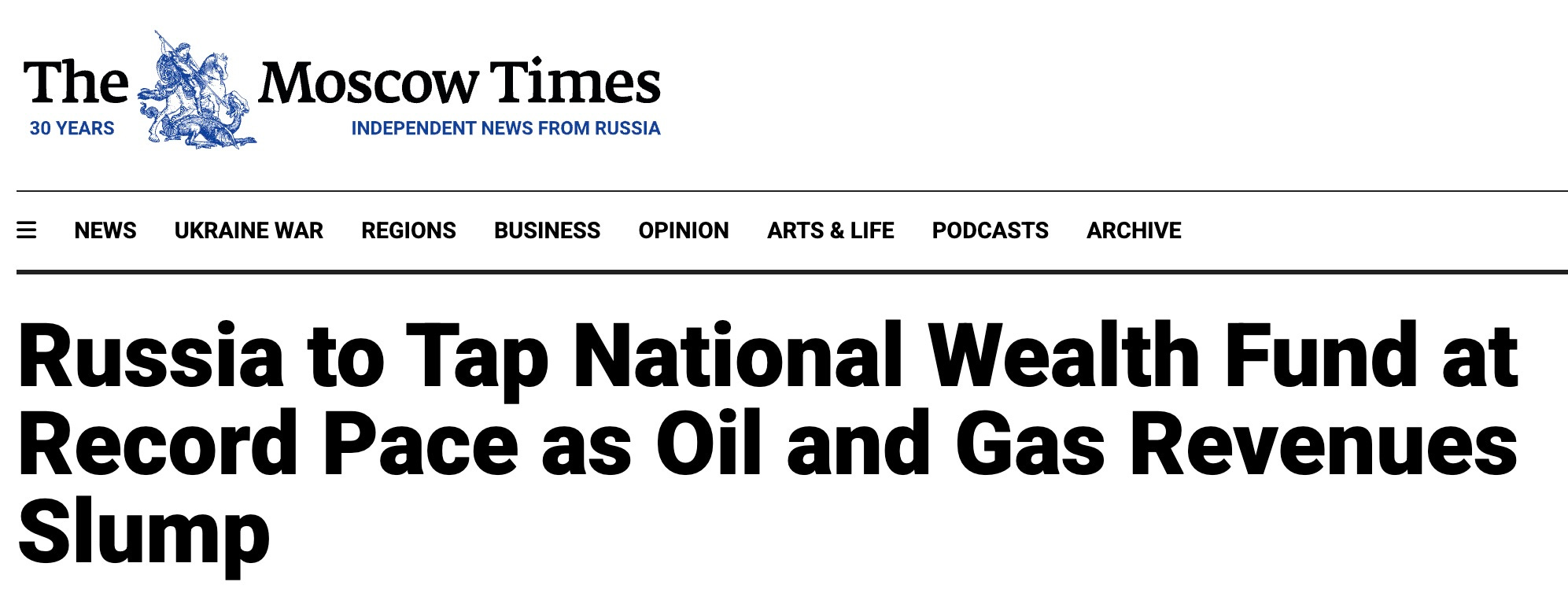
• PIGGY BANK RAID: Falling oil revenue is drawing down Moscow’s rainy day fund. Before Russia’s full-scale invasion of Ukraine in 2022, its National Wealth Fund held $113.5 billion in liquid assets - foreign currency and gold held at the Central Bank. At the beginning of 2026 it held $52.9 billion.
The Moscow Times (publishing from Amsterdam since the full-on invasion of Ukraine) says:
“Russia will sharply increase sales of foreign currency and gold from its National Wealth Fund (NWF) to offset a steep fall in oil and gas revenues, which sank last year to their lowest level since the pandemic and halved in December year-on-year.
This will be the largest daily volume of such operations on record, exceeding even the peak pace during the Covid-19 crisis, when assets were sold at roughly 11.4 billion rubles ($147 million) a day, Interfax said.”
•••••
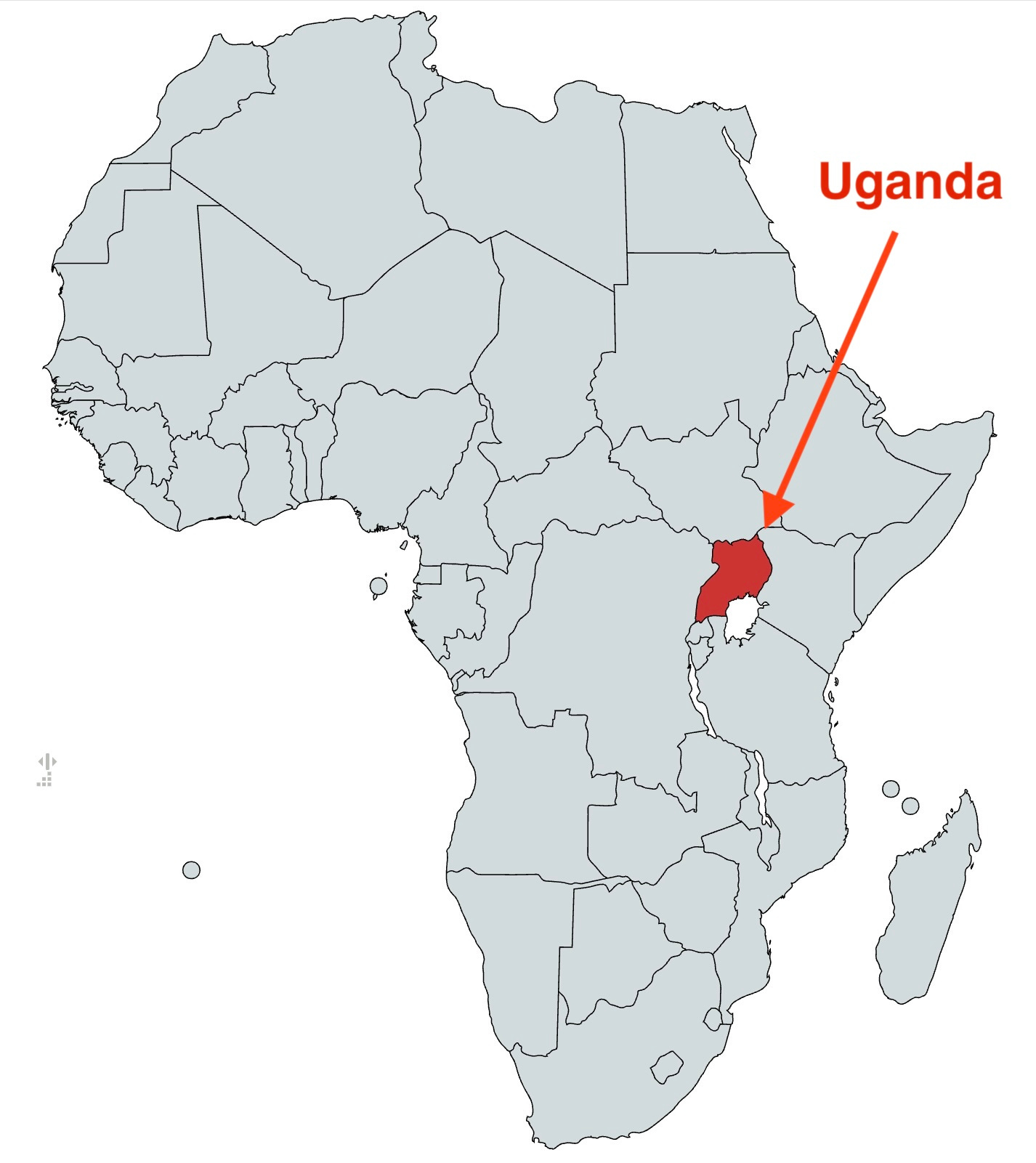
AND FINALLY: Last weekend Ugandan President Yoweri Museveni’s supporters celebrated his election to a seventh term in office. He claimed to have gotten over 71 percent of the vote, while his main rival, performer Bobi Wine, took most of the rest. Wine called the results fake.
The incumbent president arranged a four-day internet blackout ahead of the vote and the failure of biometric voter identification machines delayed voting in areas where Wine was elected to do well.
Wine, a 43-year old popular singer, has a history with state security, including arrests, beatings, and intimidation. Museveni’s son, General Muhoozi Kainerugaba, the head of Uganda’s armed forces, threatened Bobi Wine after this election, including saying on social media saying he wants Wine dead.
Museveni has ruled Uganda for forty years this weekend.
•••••
That’s it for this week. Thanks for reading all the way down to the end.
See you next week. Please pass this article around and invite your friends to subscribe. And do let me hear from you.
Content on Common Sense and Whiskey is free. There’s no paywall, but if you subscribe for $5 a month or $50 a year, next time I’m in town I’ll come over and wash your car. Maybe I will.
Cheers,
Bill
