

What Just Happened? #80
A Knee on NATO's Neck

Welcome and thanks for coming by. We start with another big week for Greenland and Denmark. We insist on not forgetting a freezing Ukraine, ask where Venezuela’s oil revenue has gone, take a look at trade with Taiwan, consider the aging, wanna be Shah and finish with a mighty chest thumping by the Scottish National Party.
Common Sense and Whiskey goes deeper than the headlines on a few stories a week, in a presentation that busy people can absorb quickly. It’s a short, sharp look at the world out there.
Have a look at today’s column. If you’re reading this as an email, maybe have a look at the online version at CommonSenseandWhiskey.com, and if you like what you see, please subscribe. Let me know what you think. Here goes.

TOUGH GIG: He’s learning on the job. Greenland’s center-right Prime Minister Jens-Frederik Nielsen is only 34 years old and just became the eighth Greenlandic Naalakkersuisut Siulittaasuat in April of last year.
In the previous month’s parliamentary elections, no party commanded a clear majority, but Nielsen, who leads the Demokraatit (Democrats) party, was able to assemble a governing coalition. His skills at cobbling together that government may now be needed to hold the country together.
[Nielsen’s title, Naalakkersuisut Siulittaasuat, is usually translated as Prime Minister, although I’ve understood that in Kalaallisut, the Greenlandic language, Naalakkersuisut means “the government,” and Siulittaasuat means “chairperson” or “leader,” so you might just as correctly translate it as Premier, or Chairman.]
The international consultancy Verian conducted a poll of Greenlanders for the Danish and Greenlandic news organizations Berlingske and Sermitsiaq, respectively, a year ago (January 2025) that found that 85 percent of Greenlanders did not want to become part of the United States, six percent did and the remaining nine percent were undecided.
It appears too early to tell what effect a year of Trump-and-family jawboning has had on Greenlanders themselves, and I can’t find a big, reputable newer poll since.
There’s been a lot of diplomatic back and forth this week: Germany’s foreign minister Johann Wadephul visited the capital to meet with Marco Rubio on Monday and “expressed optimism,” as diplomats do, that Europe and the US can find a “compromise” on Greenland. He suggested NATO might engage in Arctic security missions in Greenland, making US ownership unnecessary.
At a Tuesday press conference with Nielsen in Copenhagen, Denmark’s PM Mette Frederiksen condemned the “completely unacceptable pressure from our closest ally.” It’s an unbelievable and confounding sentence to read, but that is where we are.
European governments have all lined up behind Greenland’s long time alignment with Denmark this week, and on Tuesday Nielsen went his furthest yet to affirm the current arrangement, saying in the joint news conference that Greenlanders would choose Denmark over the US if they were asked to make such a choice “here and now.”
Asked for reaction later in the day, an undiplomatic Donald Trump said, “That’s their problem. I disagree with him. That’s going to be a big problem for him.”

JD Vance appears to hold the administration’s Greenland brief, and seems to be holding it extra tight after his potential future political rival Marco Rubio’s role in the administration’s Venezuela operation was seen as a success, and spawned a splashy profile or two.
USA Today reported that Vance invited himself to the main event this week, a meeting in Washington on Wednesday that Denmark originally requested with Rubio. Both Rubio and Vance were there, and Denmark and Greenland brought in two big guns, Danish Foreign Minister Lars Løkke Rasmussen, a two time former Prime Minister (2009-2011 and 2015-2019) and his counterpart from Greenland, Foreign Minister Vivian Motzfeld.
Reading between the lines, it could have been worse (and might have if there had been TV cameras - see Vance v Zelenskyy, February 28, 2025), but it didn’t go off the rails. The Washington Post headlined it “Vance’s Greenland meeting ends with ‘fundamental disagreement.’”
Standing in front of the Danish Embassy with Foreign Minister Motzfeld afterward, Rasmussen said “It’s clear the President has this wish of conquering Greenland,” and “The president has made his view clear, and we have a different position.”
Trump posted to social media that Russia and China are coming for Greenland and, again undiplomatically, “two dogsleds (for defense) won’t do it!” At the embassy news conference the Danish Foreign Minister flatly contradicted Trump.
“It is not a true narrative that we have ... Chinese warships all around the place,” he said.
Trump has never offered any evidence for such a thing and no one but he and his acolytes believes it. And if the waters around Greenland were seething with enemies, we might expect to have heard about it from NATO, or Greenland’s near neighbors like Iceland, Britain, Canada and Norway.
EUROPEANS TRY CLOSING RANKS: The French Foreign Minister says France will open a consulate in Greenland on February 6th. Canada is planning to open a consulate in Greenland’s capital, Nuuk, in early February.
And troops from Canada, Finland, France, Germany, the Netherlands, Norway, Sweden and the UK are sending troops or staff to show their flags for military exercises in Greenland that started Wednesday and run through tomorrow, Saturday.
[It’s a topic for a separate discussion, but note that participants, Canada, Denmark, Finland, Norway, Sweden and the UK, along with Iceland, unanimously comprise the entire northern tier of allied Western states. (Iceland does not have its own standing army.) This group, along with the three Baltic states, Poland and the Netherlands, have been strong in support for Ukraine and make up an emergent northern core of NATO.]
Denmark’s Defense Minister Troels Lund Poulsen also proposes to base more Danish troops in Greenland, and to set up “a more permanent military presence” for NATO troops on a rotational basis.
•
Remember how it was widely speculated that Donald Trump confused the meaning of “insane asylum” with “asylum seeker” in maintaining that countries were emptying out their mental hospitals and sending the patients to the United States? Even the Koch brothers-funded reason.com website thought it might be true.
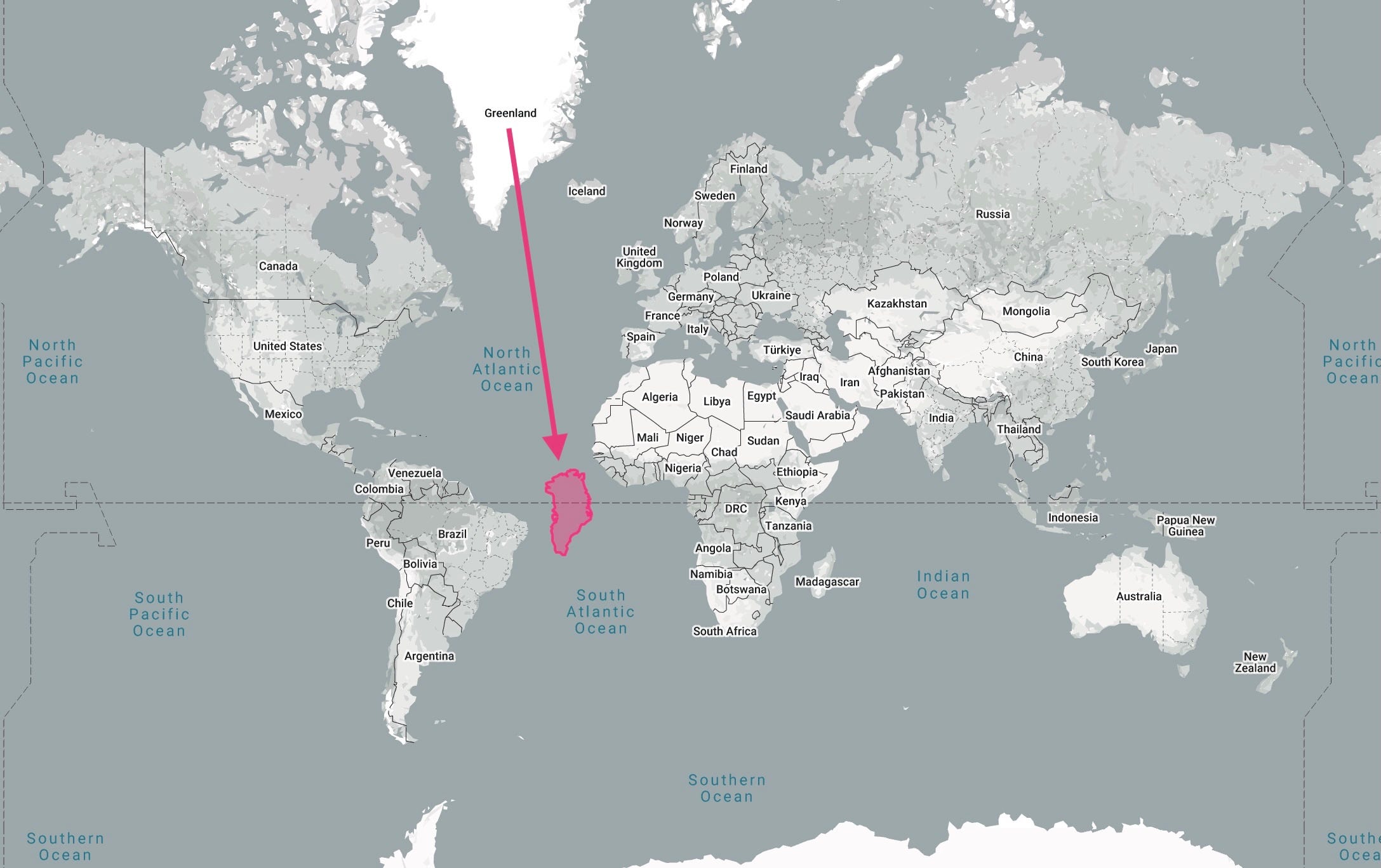
Now there’s a new and similarly crazy idea: that the president doesn’t understand how the Mercator map projection makes objects look bigger near the poles, and so he thinks Greenland is bigger than it is, and that’s part of the reason he wants to own it.
Here is a map resource you can use to demonstrate the true size of countries on maps. And here is the true size of Greenland, if it were brought to the equator:
NEXT WEEK: With Greenland in the news, next week I’ll share a travel story about a 2016 visit to Tasiilaq, on Greenland’s less-visited east coast.
•••••
LEGISLATION YOU NEVER THOUGHT WE’D NEED: We live in interesting times.

•••••
UKRAINE: Multitasking isn’t a strong suit for many politicians and journalists. The focus on Greenland this week has left Russia’s war on Ukraine thoroughly out of the news, but Ukraine is still there, and its people are freezing:

Russia is trying to - literally - freeze Ukrainians to death, in what will be one part of Vladimir Putin’s eternal burn-in-hell legacy. Here’s another: since the start of the full-scale invasion by the Russian Federation, the World Health Organization has verified 2763 attacks on health care in Ukraine, as of December 5th, 2025. It’s the most ever ordered by any tyrant. Anywhere. Ever.
But about the cold: This winter’s unusually frigid, unusually long-lasting weather has set up an underreported emergency situation. In the Soviet era, buildings across Ukraine were built with centralized hot water heating. Power plants generated electricity, and residual heat was captured to warm water, which was (and is) pumped through pipes in housing blocks for heating, provided as a municipal service like electricity, water and sewer.
These are the ubiquitous wheezing pipes in flats we read about in Soviet-era literature. Heating in this way was a key feature of Soviet life across what is now the Russian Federation, Belarus, the Baltics, and some of Central Asia.
What once symbolized the collective Soviet provision of resources is now one more industrial scale challenge visited on Ukraine by Moscow. Because all these Russian attacks on Ukrainian energy generation don’t just knock out power, they stop the supply of heated water.
In extended periods of below-freezing weather, the water in the pipes freezes, and when it eventually thaws, it bursts pipes in thousands of buildings all over town. Which means that when temperatures finally reach above freezing, not only will the heating system be unavailable in countless buildings across Ukraine, but also water damage from leaky pipes will make untold numbers of buildings unlivable. See here and here.

ENERGY POLITICS: This quote from elsewhere on Substack is provocative: “In 2024, European countries spent more money importing Russian energy than they did financially helping Ukraine, effectively paying the bill for Russian aggression.” But is it true?
According to the Kiel Institute for the World Economy’s Ukraine Support Tracker, Europe allocated about €18.7 billion in financial support to Ukraine in 2024 (not counting military or humanitarian aid). That makes Europe’s energy import spending from Russia 20 to 40 percent higher than its Ukraine financial aid figure for that year.
The comparison is strictly between energy import spending and financial aid to Ukraine, though, not total European support (which also includes military assistance, humanitarian relief, refugee support, future reconstruction commitments and the like). If you include all types of aid, Europe’s total support rises far beyond its fossil fuel payments to Russia. Which is still no excuse for continuing to buy all that Russian oil.
•
NOTE: Try my curated, constantly updated X list of Ukraine resources, Russia’s War on Ukraine, currently followed by around 1700 people. it’s made up of the posts of about 250 officials of various governments, sources in neighbor countries, press, diplomats, academics, OSINT providers and others.
•••••
VENEZUELA: Once having deposed a leader he declared corrupt, a more conventional American president might demand freedom for political prisoners and arrange for the US military to escort the Venezuelan Nobel Laureate María Corina Machado on a triumphant return to Caracas. It doesn’t look like we’re going to see that.
In fact, María Corina Machado was in Washington yesterday bending the knee and rendering unto Donald Trump her Nobel Peace Prize medal, in a sad, embarrassing and likely ineffectual attempt to bring democracy to her country.

Instead, the administration sold its first consignment of seized Venezuelan oil this week. On Wednesday night Semafor reported that
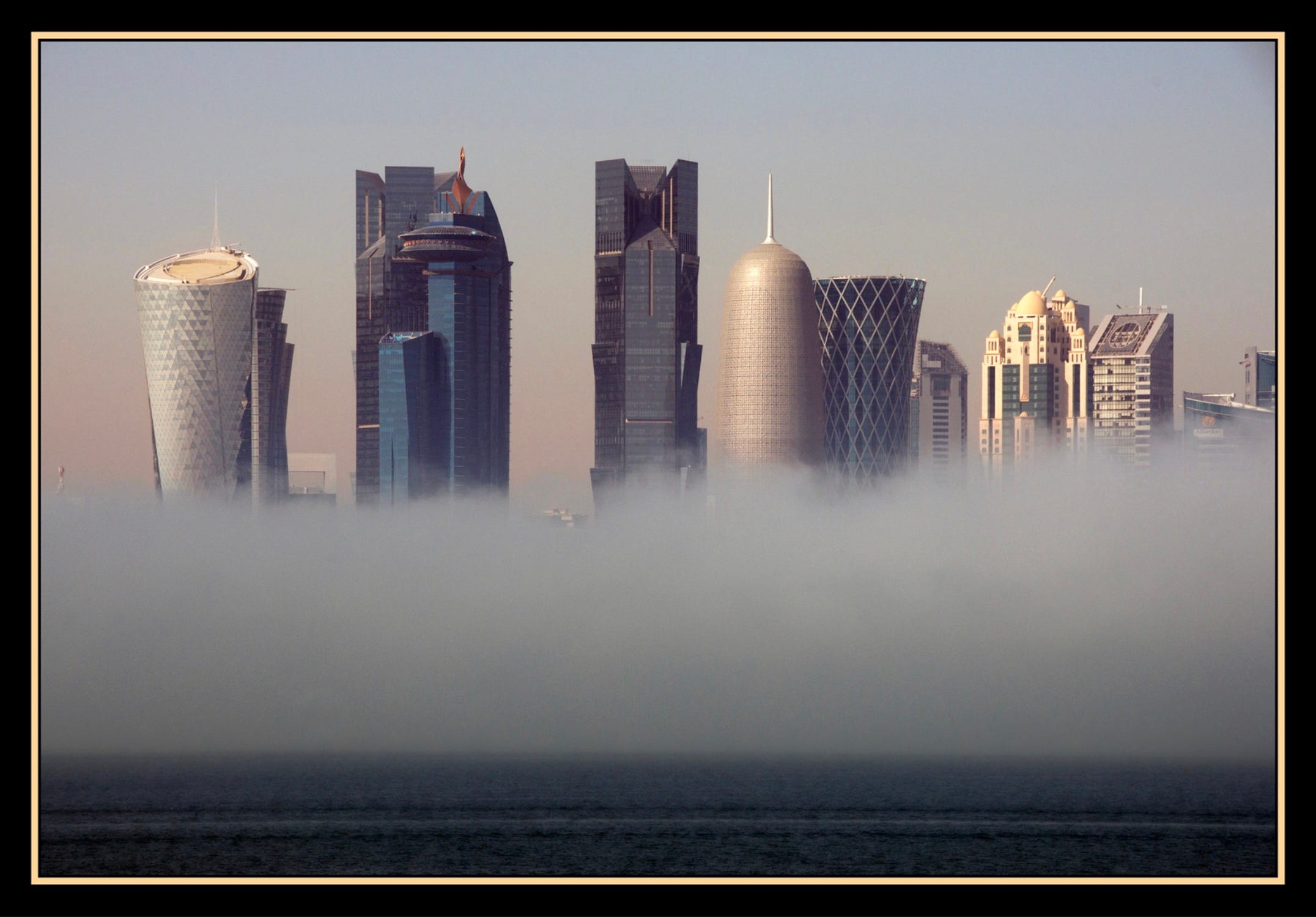
“Revenue from the oil sales is currently being held in bank accounts controlled by the US government, as indicated in Friday’s order, according to the administration official. The main account, according to a second senior administration official, is located in Qatar.”
So far we don’t know who bought the oil. Reuters has reported that two commodity trading firms, Geneva-based Vitol and Trafigura, formally headquartered in Singapore but also with operations in Geneva, are involved with marketing and shipping the oil.
It’s utterly unprecedented. After seizing and jailing the corrupt leader of a sovereign state, the United States has seized five hundred million dollars of its oil. It has been marketed under US supervision and sold on the global market to unknown buyers, with proceeds controlled by the US president and held in an offshore bank account at an undisclosed bank in the country that gave the president the gift of a $400 million 747-8 jet.
The White House assures us that the accounts are “sovereign property of Venezuela held ‘in custody’ by the United States Government — not as U.S. government property — and cannot be used except for sovereign or diplomatic purposes as directed,” according to a White House executive order.
Senator Elizabeth Warren, the Democrats’ ranking Banking Committee member, said “There is no basis in law for a president to set up an offshore account that he controls so that he can sell assets seized by the American military.”
As we know, Congress controls spending. It’s not a function of the Executive branch. By statute, “an official or agent of the Government receiving money for the Government from any source shall deposit the money in the Treasury as soon as practicable without deduction for any charge or claim.” [31 U.S.C. § 3302(b)]
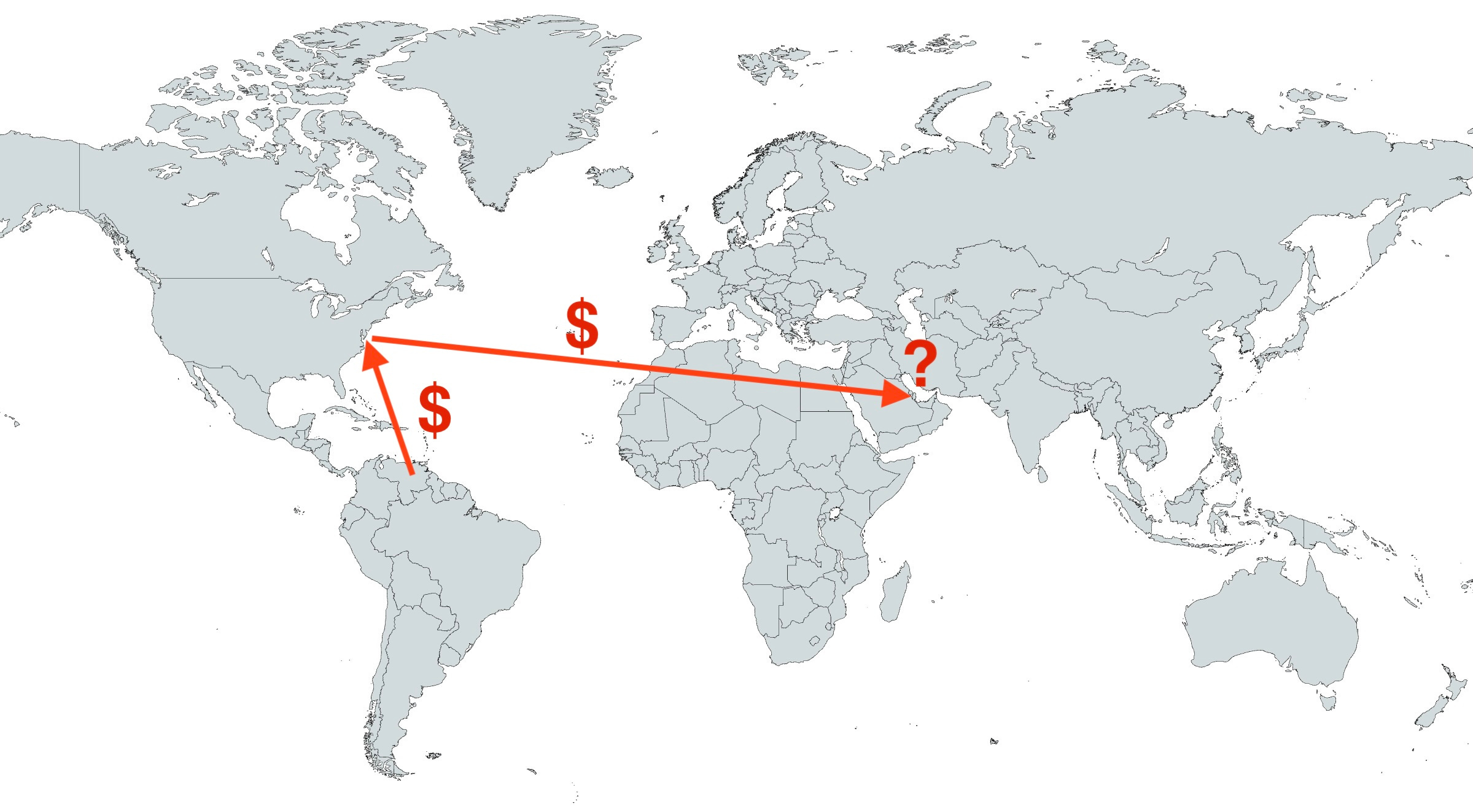
I’ll only suggest that “deposit the money in the Treasury” ≠ “deposit the money in an offshore bank account at an undisclosed bank in the country that gave the president the gift of a $400 million 747-8 jet.”
•••••
TAIWAN: The United States announced a trade agreement with Taiwan yesterday, Thursday. Before the agreement, Security Asia reported earlier this week that “Taiwan Semiconductor Manufacturing Company is accelerating its US investment amid direct government incentives, evolving trade negotiations, and political scrutiny.”
Why this matters: For the moment at least, Taiwan Semiconductor Manufacturing Company (TSMC) is the most important semiconductor manufacturer in the world. It doesn’t design chips; it makes them for huge clients, like Apple, Nvidia and American defense suppliers.
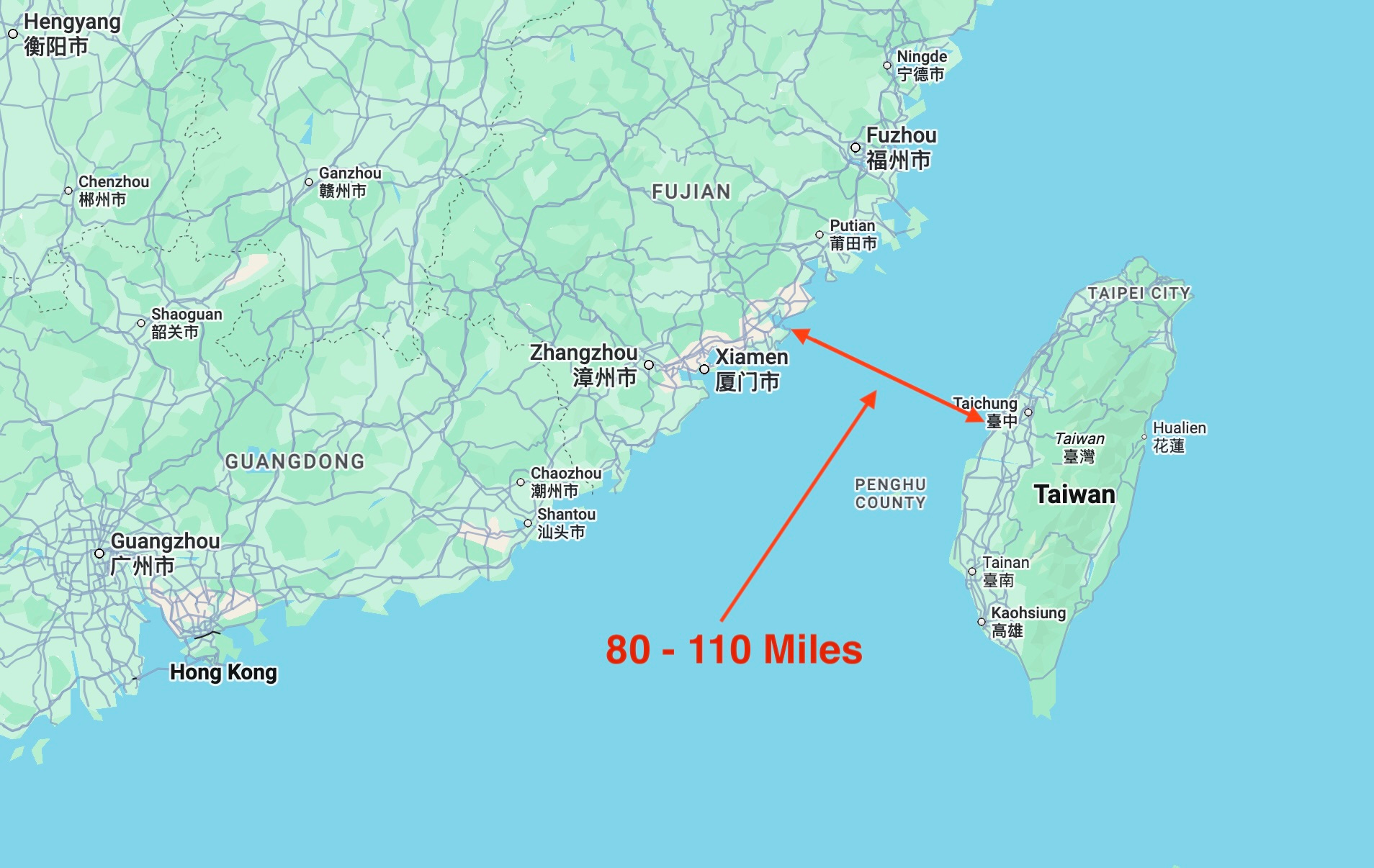
TSMC produces the world’s most advanced chips in Taiwan, a hundred miles from China, and thus sits at the center of the rivalry between China and the US, and all the politics and intrigue that surround it. China covets TSMC’s chips, and control of them, and the United States aims to keep a steady, secure supply out of Beijing’s hands.
It looks like what’s happening with TSMC’s accelerated US investment is a redistribution of risk. For years TSMC concentrated its manufacture of chips in Taiwan because the island offered a ready talent pool of engineers (although many were returned Taiwanese engineers who trained in the US), a network of materials suppliers that grew up around TSMC and because Taiwan felt comfortable under the American security umbrella.
The rapid growth of China and, arguably, perceived emerging leaks in that American security umbrella, have caused TSMC to diversify geographically.
The direct government incentives in the Security Asia report are primarily a result of the Biden administration’s Covid-era CHIPS and Science Act, through which Washington offers tens of billions of dollars in subsidies, tax credits and guarantees to bring advanced semiconductor manufacturing to the US.
It costs more to build and operate TSMC facilities in the US than in Taiwan and the CHIPS subsidies help to offset that. Which doesn’t necessarily mean that TSMC would prefer to make chips in the US. But use of the subsidies also buys political cover and protection from potential future Trump tariffs. It’s geopolitical insurance.
ARID POLICY CORNER: TSMC illustrates a trend in political continuity between US administrations. First, Donald Trump initiated tariffs, especially against China, in his first term that almost surely Joe Biden wouldn’t have, but the Biden administration left them in place.
The CHIPS Act looks like a Biden exercise in industrial policy that Donald Trump would never have put in place, but the Trump administration didn’t ax it, either. Both administrations, in various ways at various times, used national security as a reason to keep the inherited policies in place, and twice in a row now, an unlikely initiative by a previous administration was left in place.
The Biden economic team saw Trump’s tariffs as transactional and crude. Trump has derided industrial policy. Yet each let the other’s policies stand, and indeed, the Trump administration is using the CHIPS Act to jawbone TSMC into building a fab plant in Arizona. What’s at work here?
Some suggest that removing them would require spending too much of the fixed amount of political capital an administration brings to office; the incoming administration would prefer to use its finite political capital elsewhere, and so economic policies tend to harden into place.
Others think that once in place, over time a policy gains legitimacy. Political partisans who benefit from the policy close ranks and bipartisan backing emerges from beneficiaries of the policy. In short, a policy develops a cheering squad.
Another idea is that once economic tools are framed as a part of national security they become untouchable, even for a president who would otherwise reject them on principle.
Pick your favorite. but whatever the reason, if policies really do harden into place over time we might see this as a warning: the more our current political culture allows the disrespect of institutions and rejection of political norms built up over generations, the harder they will be to reinstate.
KIDDEESHAH: The former Shah’s son, like his father named Reza Pahlavi, left Iran 48 years ago as a teenager, before the Islamic revolution. It strikes me that urging Iranians to ‘continue the struggle’ from his home in Maryland, as his ‘compatriots’ are shot, might not sound that stirring to the compatriot’s ear. Maybe he could get on a plane and get over there to help. Otherwise he risks looking like a politician who seeks to claim leadership by birthright.

•••••

If you’re reading this as an email, be aware that your provider may clip the article before the end. Try clicking on ‘view entire message’ to see the whole thing, or you can always read everything at Common Sense and Whiskey online.
•••••

AND FINALLY, MAGICAL THINKING: Remember Scottish Independence? That was a real proposition for a time, as championed by the Scottish National Party (SNP) under the leadership of Alex Salmond and then Nicola Sturgeon, before each was forced from office by their own (separate) scandals.
In 2014, turnout hit a remarkable 84.6 percent in a referendum on the question, which was rejected, and yet the next year the SNP won an equally remarkable 56 of Scotland’s 59 parliamentary seats in Westminster.
The SNP is not what it used to be. And yet there was the Scottish First Minister John Swinney a week ago, chiming in after Kier Starmer’s ‘coalition of the willing’ pledge of British troops, declaring that he, Swinney, would commit Scottish military personnel to Ukraine in the event of an “acceptable peace” between Ukraine and Russia - if Scotland were independent. Which, at this point, looks even less likely than a Ukraine peace agreement.
•••••
That’s it for this week. Thanks for reading all the way down here.
See you next week. Please pass this article around and invite your friends to subscribe. Like we say in Georgia, ‘It don’t cost nothing.’ And do let me hear from you.
Content on Common Sense and Whiskey is free. There’s no paywall, but if you subscribe for $5 a month or $50 a year, next time I’m in town I’ll come over and wash your car. Maybe I will.
Cheers,
Bill

He doesn't understand the merciator map. Yet he will redraw it with a Sharpie. Good synopsis. Always good to see it show up on a Friday. Thanks.
Excellent breakdown here. The TSMC risk redistribution point is something I hadn't thought about explicitly but tracks with how corporate strategy shifts when geopolitics destabilize. The interesting bit is how industrial policy from different adminstrations hardens into bipartisan consensus not through ideological agreement but throgh interest group consolidation. Saw this personally consulting for a midwest manufacturing firm that pivoted hard on Biden subsidies and now cant imagine operating wihtout them.