

What Just Happened #78
New Year 2026 edition

Welcome and happy 2026. Had enough holiday indulgence? There’s this one last weekend we might use to delay the grim onset of January - if it shows up at all. Here in Atlanta, there were still a few green leaves on the ordinary trees as they lit the Christmas tree and menorah in our main city park. So far there hasn’t been a lot of real winter.
It’s hard to know what’s real and what’s not on what used to be Twitter these days, but we do know that protests that broke out in Tehran last Sunday have been sustained all week. Could it be the first big story of the new year? Protesters have been disappointed in Iran before, but let’s watch.
Today we’ll catch up a little on Russia’s war on Ukraine, and among other things, we’ll consider “what Somaliland is, really.” But before we get started, just a quick thank you to subscribers, particularly paid subscribers, for coming by once or twice a week.
Common Sense and Whiskey goes deeper than the headlines on a few stories a week, in a presentation that busy people can absorb quickly. It’s a short, sharp look at the world out there.
Have a look at today’s column. If you’re reading this as an email, maybe have a look at the online version at CommonSenseandWhiskey.com, and if you like what you see, please subscribe. Let me know what you think. Here goes.
•••••

IN RUSSIA’S WAR ON UKRAINE, IT’S NOT A PEACE PROCESS: It’s more of a fitful series of events, a series of regular, desultory meetups that mean something different to each interested party, like so:
The United States wants that peace prize. As a third party to the Russia/Ukraine conflict, the US can negotiate with Ukraine, the victim of aggression, morning to night and month after month, but until the aggressor is directly involved and negotiating, there’s little hope for a US-imposed resolution. One dramatic move the US could make would be to wash its hands of the whole situation, but relinquishing the stage is something President Trump is unlikely to do. In the meantime, American diplomacy adds up to just so much campaigning for Donald Trump’s Nobel prize.
Michael Weiss notes that, in spite of Donald Trump’s running social media commentary, the US is still extending tacit approval for Ukraine’s military campaign. As part of Ukraine’s deep strike campaign against Russia’s energy infrastructure, Weiss says, on Christmas Day Kyiv
“hit the Novoshakhtinsk oil refinery in Rostov with British-supplied Storm Shadow cruise missiles, meaning it must have been authorized by Gen. Alexus Grynkewich, the NATO Supreme Allied Commander, because he has final say on the use of any Western munitions fired into Russia.”
Grynkewich, like every Saceur, is American. Of Belarusian descent, he’s a University of Georgia grad with an MA in history, class of ‘94.
While trying to snare the peace prize for the boss, various American players pursue their own interests: Trump would like to impose a settlement on the combatants, pocket the peace prize, restore American trade with Russia and a build a Trump Moscow Tower. Marco Rubio, in contrast, is trying to deconstruct what he can of Steve Witkoff’s Russian-drafted peace plan, enjoy a side dish of regime change in Venezuela/Cuba, and remain Robin to Trump’s Batman. Witkoff continues vacantly playacting the Putin-friendly negotiator role, and Jared Kushner remains forever nearby to protect the family money.
Ukraine wants to keep the Americans talking. Because as long as the Trump team is engaged, and thinks it’s doing whatever it is that it thinks it’s doing, it isn’t denying Ukraine the intelligence support Ukraine depends on.
The Europeans don’t really, really want a settlement to end the war. They’d have to help enforce it, putting troops in harm’s way. What they’d prefer is two or three years of grace, to rearm. Like Kyiv, they’re playing for time, seeking to talk down the breakup of the trans-Atlantic alliance, maintaining what they can of it, mitigating the harm the Americans can do to Ukraine and keeping a political process in train.
The Russians want Ukraine, plain and simple, and that‘s unclear to no one except the American president. Okay, maybe to Steve Witkoff, too, who seems to view Putin as a fine chap who would probably be a good golfing buddy if he weren’t into odd unAmerican pursuits like judo.
The analyst Jade McGlynn sums up the view from Moscow:
“Russia thinks Ukraine will collapse first and then negotiations can begin. Until then, I would say that we have talks but not negotiations.”
There are, in fact, negotiations. It’s just that Ukraine and the Europeans negotiate with the Americans and the Americans negotiate among themselves, but the Russians, so far, negotiate with no one. They issue edicts and they may be expected to continue issuing edicts as long as that continues to work.
It’s why nothing substantive ever seems to come from Trump/Zelensky meetings. As long as it suits everyone for these mostly empty bits of diplomacy to continue, my guess is they will continue.
The Russians operated straight from their playbook just after Zelenskyy left Florida last weekend, running to Daddy Trump to complain that Zelenskyy had targeted Putin’s lair, which must be the most heavily guarded bit of earth in Российская Федерация (the Russian Federation).
Trump took the bait at first, but it was good to see that US Ambassador to NATO Matthew Whitaker said on Tuesday it was “unclear whether it actually happened,” and that, “You know, Ukraine is receiving drones and missiles every single night into their capital city.” Ultimately the CIA concluded and CIA Director John Ratcliffe told the President that Ukraine did not, in fact, attack Putin’s vacation villa.
•••••

PROJECT 2026: The Trump team is acting pleased with itself. It seems to appreciate the way its Project 2025 preparations have played out (“It’s actually way beyond my wildest dreams,” Paul Dans, one of Project 2025’s leaders, said.), so now it’s pressing its National Security Strategy (NSS) into a similar action plan to undermine liberal governance across Europe.
The NSS seeks to support what it sees as “the growing influence of patriotic European parties” (“patriotic” is MAGA for hard-right nationalist parties) across Europe, and the administration has already moved to make it happen.
About twenty German Alternative für Deutschland (AfD) politicians traveled to the United States last week to meet with Trump administration officials, including U.S. Under Secretary of State Sarah Rogers.
The AfD has widespread grassroots support across Germany, but in February the German Federal Office for the Protection of the Constitution (BfV), which is Germany’s domestic intelligence agency, classified the AfD as a “proven extremist group” after determining that “the party has been following a far-right nationalist and extremist agenda, actively undermining Germany’s democratic constitutional order.”
The BfV said “The party’s predominant understanding of people based on ethnicity and ancestry is incompatible with the free democratic constitutional order.” This is the same AfD party whose co-leader, Alice Weidel, was granted a meeting with JD Vance during his visit to Munich early in 2025.
In November Alex Bruesewitz, who is a senior adviser to Never Surrender, Trump’s political action committee, told AfD leaders in Berlin “that he sees them as “bold visionaries” shaping the country’s future.”
And on December 12th, eight days after publication of the NSS, US Ambassador to France Charles Kushner (yes, those Kushners) published a photo of himself meeting with the leaders of France’s far-right National Rally party, writing that he “appreciated the chance to learn from (them) about the RN’s economic and social agenda and their views on what lies ahead for France.”


•••••
A CHART WORTH A THOUSAND WORDS: Brilliant chart via Christopher Smart’s Leading Thoughts substack, graphically showing how thoroughly and irreversably the US’s unipolar moment is gone. Note how US Treasuries surge ahead of gold as a percent of other countries’ foreign reserves in early 1995, three years after the Soviet collapse, when the US stood as unquestioned hegemon.
It only lasted for a relative moment. Shortly after the country weathered the subprime mortgage crisis it began it’s long, gradual slide toward now.
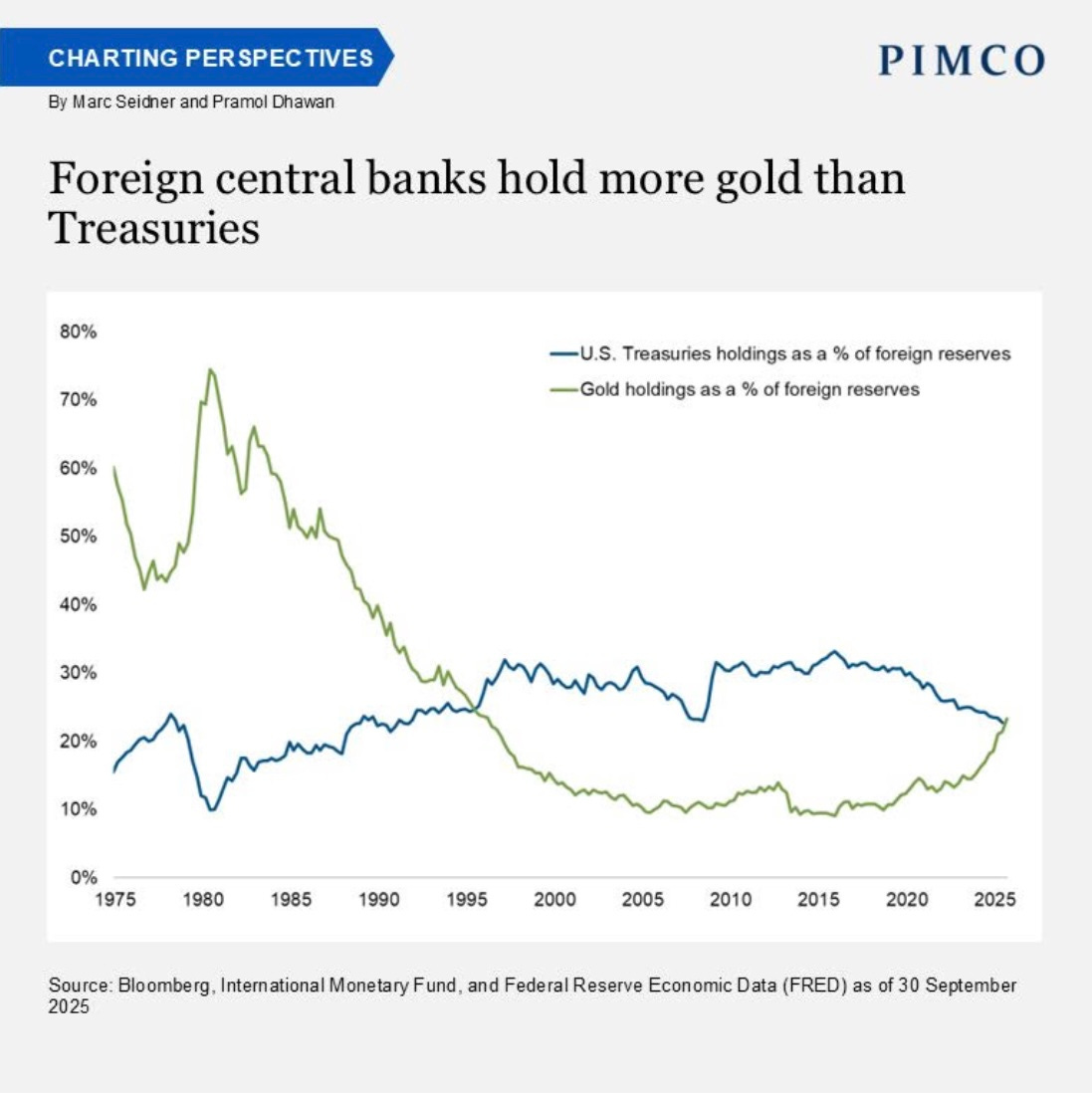
Here’s what Christopher Smart wrote:
It’s not news that the gold reserves of foreign central banks have been growing. Some of this is just the impact of rocketing gold prices. Some of this reflects deliberate efforts to diversify away from the dollar to mitigate sanctions risk. To be clear, the dollar isn’t about to be toppled by gold, bitcoin or China’s yuan as the world’s reserve currency, but somehow this chart takes on a fresh significance in the week after America announces a National Security Strategy that is more hollow, self-congratulatory and selfish than any of its predecessors since 1987.
•••••

If you’re reading this as an email, be aware that your provider may clip the article before the end. Try clicking on ‘view entire message’ to see the whole thing, or you can always read everything at Common Sense and Whiskey online.
•••••
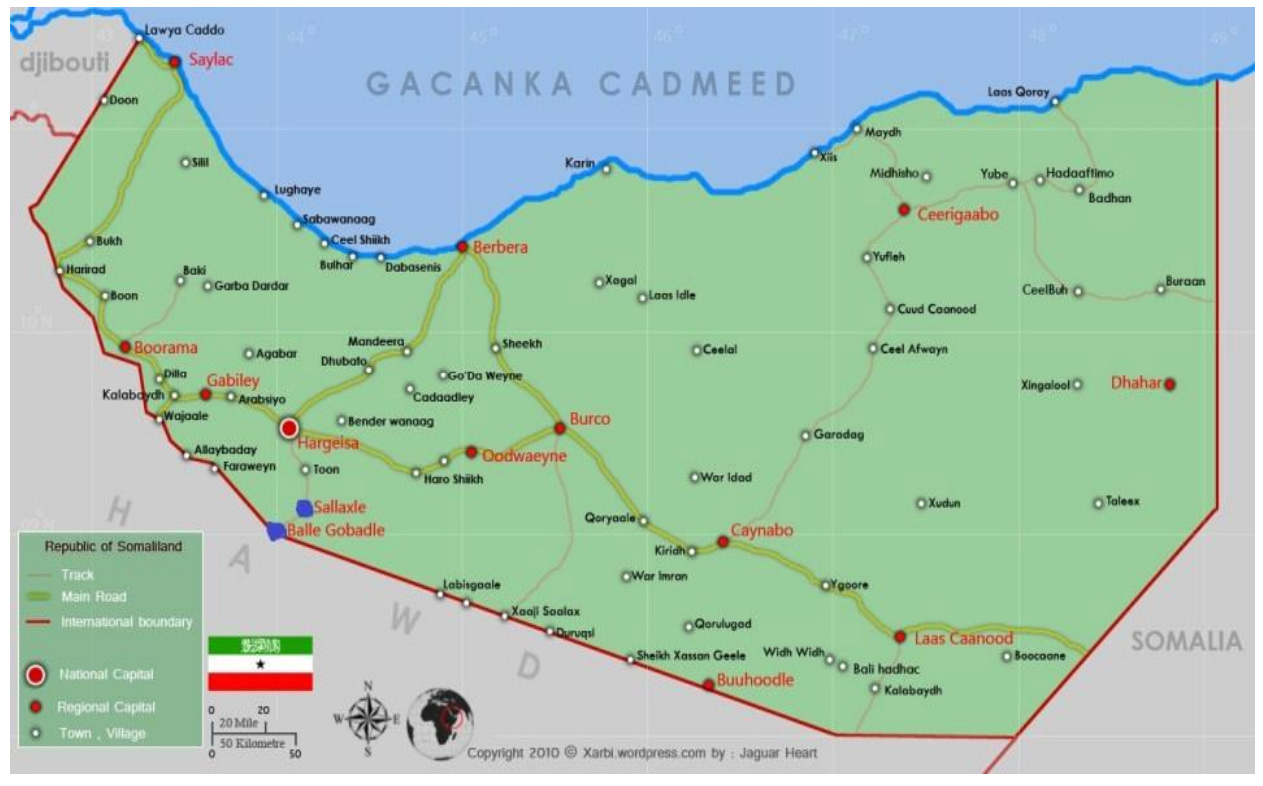
“DOES ANYONE KNOW WHAT SOMALILAND IS, REALLY?”
For starters, most people don’t know where it is. It’s here:
In this neighborhood:
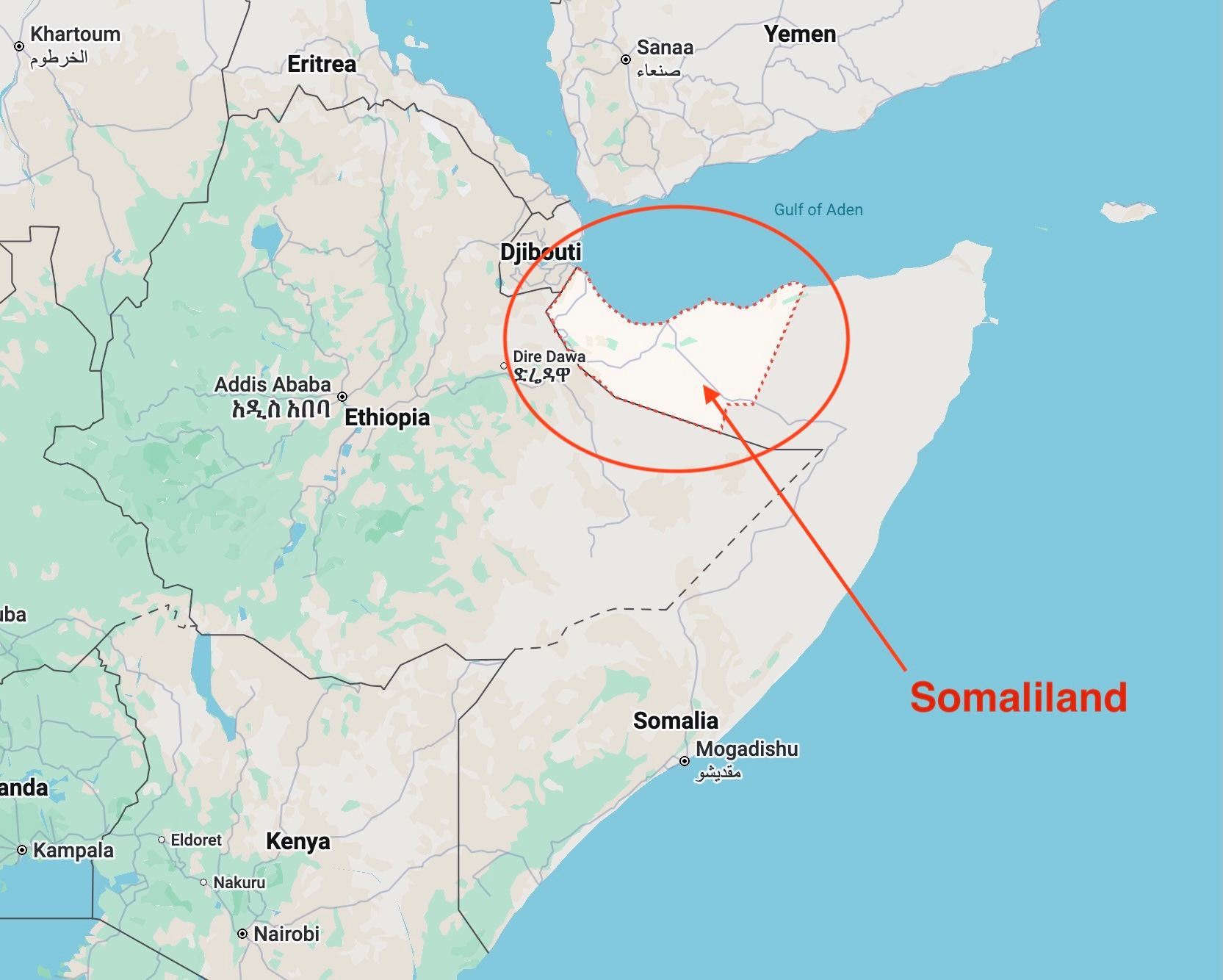
Somaliland is what you and I think of, if we think of it at all, as the northwestern part of Somalia. It declared its independence in 1991 but, until this week, for all that time it had been recognized by exactly no governments.
That doesn’t mean it’s hard to get to Somaliland. There are daily flights to the capital, Hargeisa, from Addis Ababa and Dubai, and other flights from Djibouti, Jeddah and even from Mogadishu, the rival capital of Somalia, an hour and a half flying time away. Somaliland functions like a country, issuing its own passports and operating its own government, currency and institutions.
Tourism may be a little off-putting, though. Joshua Keating writes in Invisible Countries that “Hargeisa is one of the safest large cities in Africa,” and “there’s not too much to be concerned about when you’re walking around.” But “foreigners traveling outside the capital have been required to hire an armed guard since the killing of four foreign aid workers by bandits in 2004.”
Still, the Sarovar Hotels Group, an Indian hospitality company, has become the first branded chain to open a hotel in the capital, with its Serene Hotel (possibly a knockoff of the Nairobi-based Serena hotel chain).
There are prime beaches along the Gulf of Aden and a few hotels around the coastal city of Berbera, but don’t expect a lot of beach resorts with a fancy umbrella in your cocktail. As a just about one hundred percent Muslim country, alcohol is only underground. For a legal buzz, citizens of Somaliland chew khat, which plays a huge role in society. In 2014, taxes on khat sales accounted for twenty percent of Somaliland's budget.
•
Somaliland declared its independence from Somalia in 1991, a few months after the last functioning Somali central government, that of Siad Barre, fell. Thirty-four years later, on the day after Christmas, Israel became the first country to officially recognize Somaliland, framing its move as “in the spirit of the Abraham Accords.”
Somalia’s government in Mogadishu naturally condemned the move as a violation of its sovereignty. The African Union, the Arab League, and others did, too, on grounds it could be regionally destabilizing. By the middle of this week, diplomacy began to take on what looked like an anti-Israeli slant, as
“(t)wenty-one Middle Eastern and African governments and organizations signed a statement condemning Israel’s recognition of Somaliland “in light of the serious repercussions to peace and security in the Horn of Africa and the Red Sea region, and its serious impacts on international peace and security, which also reflects Israel’s clear and complete disregard for international law.” (Signed) Saudi Arabia, Egypt, Turkey, Iran, Pakistan, Qatar, Jordan, Algeria, Iraq, Kuwait, Oman, Libya, Palestine, Somalia, Sudan, Yemen, Comoros, Djibouti, Gambia, Maldives, Nigeria and the Organization of Islamic Cooperation,” Shoshona Bryen wrote.
Although the Israeli Prime Minister met Donald Trump in Florida this week, the American president didn’t follow suit. “Does anyone know what Somaliland is, really?” Trump asked.
I’m generally on Somaliland’s side on this one. After all, the United States also, sort of, started out, you know, in favor of self-determination.
Further reading: Der Spiegel’s A Miracle on the Horn of Africa.
••••••
END OF MAIL IN DENMARK: The Danish postal service delivered its last letter on Tuesday, ending more than four hundred years of service.
Danes will still be able to send letters, using the delivery company Dao, which already delivers letters in Denmark but will expand its services from 1 January from about 30m letters in 2025 to 80m in the new year. A standard domestic letter up to 100 grams now costs DKK 23, about $3.60/€3.10/£2.70.
•••••
That’s it for this week. Thanks for reading all the way to the end, and happy holidays to you and yours.
See you next week. Please pass this article around and invite your friends to subscribe. Like we say in Georgia, ‘It don’t cost nothing.’ And do let me hear from you.
Content on Common Sense and Whiskey is free. There’s no paywall, but if you subscribe for $5 a month or $50 a year, next time I’m in town I’ll come over and wash your car. Maybe I will.
Cheers,
Bill
Thanks for reading Common Sense and Whiskey. This post is public so please feel free to share it. I’m grateful that you read my Substack, thank you very much. Please tell your friends, and consider subscribing for five dollars a month. See you next week.
