

Govern? Let's Fight Instead.
What Just Happened #93

Welcome. We heard many times this week that the president and Xi Jinping are friends. We may need to wait a little bit to see if anything really happened at the summit in Beijing. As Air Force One headed home on Friday, it looked like a visit short on achievements.
Today, we recap election fallout in the British Labour Party, discuss cultural cross-pollination in the High North and consider events in South Korea and Hungary. Then we close with an uncharacteristically gloomy commentary.
Common Sense and Whiskey goes deeper than the headlines on a few stories a week, in a presentation that busy people can absorb quickly. It’s a short, sharp look at the world out there.
If you’re reading this as an email, have a look at the online version at CommonSenseandWhiskey.com, where all CS&W content is available, and if you like what you see, please subscribe. Talk to me in the comments section or directly, at BillMurrayWriter (at) gmail.com. Let me know what you think.
•••••

LONG HOT SUMMER FOR LABOUR: In a statement meant to criticize Kier Starmer from the left, Starmer’s former Deputy Prime Minister Angela Rayner delivered a broadside just three days after last week’s devolved and local elections in Great Britain:
“Countries including Spain and Canada have shown that economies can grow and people can thrive when governments stay true to labour and social democratic values and put people first. We need to learn from that.”
Criticism from Labour’s left might be expected to cite the government in Spain, given Pedro Sanchez’s history of confronting austerity through, for example, repeated increases in the minimum wage.
But Canada? It’s a country that, it’s true, is governed by a nominally center-left government, but its leader is best known as a career banker.
Used to be, a Labour critique from the left might have appealed for solutions associated with organized labor, or public ownership, or maybe appeals for redistributive solutions.
Once upon a time Carney would have represented the very embodiment of managerial capitalism. In 2026 the leading British center left party opposes austerity and nationalist populism. These days in the UK, it’s no longer Labour versus capital.
Rayner was cleared of “deliberate wrongdoing or carelessness” by HMRC (broadly the British equivalent of the American Internal Revenue Service) in a tax matter this week. The ruling seems to have come a wee bit late for her to use as a springboard for what looks like a brewing leadership campaign in the Labour Party.
The first potential candidate showing a public interest in the Prime Minister’s job so far is Wes Streeting, until this week the Health Secretary. Streeting lives on the right of Labour. He’s comfy with the private-sector inside public services in a way that not all Labourites are, and was a sharp Jeremy Corbyn critic.
Thursday morning Streeting resigned from the Starmer cabinet to clear the decks for his leadership challenge, and promptly backed Burnham. It was unclear whether he has enough support for in the first place. He would need 81 MPs to sign on to his bid to mount a direct challenge.
It was thought Rayner might oppose Streeting from the left of the party, but rather than using the news of a clean slate from the tax authorities to help mount a candidacy, she spent the week issuing less-than-leaderlike statements like this:
“I’ll play my part in doing everything we possibly can to deliver the change, because it’s not a personal ambition, I know the difference it makes.”
And by Thursday that was all just as well, because Greater Manchester Mayor Andy Burnham looked set to play the role of challenger-from-the-left. The Greater Manchester mayoralty Burnham holds is second only to London in size, at just under three million.
Burnham has a wee barrier to get through first, though, because at the moment he’s not a member of parliament. Burnham found an MP, 32 year old Josh Simons, who was willing to resign his seat in the Greater Manchester constituency of Makerfield to make room for Burnham, which would give him standing to enter the leadership race.
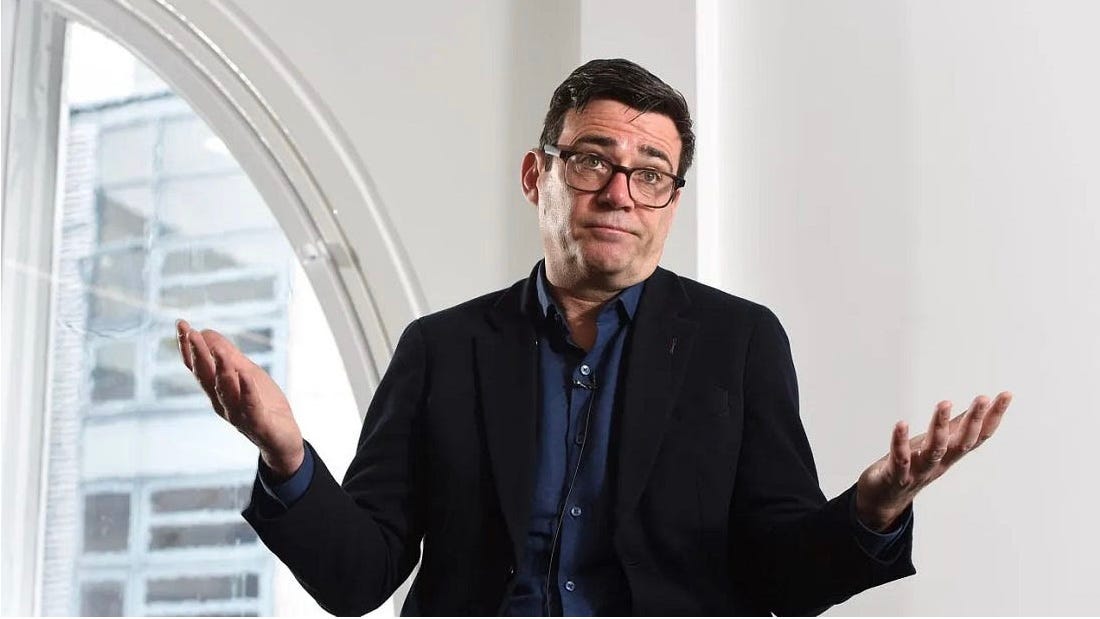
Burnham will need to be selected for and win a Makerfield by-election first. He may not be a shoo-in. As the Guardian has it:
”While Burnham won the constituency in the 2024 mayoral race with 62% of the vote, at last week’s local elections (far-right) Reform won 50.4% across the eight wards up for election, with Labour trailing on just 22.7%.”
All this maneuvering will take time. Even if the whole party agrees to wait for Burnham, a by-election probably can’t be arranged until around the beginning of July, and the leadership challenge can’t begin until then. There’s plenty of time for plotting.
It looks like shaping up to be a long, hot summer for the Labour Party. And as they fight it out, let the American opposition take one lesson now from what may be the coming fall of Keir Starmer:
Make a plan. Be ready to come to office with goals. Devise a Project 2029 and run on it.
•••••
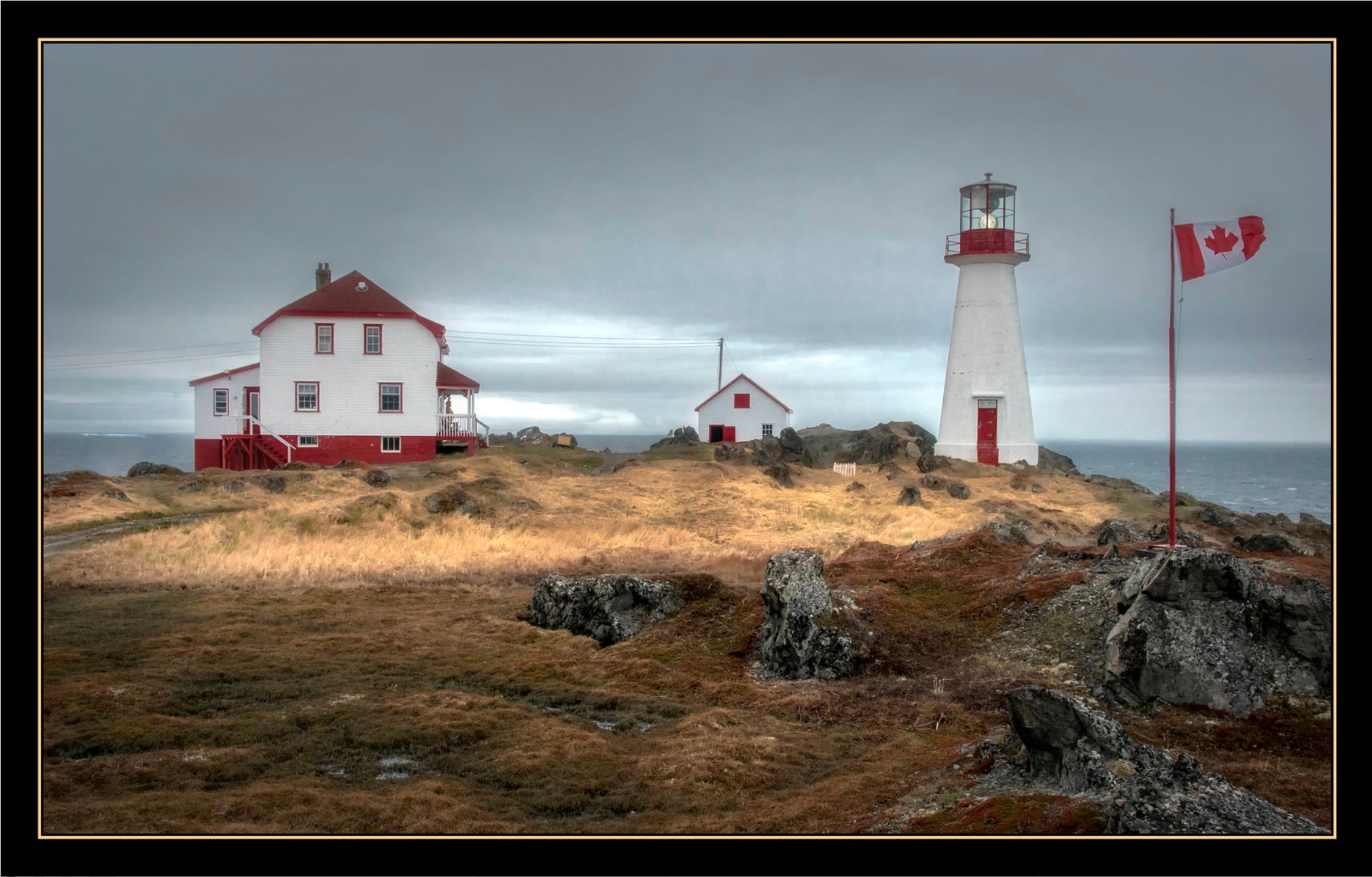
CULTURAL CROSS-POLLINATION IN THE NORTHLANDS: Cultural cross-pollination has broken out across the Atlantic in the northern countries, as evidenced by this headline in the Globe and Mail: “Canadians should embrace Norway’s dedication to open-air life” about the Nordic idea of friluftsliv. Cold-climate democracies are borrowing social habits, institutional ideas, and even stories about identity from one another.
The two sides of the north Atlantic start out as a natural fit; Montreal remains one of the great capitals of the Francophone world. There’s even a tiny sovereign, Euro-spending bit of the French Republic just a fifteen mile ferry ride off the coast of Newfoundland.

And it works in both directions. Canada is coming to be seen a kind of “North Atlantic middle power” in parts of northern Europe that share these characteristics: large territory, thinly populated, with Arctic exposure, potential resource wealth, members of NATO but with a defensive orientation.
With good reason, since they share unique common political interests; Arctic sovereignty and indigenous affairs are perhaps foremost among them
In the quarter century or so I’ve been traveling there, the Nordics have transformed from nearly homogenous societies racially and ethnically, to a much more multicultural realm. Especially after the waves of immigration into northern Europe over the last fifteen or so years, Canada’s comparatively mature multicultural model is widely debated across northern Europe. It’s also official Canadian policy.
Plus, wilderness, lakes, remoteness, resource economies, northern indigenous cultures and just knowing how to handle winter are all naturally familiar terrain.
Canada and the Nordics are growing together, not merely as allies, but as civilizational cousins. It’s a process nudged along as an unintended consequence of Mark Carney’s US/Canada ‘rupture.’
•••••
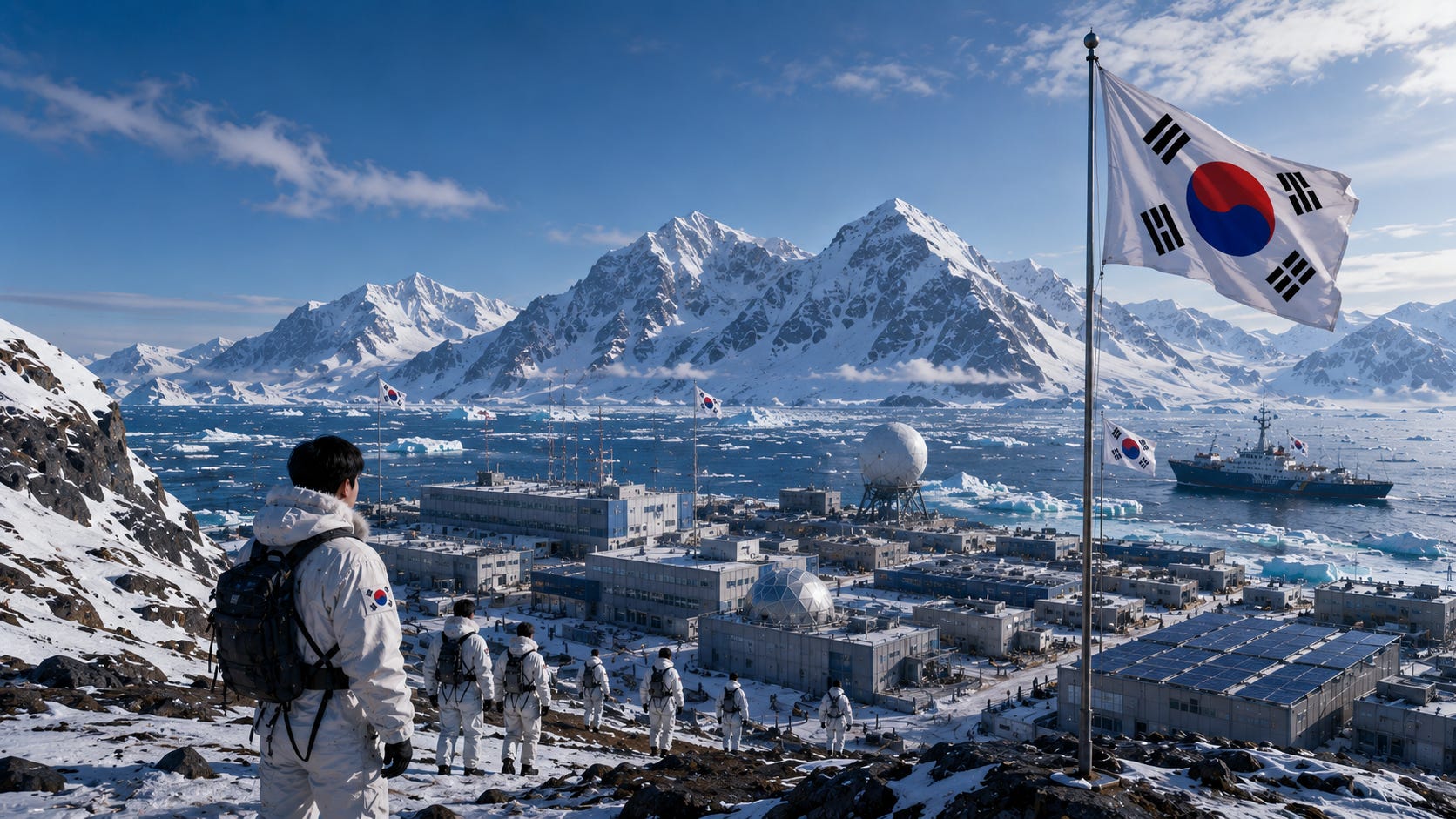
SOUTH KOREA: More news about the High North comes, if a little improbably, from Seoul, where the government aims to become “a key player in emerging Arctic shipping routes.”
The legislature has prioritized “a sweeping bill to build port infrastructure, coordinate national strategy and secure a foothold in polar logistics,” according to the always usually interesting High North News. It hopes to develop Busan into “a hub for the Arctic route.”
Whatever comes of the initiative, some legislators got a free trip to Norway. “A delegation from the port of Busan recently signed a partnership agreement with Norway’s port of Tromsø.”
•••••

HUNGARY: Following his defeat in Hungarian elections a month ago this week, former Prime Minister Viktor Orbán reported feeling “pain and emptiness.” He revealed this to the YouTube channel Patriota.
He also told Patriota “I have never tolerated any corruption.”
The London Times reported separately that Orbán’s daughter Rahel, “prominent in the tourism and beauty sectors,” had moved with her husband to New York, “so she could pursue further studies.” That couple’s combined fortune has been estimated by Forbes as at least 151 billion forints” ($561 million), the Times reported.
•••••

If you’re reading this as an email, be aware that your provider may clip the article before the end. Try clicking on ‘view entire message’ to see the whole thing, or you can always read everything at Common Sense and Whiskey online.
•••••
NOT A HAPPY COMMENTARY: The United States is in a tailspin, and that’s not just based on the headlines of the day: yes, there’s the war with no way out in Iran, Russia’s war on Ukraine (and freedom), inflation that won’t go away and grumbling and dissatisfaction about the economy.
More consequential is the tidal pull of tyranny, and the dispiriting realization of how many people are happy to help see democracy off. We’re witnessing the real-time weakening of political institutions.
And there’s something else: the hollowing out of humanity from all of economic life in America—not just from where Americans get goods and services, but also from where they get their paychecks. We’re living through all the things a raft of books have been warning us about.
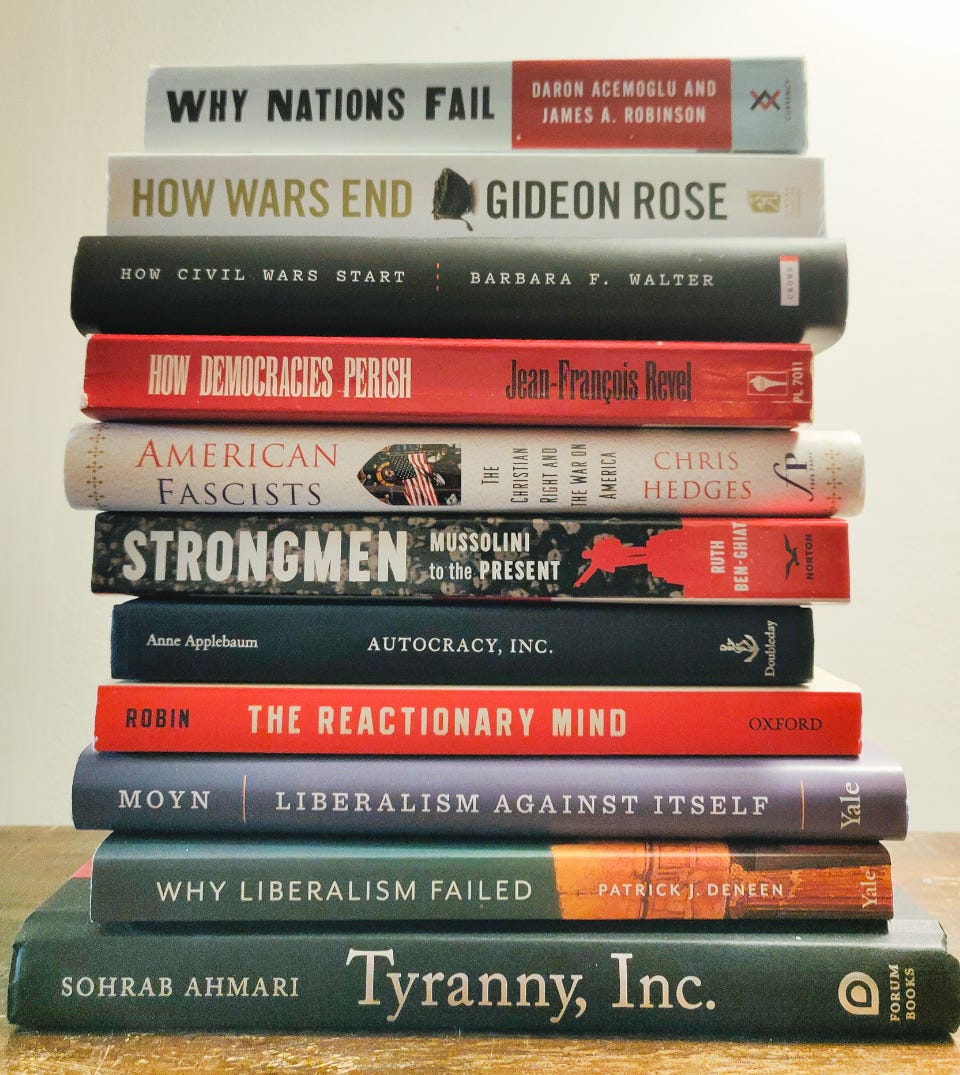
At least we were warned.
I hope you had a chance to read the article I shared earlier this week from the Australian writer David Lewis. David wrote:
“Neoliberalism promised flexibility, efficiency, and freedom. In practice, it delivered something more corrosive: the systematic transfer of risk from institutions to individuals, while leaving institutional authority largely intact.”
That it did. And as a result, trust evaporated. As a result you get:
“… a refusal to grant institutions the presumption of good faith they once enjoyed,” which is a failure of legitimacy. It’s “the accumulated consequence of institutions that retained authority while shedding obligation.”
And then we reelected Donald Trump.
What’s more worrisome is that it’s not just the United States. David was writing from Australia. Governments across the West are unable to care for their citizens.
Rana Dasgupta argues that the state has become unable to manage economic inequality, eco-degradation and tech’s manipulation of the truth. More to the point, the state has shown it’s inability or unwillingness to even try.
To Dasgupta, “the nation-state is a constantly changing commercial engine, whose interests coincide only sometimes with those of human beings.” There’s the problem. The solution, which is considerably easier said than done, is to change the state.
If you believe this, the way to pull ourselves out of this is not just to take control of the House in November. It is to change the state. There’s next week’s project.
•
A corrective is needed but none is in sight. Antonio Gramsci has perhaps been over-quoted in the 2020s, because his famous “interregnum” maps so perfectly onto today.
His circumstances, his lived reality was in fact radically different. For him the backdrop was the breakdown of the old order after the Great War. As a Marxist, he saw defeat snatched from the hands of victory.
He saw the old liberal order replaced not by a governing working class, but by Italian Fascism. And during his “interregnum,” he was in jail.
Still, his words apply:
“The crisis consists precisely in the fact that the old is dying and the new cannot be born; in this interregnum a great variety of morbid symptoms appear.”
A modern paraphrase says, “The old world is dying, and the new world struggles to be born: now is the time of monsters.”
In our context, no matter how much leadership sets out to maintain a system many see as morally bereft, that leadership itself is seen as ineffectual at best and complicit at worst.
The disillusionment that follows, compounded by the confounding zeal of those converted to ‘illiberal democracy,’ allows for the rise of Gramsci’s monsters. From the roster of our day, they include Berlusconi, Kaczyński, Orbán, Johnson/Farage and, of course, Donald Trump.
We must also consider that this may not be an interregnum at all, and a corrective may not be coming. There is “the possibility that we have entered a time of more frequent crisis – a time after stable orders.”
•••••
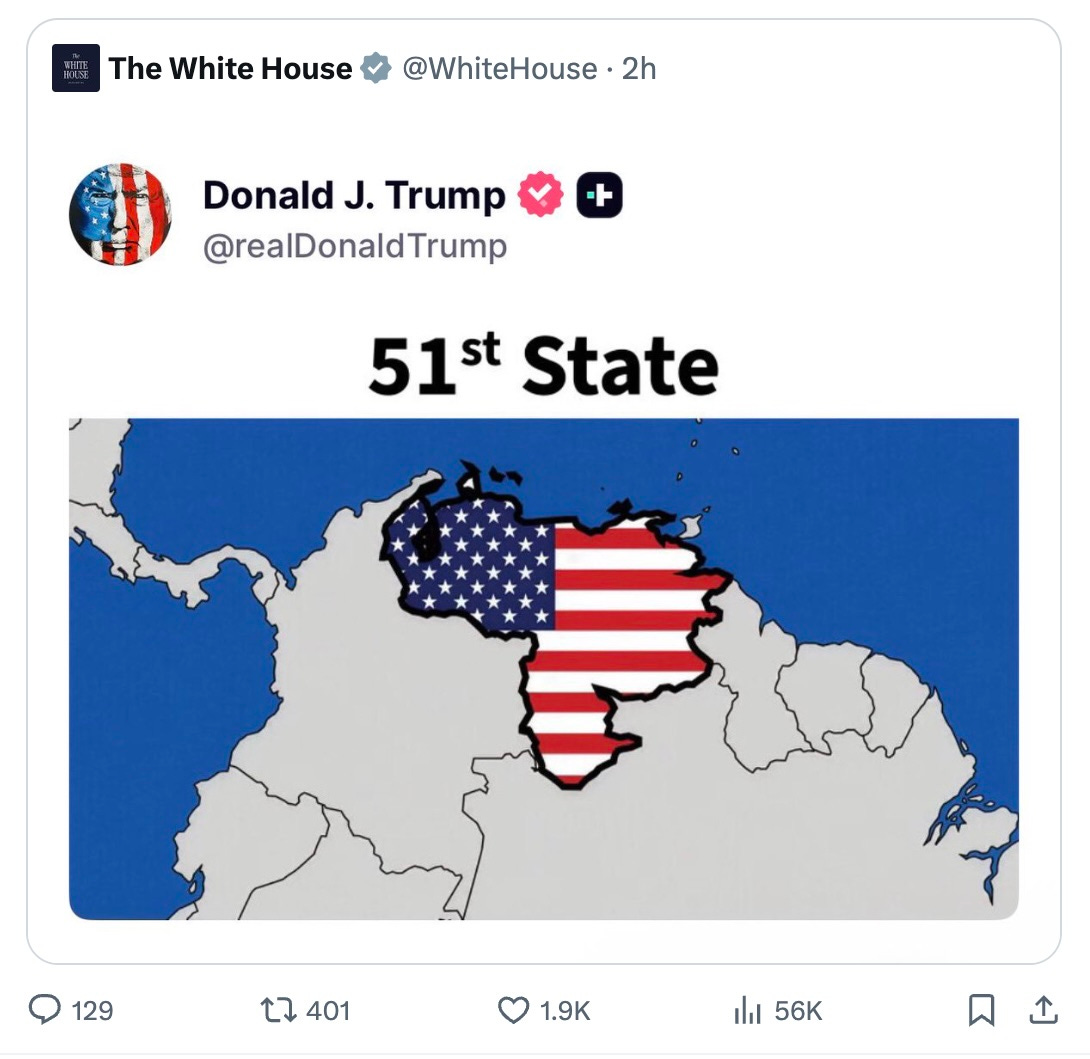
Like most people, you’ve probably quit paying attention to what the president puts on social media. Here’s the kind of thing you’ve been missing:
•••••
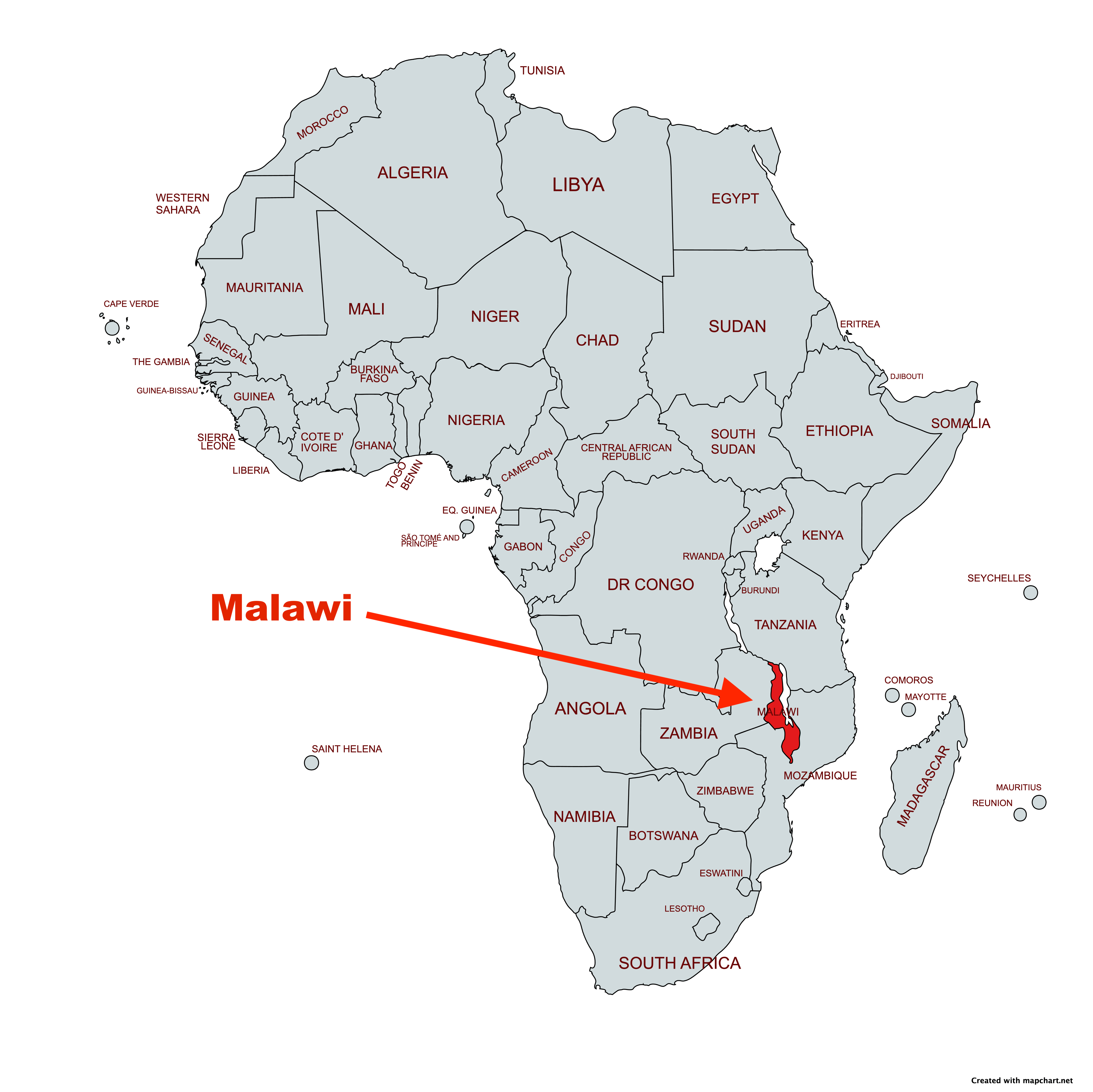
MALAWI: Bloomberg reports that when Iran closed the Strait of Hormuz in response to an attack by the US and Israel, it choked off shipments from producers who supply almost 60% of the nitrogen-bearing fertilizer needed by subsistence farmers who make up the bulk of Malawi’s population.
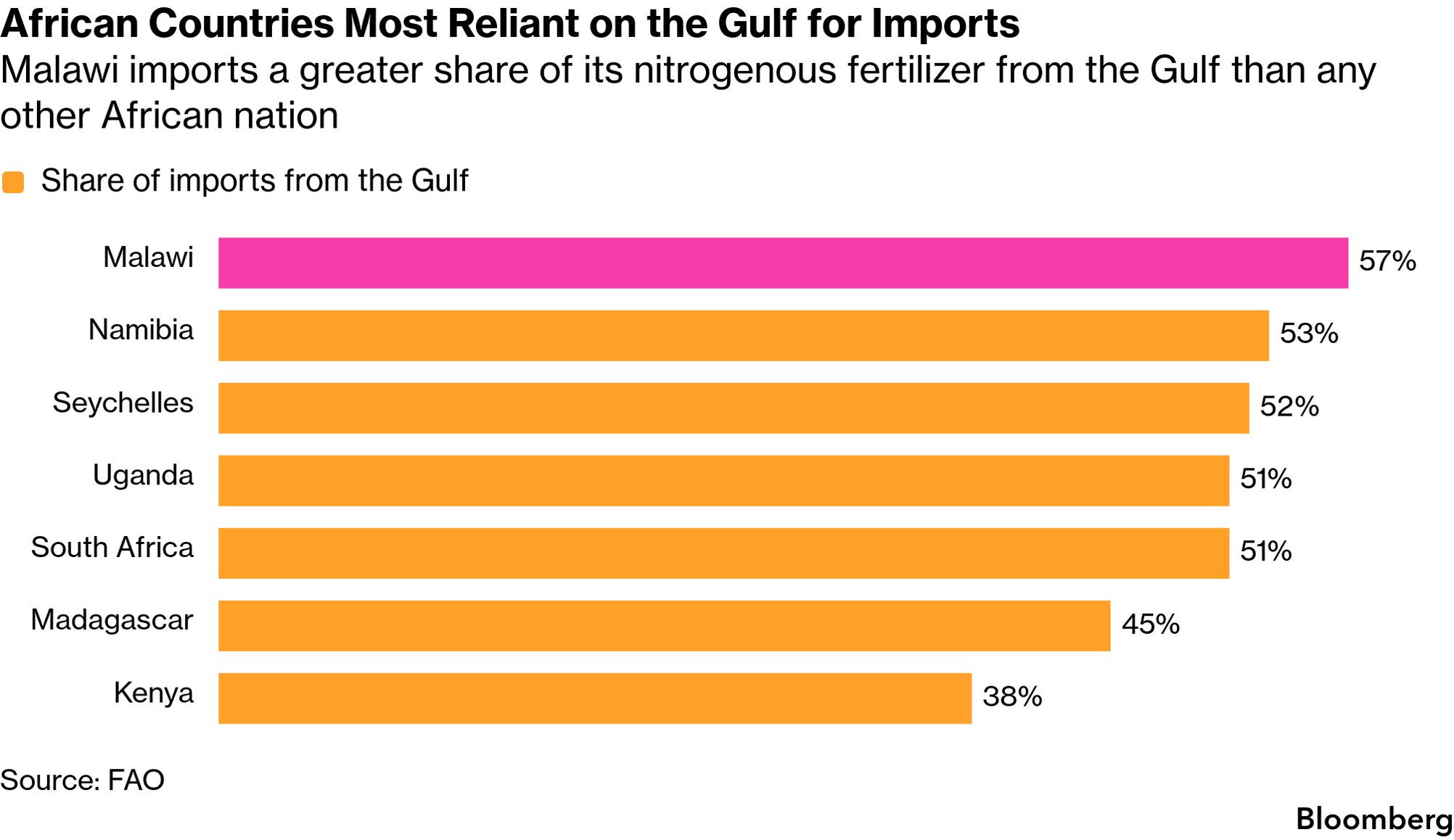
As a result, landlocked Malawi, one of the countries in the world least prepared to afford a new raft of troubles—and three thousand miles from the conflict—now faces the second-highest fuel prices in the world, scarce fertilizer and impending food shortages.
Now, as a consequence of the war, fertilizer costs have surged (if it’s available at all) and the cost of transporting it to remote rural areas is prohibitive.
Malawi is poorly connected to the nearest ports, in Mozambique and South Africa, and customers with more money often snatch up cargoes en route, to replenish dwindling stocks.
•••••
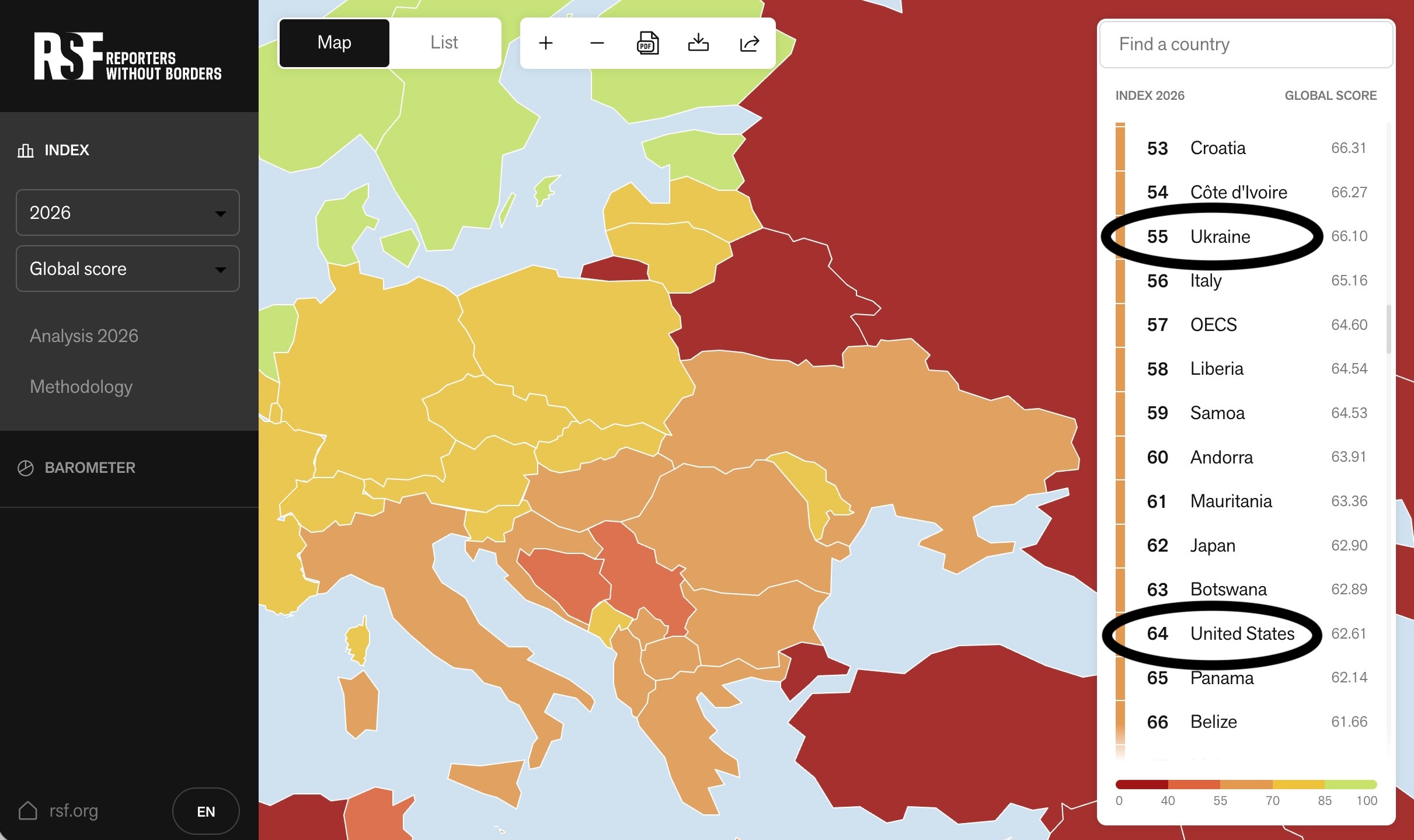
GOT FREEDOM OF THE PRESS? And finally, Ukraine may not have any cards, but on the new 2026 press freedom list from Reporters Without Borders, Ukraine moves up seven slots to 55th, surpassing the United States, which slides seven slots to 64th.
•••••
That’s it for today. Thanks for your time, and let me hear what you think. Please pass this article around and invite your friends to subscribe. Substack authors, feel free to restack this or any other column on your own Substack anytime.
Content on Common Sense and Whiskey is free. There’s no paywall, but if CS&W is beneficial to you, please subscribe for just $5 a month or $50 a year. Big American media is increasingly falling under the control of government-friendly oligarchs. The future is on Substack and platforms like it — please invest in independent writers you trust. We’d all appreciate your support.
Cheers,
Bill

The "them damn kids" landscape has changed. In the 60s we had the hard hats and the hippies. A single division based loosely on age. Now? The millennials are supposed to oppose Gen Z (or whomever sits to the left and right on the imaginary hate scale). How many divisions now? Looks like about 8. Eight places to divide citizens, all with memes and slogans lobbed at each other across the net. Makes y' long for the days of hard hats and hippies.
This hate basis can be defeated. First, I suggest common cause. Let's clean up the air. Actually, balancing C02 is all we have to do and the oligarchs have the money. Sounds big, but the atmosphere is only a few miles thick where greenhouse gases accumulate. The mechanics of C02 removal are extremely simple. And you don't have to remove the bulk of it. Just enough to get us down to a 260 ppm load. I could totally geek out on this world wide project, but go read Bill Mckibben on it.
America can lead in this regard. We led the world against Fascism and won,...briefly. we just have to sell the average voter on the joy of waking up every day to lungs full of clean oxygen packed air and a well behaved atmosphere.
Good article, Bill, and spot on about the state or our "union". An electorate that was duped by a con man like Trump TWICE gets what it gets, and it ain't good. The gaslighting, grifting and corruption are up front and in day-glo lighting, yet here we are. MAGA is well on its way to fulfilling Project 2025, and then some (a lot). Looking forward to seeing my Social Security and Medicare looted so Trump can cover Cuba in gold statues of himself.